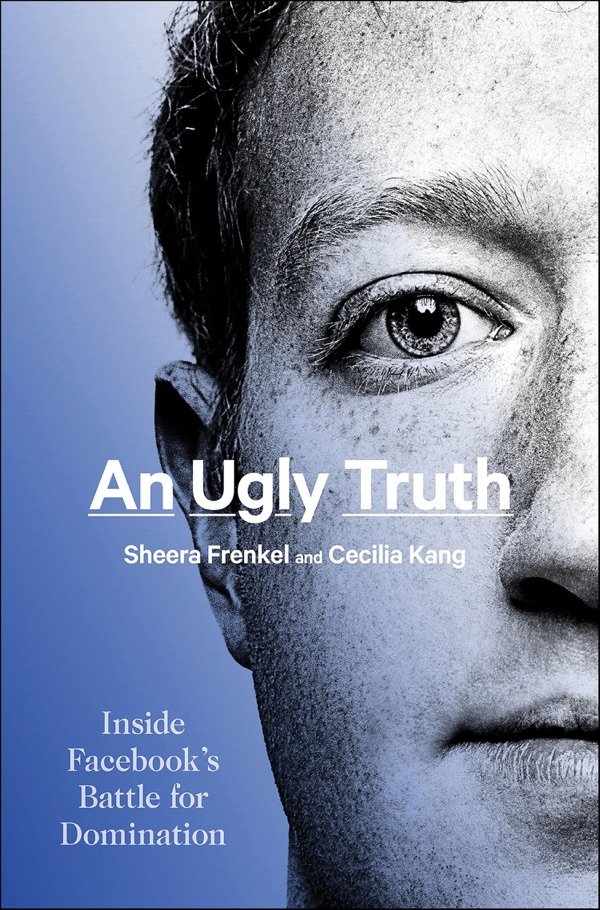
An Ugly Truth: Inside Facebook's Battle for Domination
by Sheera Frenkel
The group agreed that political speech could be protected under a “newsworthiness” standard. The idea was that political speech deserved extra protection because the public deserved to form their own opinions on candidates based on those candidates’ unedited views. The Facebook executives were creating the basis for a new speech policy as a knee-jerk reaction to Donald Trump. “It was bullshit,” one employee recalled. “They were making it up on the fly.” One thing is certain. Even if the company undergoes a radical transformation in the coming years, that change is unlikely to come from within. The algorithm that serves as Facebook’s beating heart is too powerful and too lucrative. And the platform is built upon a fundamental, possibly irreconcilable dichotomy: its purported mission to advance society by connecting people while also profiting off them. It is Facebook’s dilemma and its ugly truth.
Facebook technically barred hate speech, but the company’s definition of what constituted it was ever evolving. What it took action on differed within nations, in compliance with local laws. There were universal definitions for banned content on child pornography and on violent content. But hate speech was specific not just to countries but to cultures.
“They would talk about how disturbing it was that they were making these decisions about what people saw in Trending and what they didn’t,” Nuñez said. “Facebook made it seem like it was a black box, like there were systems making these decisions, but actually there were employees who were making critical decisions without any oversight.”
The way Sandberg saw it, if Google filled demand, then Facebook would create it. Facebook users weren’t there to shop, but advertisers could use the company’s understanding of its users to convert them into shoppers. What she was proposing was essentially a whole new level of tracking.
The New York Times had published its paper for more than one hundred years under the motto “All the News That’s Fit to Print.” Facebook was publishing its news under a different kind of motto: All the news from your friends that you never knew you wanted.
Mark Zuckerberg’s three greatest fears, according to a former senior Facebook executive, were that the site would be hacked, that his employees would be physically hurt, and that regulators would one day break up his social network.
"The group agreed that political speech could be protected under a “newsworthiness” standard. The idea was that political speech deserved extra protection because the public deserved to form their own opinions on candidates based on those candidates’ unedited views. The Facebook executives were creating the basis for a new speech policy as a knee-jerk reaction to Donald Trump. “It was bullshit,” one employee recalled. “They were making it up on the fly.”"
"One thing is certain. Even if the company undergoes a radical transformation in the coming years, that change is unlikely to come from within. The algorithm that serves as Facebook’s beating heart is too powerful and too lucrative. And the platform is built upon a fundamental, possibly irreconcilable dichotomy: its purported mission to advance society by connecting people while also profiting off them. It is Facebook’s dilemma and its ugly truth."
"Facebook technically barred hate speech, but the company’s definition of what constituted it was ever evolving. What it took action on differed within nations, in compliance with local laws. There were universal definitions for banned content on child pornography and on violent content. But hate speech was specific not just to countries but to cultures."
"“They would talk about how disturbing it was that they were making these decisions about what people saw in Trending and what they didn’t,” Nuñez said. “Facebook made it seem like it was a black box, like there were systems making these decisions, but actually there were employees who were making critical decisions without any oversight.”"
"The way Sandberg saw it, if Google filled demand, then Facebook would create it. Facebook users weren’t there to shop, but advertisers could use the company’s understanding of its users to convert them into shoppers. What she was proposing was essentially a whole new level of tracking."
"The New York Times had published its paper for more than one hundred years under the motto “All the News That’s Fit to Print.” Facebook was publishing its news under a different kind of motto: All the news from your friends that you never knew you wanted."
"Mark Zuckerberg’s three greatest fears, according to a former senior Facebook executive, were that the site would be hacked, that his employees would be physically hurt, and that regulators would one day break up his social network."
- →The way Sandberg saw it, if Google filled demand, then Facebook would create it. Facebook users weren’t there to shop, but advertisers could use the company’s understanding of its users to convert them into shoppers. What she was proposing was essentially a whole new level of tracking.
- →The New York Times had published its paper for more than one hundred years under the motto “All the News That’s Fit to Print.” Facebook was publishing its news under a different kind of motto: All the news from your friends that you never knew you wanted.
Looking for something similar?
Describe your situation. The search finds the right book from the entire library.