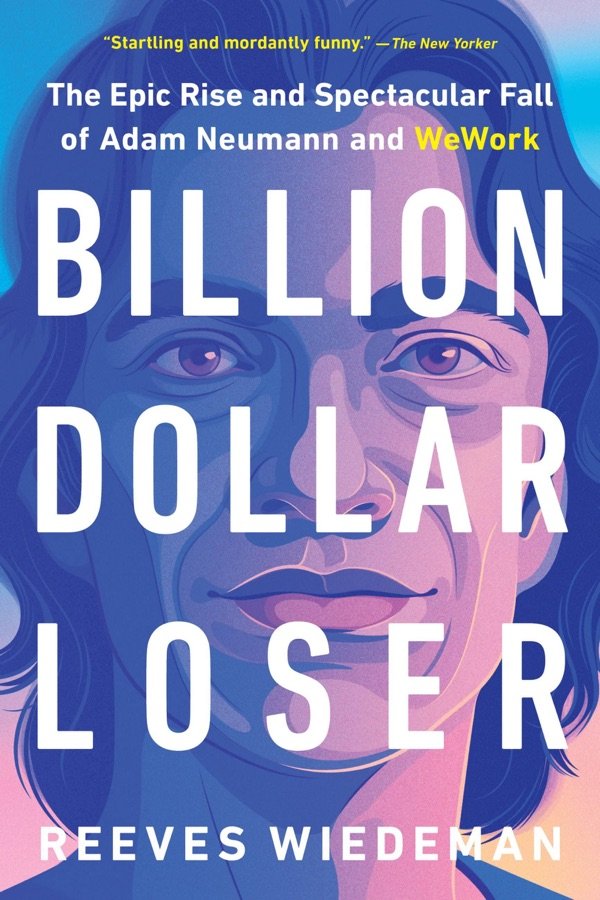
Billion Dollar Loser: The Epic Rise and Spectacular Fall of Adam Neumann and WeWork
by Reeves Wiedeman
WeWork bought Lord & Taylor’s flagship Manhattan department store with plans to make it the company’s next headquarters—a metaphor for the economic shifts of the 2010s: an old-world institution gobbled up by a fresh-faced newcomer fueled by Middle Eastern oil money, a sheen of technological disruption, and an impulse toward empire. He had long resisted the obvious—that WeWork was a real estate leasing company—insisting that it was anything but: it was a tech start-up, a social network, a “community company,” an organization bent on reshaping society. “We are here in order to change the world,” Neumann once said. “Nothing less than that interests me.”
WeWork bought Lord & Taylor’s flagship Manhattan department store with plans to make it the company’s next headquarters—a metaphor for the economic shifts of the 2010s: an old-world institution gobbled up by a fresh-faced newcomer fueled by Middle Eastern oil money, a sheen of technological disruption, and an impulse toward empire.
He had long resisted the obvious—that WeWork was a real estate leasing company—insisting that it was anything but: it was a tech start-up, a social network, a “community company,” an organization bent on reshaping society. “We are here in order to change the world,” Neumann once said. “Nothing less than that interests me.”
WeWork kicked two nonprofits out of their offices in downtown San Francisco when it offered to pay the building’s landlord double the rent in order to take over the space from the organizations, both of which worked to prevent tenants from being evicted from their homes in San Francisco.
WeWork began offering commercial real estate brokers a shocking commission: 100 percent of the first year’s rent paid by new tenants. On some two year deals, where WeWork was already giving a year away free, that meant the company was bringing in no revenue at all for twenty-four months.
The next day, they told Schreiber that WeWork, which didn’t have a single location, was worth $45 million. Without asking questions or pushing back, Schreiber agreed to commit $15 million to fund the idea in exchange for a third of a company that did not yet exist.
"WeWork bought Lord & Taylor’s flagship Manhattan department store with plans to make it the company’s next headquarters—a metaphor for the economic shifts of the 2010s: an old-world institution gobbled up by a fresh-faced newcomer fueled by Middle Eastern oil money, a sheen of technological disruption, and an impulse toward empire."
"He had long resisted the obvious—that WeWork was a real estate leasing company—insisting that it was anything but: it was a tech start-up, a social network, a “community company,” an organization bent on reshaping society. “We are here in order to change the world,” Neumann once said. “Nothing less than that interests me.”"
"WeWork kicked two nonprofits out of their offices in downtown San Francisco when it offered to pay the building’s landlord double the rent in order to take over the space from the organizations, both of which worked to prevent tenants from being evicted from their homes in San Francisco."
"WeWork began offering commercial real estate brokers a shocking commission: 100 percent of the first year’s rent paid by new tenants. On some two year deals, where WeWork was already giving a year away free, that meant the company was bringing in no revenue at all for twenty-four months."
"The next day, they told Schreiber that WeWork, which didn’t have a single location, was worth $45 million. Without asking questions or pushing back, Schreiber agreed to commit $15 million to fund the idea in exchange for a third of a company that did not yet exist."
"Adam’s focus on growth at the expense of profitability fit with an emerging business theory that it was best to acquire customers by any means necessary and then figure out how to make money later."
"“The nature of the private markets is that if nine smart investors pass, it only takes one relatively dumber investor, and suddenly we’re valued at $16 billion,” the finance team member said."
- →Adam’s focus on growth at the expense of profitability fit with an emerging business theory that it was best to acquire customers by any means necessary and then figure out how to make money later.
Looking for something similar?
Describe your situation. The search finds the right book from the entire library.