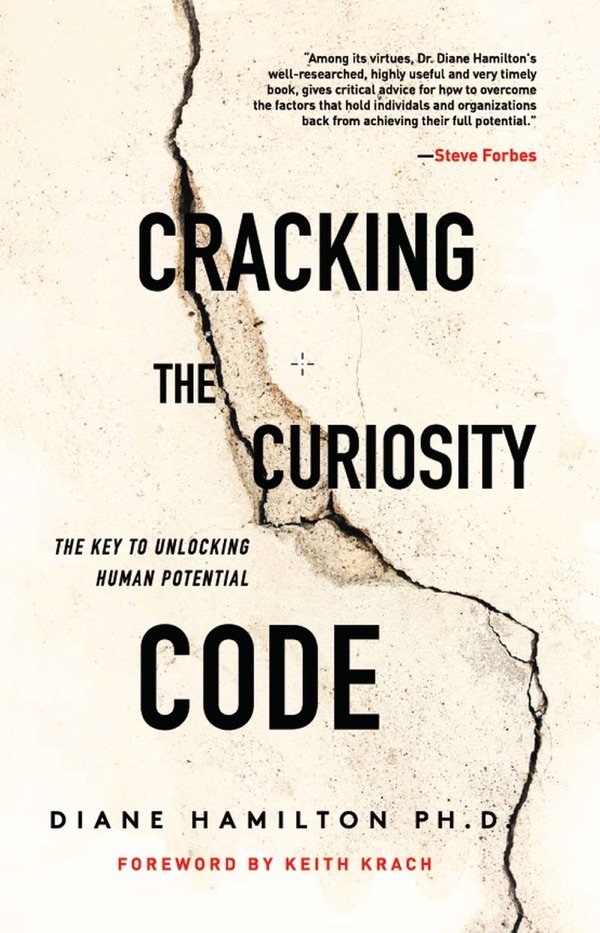
Cracking the Curiosity Code: The Key to Unlocking Human Potential
by Diane Hamilton
Desire or want: We desire a certain type of house or car or a membership at the country club. We do not need these things, but we want them, so we are motivated. Some missing element or void: We suffer some forms of shortcoming in our lives, whether mental, physical, or emotional. To varying degrees, we have a desire to overcome or attempt to mitigate those shortcomings. It’s that desire that motivates us. These six signature traits are cultural intelligence, collaboration, commitment, courage, cognizance, and curiosity. As she explained, “Curiosity isn’t passive. It’s very active. Curiosity’s about showing appreciative inquiry, bringing open mindset and true desire to know your people. Leaders who show these traits actively seek the perspective of diverse others in ideation and decision-making.”
These six signature traits are cultural intelligence, collaboration, commitment, courage, cognizance, and curiosity. As she explained, “Curiosity isn’t passive. It’s very active. Curiosity’s about showing appreciative inquiry, bringing open mindset and true desire to know your people. Leaders who show these traits actively seek the perspective of diverse others in ideation and decision-making.”
Five Fundamental Steps of Decision-Making Decision-making, as classically described, involves these five fundamental steps: Define the problem or issue. Define the goal or resolution. Generate alternative solutions that could achieve the goal. Analyze and decide which alternative best achieves the goal. Implement the selected alternative.
It seems that the more curious people are, the more alternatives they’re able to generate when making tough decisions. Some may prefer the simplistic approach (e.g., Do I choose A or B, black or white?). However, those who actively engage their curiosity to generate more alternatives always seem to make better, higher quality decisions.
Curiosity, intrinsic and fundamental to our very being, is referred to as trait curiosity. In contrast, state curiosity is the type of curiosity driven by external factors such as money, prestige, and power. Trait curiosity affirms that humans are hard-wired to have a lifelong interest in learning and to explore what’s new to them.
In most video games (excluding Cube). there is no prize other than the social reward of competing with others to win the game. Scientists tell us that the same intrinsic drive that motivates us to be social is the same drive that motivates us to be curious. So, the social interaction is motivation in and of itself.
"Desire or want: We desire a certain type of house or car or a membership at the country club. We do not need these things, but we want them, so we are motivated. Some missing element or void: We suffer some forms of shortcoming in our lives, whether mental, physical, or emotional. To varying degrees, we have a desire to overcome or attempt to mitigate those shortcomings. It’s that desire that motivates us."
"These six signature traits are cultural intelligence, collaboration, commitment, courage, cognizance, and curiosity. As she explained, “Curiosity isn’t passive. It’s very active. Curiosity’s about showing appreciative inquiry, bringing open mindset and true desire to know your people. Leaders who show these traits actively seek the perspective of diverse others in ideation and decision-making.”"
"Five Fundamental Steps of Decision-Making Decision-making, as classically described, involves these five fundamental steps: Define the problem or issue. Define the goal or resolution. Generate alternative solutions that could achieve the goal. Analyze and decide which alternative best achieves the goal. Implement the selected alternative."
"It seems that the more curious people are, the more alternatives they’re able to generate when making tough decisions. Some may prefer the simplistic approach (e.g., Do I choose A or B, black or white?). However, those who actively engage their curiosity to generate more alternatives always seem to make better, higher quality decisions."
"Curiosity, intrinsic and fundamental to our very being, is referred to as trait curiosity. In contrast, state curiosity is the type of curiosity driven by external factors such as money, prestige, and power. Trait curiosity affirms that humans are hard-wired to have a lifelong interest in learning and to explore what’s new to them."
"In most video games (excluding Cube). there is no prize other than the social reward of competing with others to win the game. Scientists tell us that the same intrinsic drive that motivates us to be social is the same drive that motivates us to be curious. So, the social interaction is motivation in and of itself."
"However, the consensus is that it’s our curiosity that serves as the driving force. Whether it’s in combination with the drivers Berlyne described, uncertainty, novelty, complexity, or conflict, or not, it’s ultimately our curiosity that fuels our motivation."
- →It seems that the more curious people are, the more alternatives they’re able to generate when making tough decisions. Some may prefer the simplistic approach (e.g., Do I choose A or B, black or white?). However, those who actively engage their curiosity to generate more alternatives always seem to make better, higher quality decisions.
Looking for something similar?
Describe your situation. The search finds the right book from the entire library.