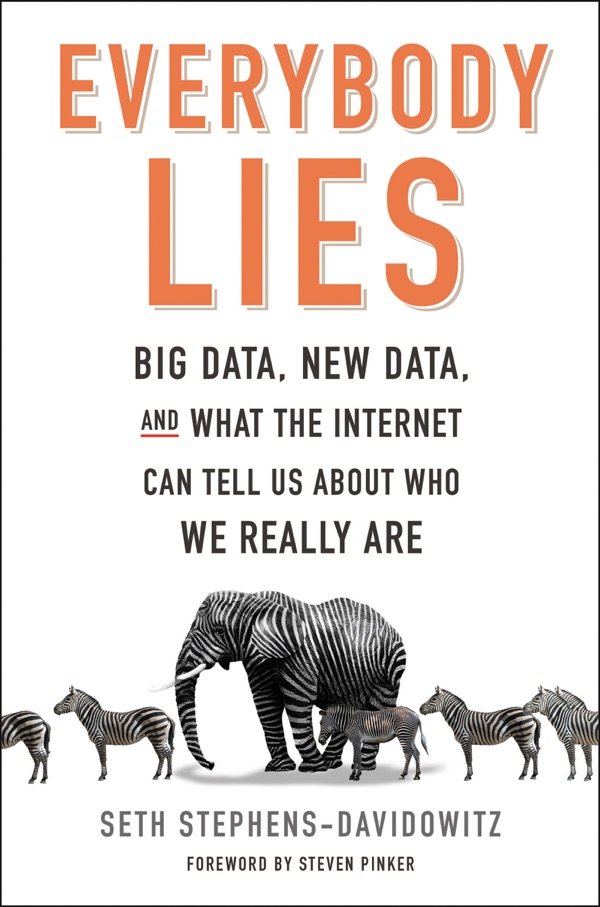
Everybody Lies: Big Data, New Data, and What the Internet Can Tell Us About Who We Really Are
by Seth Stephens-Davidowitz
Silver found that the single factor that best correlated with Donald Trump’s support in the Republican primaries was that measure I had discovered four years earlier. Areas that supported Trump in the largest numbers were those that made the most Google searches for “nigger.” When we lecture angry people, the search data implies that their fury can grow. But subtly provoking people’s curiosity, giving new information, and offering new images of the group that is stoking their rage may turn their thoughts in different, more positive directions.
Silver found that the single factor that best correlated with Donald Trump’s support in the Republican primaries was that measure I had discovered four years earlier. Areas that supported Trump in the largest numbers were those that made the most Google searches for “nigger.”
When we lecture angry people, the search data implies that their fury can grow. But subtly provoking people’s curiosity, giving new information, and offering new images of the group that is stoking their rage may turn their thoughts in different, more positive directions.
Search data revealed that we lived in a very different society from the one academics and journalists, relying on polls, thought that we lived in. It revealed a nasty, scary, and widespread rage that was waiting for a candidate to give voice to it.
This is the fourth power of Big Data: it makes randomized experiments, which can find truly causal effects, much, much easier to conduct—anytime, more or less anywhere, as long as you’re online. In the era of Big Data all the world’s a lab.
First, and perhaps most important, if you are going to try to use new data to revolutionize a field, it is best to go into a field where old methods are lousy.
"Silver found that the single factor that best correlated with Donald Trump’s support in the Republican primaries was that measure I had discovered four years earlier. Areas that supported Trump in the largest numbers were those that made the most Google searches for “nigger.”"
"When we lecture angry people, the search data implies that their fury can grow. But subtly provoking people’s curiosity, giving new information, and offering new images of the group that is stoking their rage may turn their thoughts in different, more positive directions."
"Search data revealed that we lived in a very different society from the one academics and journalists, relying on polls, thought that we lived in. It revealed a nasty, scary, and widespread rage that was waiting for a candidate to give voice to it."
"This is the fourth power of Big Data: it makes randomized experiments, which can find truly causal effects, much, much easier to conduct—anytime, more or less anywhere, as long as you’re online. In the era of Big Data all the world’s a lab."
"First, and perhaps most important, if you are going to try to use new data to revolutionize a field, it is best to go into a field where old methods are lousy."
"The power in Google data is that people tell the giant search engine things they might not tell anyone else."
"I am now convinced that Google searches are the most important dataset ever collected on the human psyche."
- →This is the fourth power of Big Data: it makes randomized experiments, which can find truly causal effects, much, much easier to conduct—anytime, more or less anywhere, as long as you’re online. In the era of Big Data all the world’s a lab.
- →First, and perhaps most important, if you are going to try to use new data to revolutionize a field, it is best to go into a field where old methods are lousy.
Looking for something similar?
Describe your situation. The search finds the right book from the entire library.