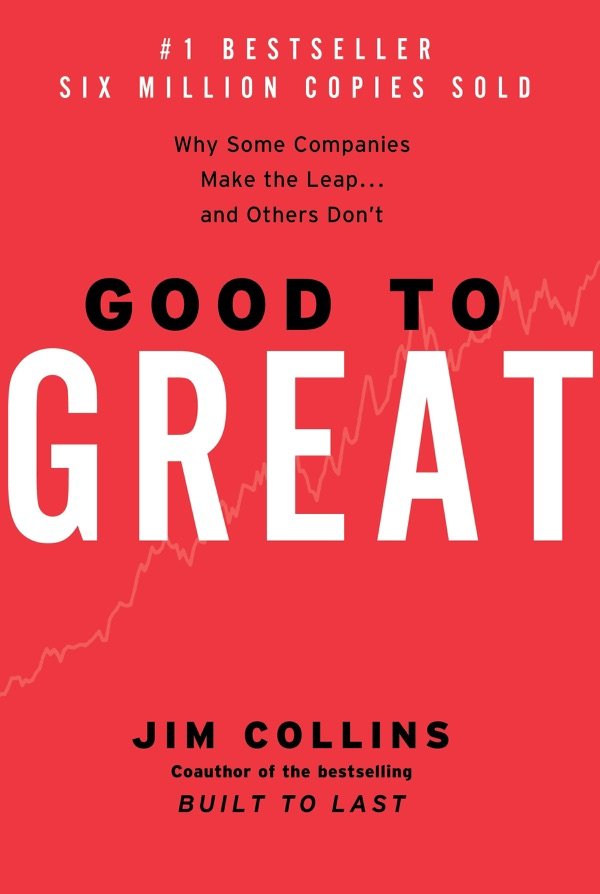
Good to Great: Why Some Companies Make the Leap... and Others Don't
by Jim Collins
Level 5 leaders look out the window to apportion credit to factors outside themselves when things go well (and if they cannot find a specific person or event to give credit to, they credit good luck). At the same time, they look in the mirror to apportion responsibility, never blaming bad luck when things go poorly. The moment a leader allows himself to become the primary reality people worry about, rather than reality being the primary reality, you have a recipe for mediocrity, or worse. This is one of the key reasons why less charismatic leaders often produce better long-term results than their more charismatic counterparts.
Level 5 leaders look out the window to apportion credit to factors outside themselves when things go well (and if they cannot find a specific person or event to give credit to, they credit good luck). At the same time, they look in the mirror to apportion responsibility, never blaming bad luck when things go poorly.
The moment a leader allows himself to become the primary reality people worry about, rather than reality being the primary reality, you have a recipe for mediocrity, or worse. This is one of the key reasons why less charismatic leaders often produce better long-term results than their more charismatic counterparts.
Leading from good to great does not mean coming up with the answers and then motivating everyone to follow your messianic vision. It means having the humility to grasp the fact that you do not yet understand enough to have the answers and then to ask the questions that will lead to the best possible insights.
The good-to-great companies at their best followed a simple mantra: “Anything that does not fit with our Hedgehog Concept, we will not do. We will not launch unrelated businesses. We will not make unrelated acquisitions. We will not do unrelated joint ventures. If it doesn’t fit, we don’t do it.
Level 5 leaders channel their ego needs away from themselves and into the larger goal of building a great company. It’s not that Level 5 leaders have no ego or self-interest. Indeed, they are incredibly ambitious—but their ambition is first and foremost for the institution, not themselves.
"Level 5 leaders look out the window to apportion credit to factors outside themselves when things go well (and if they cannot find a specific person or event to give credit to, they credit good luck). At the same time, they look in the mirror to apportion responsibility, never blaming bad luck when things go poorly."
"The moment a leader allows himself to become the primary reality people worry about, rather than reality being the primary reality, you have a recipe for mediocrity, or worse. This is one of the key reasons why less charismatic leaders often produce better long-term results than their more charismatic counterparts."
"Leading from good to great does not mean coming up with the answers and then motivating everyone to follow your messianic vision. It means having the humility to grasp the fact that you do not yet understand enough to have the answers and then to ask the questions that will lead to the best possible insights."
"The good-to-great companies at their best followed a simple mantra: “Anything that does not fit with our Hedgehog Concept, we will not do. We will not launch unrelated businesses. We will not make unrelated acquisitions. We will not do unrelated joint ventures. If it doesn’t fit, we don’t do it."
"Level 5 leaders channel their ego needs away from themselves and into the larger goal of building a great company. It’s not that Level 5 leaders have no ego or self-interest. Indeed, they are incredibly ambitious—but their ambition is first and foremost for the institution, not themselves."
"The good-to-great companies built a consistent system with clear constraints, but they also gave people freedom and responsibility within the framework of that system. They hired self-disciplined people who didn’t need to be managed, and then managed the system, not the people."
"Those who build great companies understand that the ultimate throttle on growth for any great company is not markets, or technology, or competition, or products. It is one thing above all others: the ability to get and keep enough of the right people."
- →Level 5 leaders look out the window to apportion credit to factors outside themselves when things go well (and if they cannot find a specific person or event to give credit to, they credit good luck). At the same time, they look in the mirror to apportion responsibility, never blaming bad luck when things go poorly.
- →Leading from good to great does not mean coming up with the answers and then motivating everyone to follow your messianic vision. It means having the humility to grasp the fact that you do not yet understand enough to have the answers and then to ask the questions that will lead to the best possible insights.
- →The good-to-great companies at their best followed a simple mantra: “Anything that does not fit with our Hedgehog Concept, we will not do. We will not launch unrelated businesses. We will not make unrelated acquisitions. We will not do unrelated joint ventures. If it doesn’t fit, we don’t do it.
- →Those who build great companies understand that the ultimate throttle on growth for any great company is not markets, or technology, or competition, or products. It is one thing above all others: the ability to get and keep enough of the right people.
Looking for something similar?
Describe your situation. The search finds the right book from the entire library.