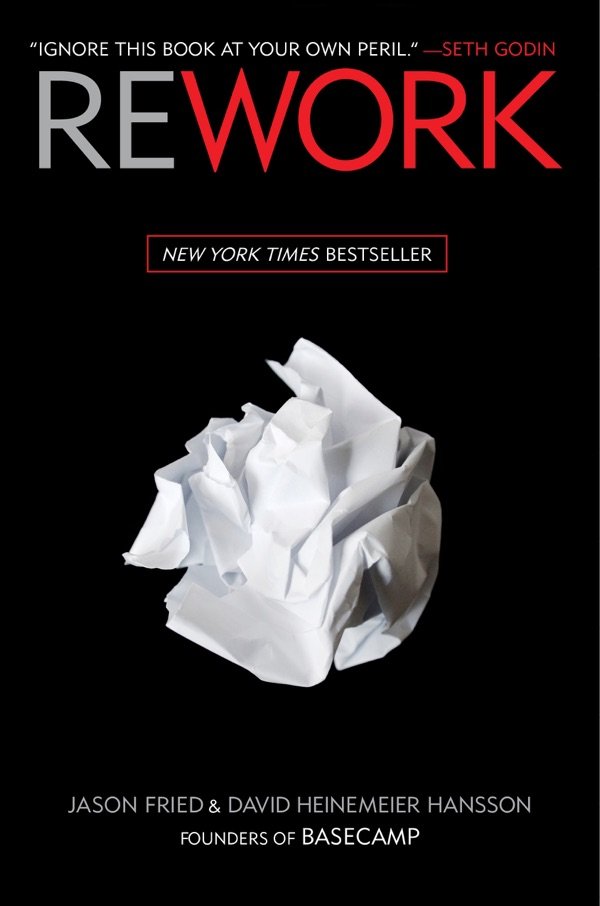
Rework
by Jason Fried
Anyone who takes a “we’ll figure out how to profit in the future” attitude to business is being ridiculous. That’s like building a rocket ship but starting off by saying, “Let’s pretend gravity doesn’t exist.” A business without a path to profit isn’t a business, it’s a hobby. Why is that? What is it about growth and business? Why is expansion always the goal? What’s the attraction of big besides ego? (You’ll need a better answer than “economies of scale.”) What’s wrong with finding the right size and staying there? Do we look at Harvard or Oxford and say, “If they’d only expand and branch out and hire thousands more professors and go global and open other campuses all over the world … then they’d be great schools.” Of course not. That’s not how we measure the value of these institutions. So why is it the way we measure businesses?
Anyone who takes a “we’ll figure out how to profit in the future” attitude to business is being ridiculous. That’s like building a rocket ship but starting off by saying, “Let’s pretend gravity doesn’t exist.” A business without a path to profit isn’t a business, it’s a hobby.
Pour yourself into your product and everything around your product too: how you sell it, how you support it, how you explain it, and how you deliver it. Competitors can never copy the you in your product.
Having an enemy gives you a great story to tell customers, too. Taking a stand always stands out. People get stoked by conflict. They take sides. Passions are ignited. And that’s a good way to get people to take notice.
You don’t create a culture. It happens. This is why new companies don’t have a culture. Culture is the byproduct of consistent behavior. If you encourage people to share, then sharing will be built into your culture. If you reward trust, then trust will be built in. If you treat customers right, then treating customers right becomes your culture.
When you want something bad enough, you make the time—regardless of your other obligations. The truth is most people just don’t want it bad enough. Then they protect their ego with the excuse of time. Don’t let yourself off the hook with excuses. It’s entirely your responsibility to make your dreams come true.
"Anyone who takes a “we’ll figure out how to profit in the future” attitude to business is being ridiculous. That’s like building a rocket ship but starting off by saying, “Let’s pretend gravity doesn’t exist.” A business without a path to profit isn’t a business, it’s a hobby."
"Why is that? What is it about growth and business? Why is expansion always the goal? What’s the attraction of big besides ego? (You’ll need a better answer than “economies of scale.”) What’s wrong with finding the right size and staying there? Do we look at Harvard or Oxford and say, “If they’d only expand and branch out and hire thousands more professors and go global and open other campuses all over the world … then they’d be great schools.” Of course not. That’s not how we measure the value of these institutions. So why is it the way we measure businesses?"
"Pour yourself into your product and everything around your product too: how you sell it, how you support it, how you explain it, and how you deliver it. Competitors can never copy the you in your product."
"Having an enemy gives you a great story to tell customers, too. Taking a stand always stands out. People get stoked by conflict. They take sides. Passions are ignited. And that’s a good way to get people to take notice."
"If you decide you absolutely must get together, try to make your meeting a productive one by sticking to these simple rules: Set a timer. When it rings, meeting’s over. Invite as few people as possible. Always have a clear agenda. Begin with a specific problem. Meet at the site of the problem instead of a conference room. Point to real things and suggest real changes. End with a solution and make someone responsible for implementing it."
"You don’t create a culture. It happens. This is why new companies don’t have a culture. Culture is the byproduct of consistent behavior. If you encourage people to share, then sharing will be built into your culture. If you reward trust, then trust will be built in. If you treat customers right, then treating customers right becomes your culture."
"When you want something bad enough, you make the time—regardless of your other obligations. The truth is most people just don’t want it bad enough. Then they protect their ego with the excuse of time. Don’t let yourself off the hook with excuses. It’s entirely your responsibility to make your dreams come true."
- →Pour yourself into your product and everything around your product too: how you sell it, how you support it, how you explain it, and how you deliver it. Competitors can never copy the you in your product.
- →Having an enemy gives you a great story to tell customers, too. Taking a stand always stands out. People get stoked by conflict. They take sides. Passions are ignited. And that’s a good way to get people to take notice.
- →When you want something bad enough, you make the time—regardless of your other obligations. The truth is most people just don’t want it bad enough. Then they protect their ego with the excuse of time. Don’t let yourself off the hook with excuses. It’s entirely your responsibility to make your dreams come true.
- →It’s the stuff you leave out that matters. So constantly look for things to remove, simplify, and streamline. Be a curator. Stick to what’s truly essential. Pare things down until you’re left with only the most important stuff. Then do it again. You can always add stuff back in later if you need to.
Looking for something similar?
Describe your situation. The search finds the right book from the entire library.