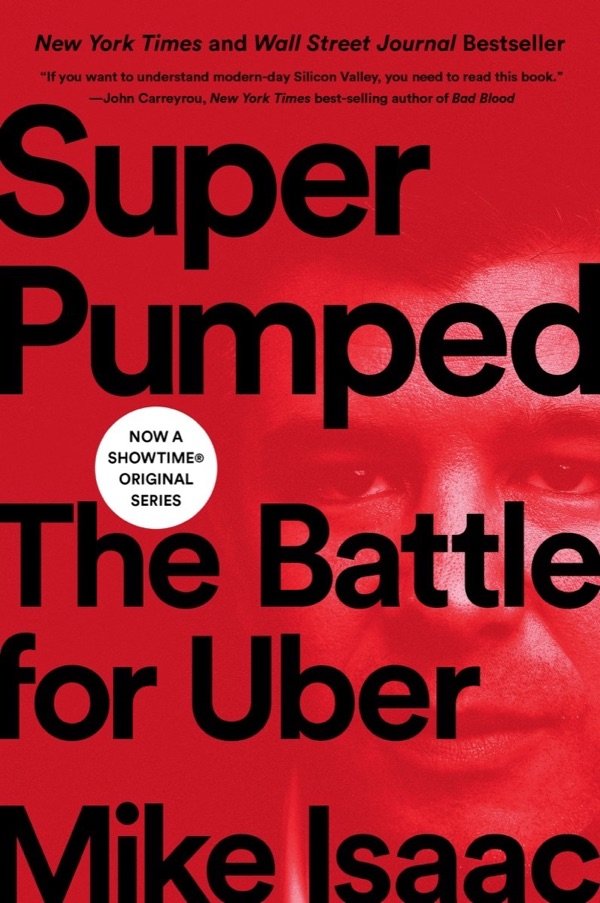
Super Pumped: The Battle for Uber
by Mike Isaac
What England didn’t know was that Uber’s general managers, engineers, and security professionals had developed a sophisticated system, perfected over months, designed to help every city strike team—including the one in Portland—identify would-be regulators, surveil them, and secretly prohibit them from ordering and catching Ubers by deploying a line of code in the app. The effect: Uber’s drivers would evade capture as they carried out their duties. Officers like England could not “see” the shady activity, and could never prove it was happening. Ovitz’s tactics worked. To keep Scour from going under, the team agreed to Ovitz’s onerous terms; the VC managed to acquire more than half the company for $4 million, wresting control of Scour away from its founders. But the episode—and the lesson in how to negotiate with venture capitalists—would stick with Travis for years to come.
Ovitz’s tactics worked. To keep Scour from going under, the team agreed to Ovitz’s onerous terms; the VC managed to acquire more than half the company for $4 million, wresting control of Scour away from its founders. But the episode—and the lesson in how to negotiate with venture capitalists—would stick with Travis for years to come.
Behind the scenes, Uber was hardly innocent. Recruiting ex-CIA, NSA, and FBI employees, the company had amassed a high-functioning corporate espionage force. Uber security personnel spied on government officials, looked deep into their digital lives, and at times followed them to their houses.
Even during recruiting, prospective employees were treated poorly. The company had designed an algorithm that determined the lowest possible salary a candidate might accept before making an offer to them, a ruthlessly efficient technique that saved Uber millions of dollars in equity grants.
Throughout his career Gurley had been enamored with what he called “marketplaces,” a category of business that neither made new products nor sold others, but merely matched the desires of one side of a market with the products of the other side, and took a cut as the middleman.
The hardest part of a VC’s job isn’t even necessarily about finding the right company, the right idea, or even the right industry to park their next investment. It is about finding the right person to run the company: the founder.
"What England didn’t know was that Uber’s general managers, engineers, and security professionals had developed a sophisticated system, perfected over months, designed to help every city strike team—including the one in Portland—identify would-be regulators, surveil them, and secretly prohibit them from ordering and catching Ubers by deploying a line of code in the app. The effect: Uber’s drivers would evade capture as they carried out their duties. Officers like England could not “see” the shady activity, and could never prove it was happening."
"Ovitz’s tactics worked. To keep Scour from going under, the team agreed to Ovitz’s onerous terms; the VC managed to acquire more than half the company for $4 million, wresting control of Scour away from its founders. But the episode—and the lesson in how to negotiate with venture capitalists—would stick with Travis for years to come."
"Behind the scenes, Uber was hardly innocent. Recruiting ex-CIA, NSA, and FBI employees, the company had amassed a high-functioning corporate espionage force. Uber security personnel spied on government officials, looked deep into their digital lives, and at times followed them to their houses."
"Even during recruiting, prospective employees were treated poorly. The company had designed an algorithm that determined the lowest possible salary a candidate might accept before making an offer to them, a ruthlessly efficient technique that saved Uber millions of dollars in equity grants."
"Throughout his career Gurley had been enamored with what he called “marketplaces,” a category of business that neither made new products nor sold others, but merely matched the desires of one side of a market with the products of the other side, and took a cut as the middleman."
"The hardest part of a VC’s job isn’t even necessarily about finding the right company, the right idea, or even the right industry to park their next investment. It is about finding the right person to run the company: the founder."
"At the end of the week, Uber’s finance team added it all up. The entire “X to the x” celebration cost Uber more than $25 million in cash—more than twice the amount of Uber’s Series A round of venture capital funding."
- →The hardest part of a VC’s job isn’t even necessarily about finding the right company, the right idea, or even the right industry to park their next investment. It is about finding the right person to run the company: the founder.
Looking for something similar?
Describe your situation. The search finds the right book from the entire library.