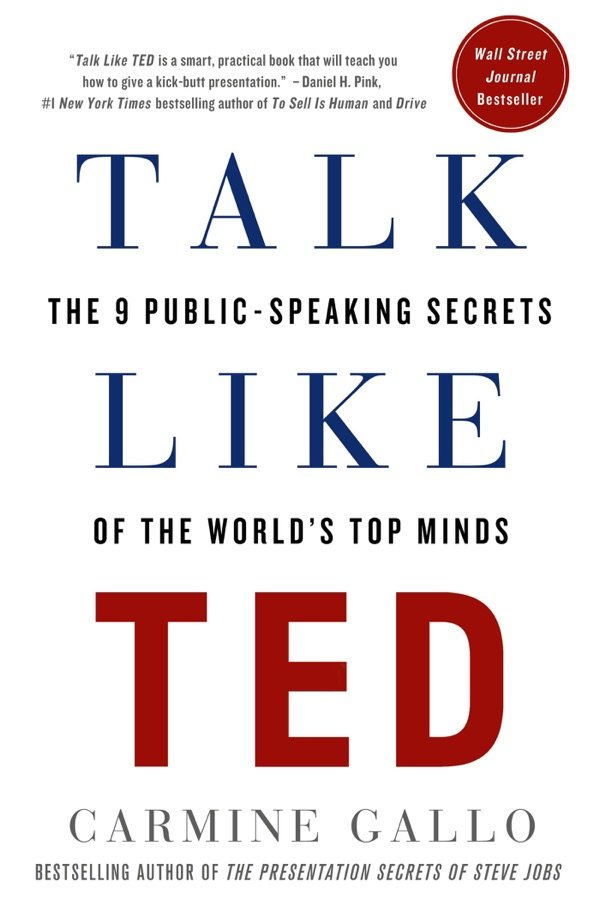
Talk Like TED: The 9 Public-Speaking Secrets of the World's Top Minds
by Carmine Gallo
WHAT MAKES YOUR HEART SING? Ask yourself, “What makes my heart sing?” Your passion is not a passing interest or even a hobby. A passion is something that is intensely meaningful and core to your identity. Once you identify what your passion is, can you say it influences your daily activities? Can you incorporate it into what you do professionally? Your true passion should be the subject of your communications and will serve to truly inspire your audience. Inspiring communicators and the best TED presenters stick to one of three types of stories. The first are personal stories that relate directly to the theme of the conversation or presentation; second are stories about other people who have learned a lesson the audience can relate to; third are stories involving the success or failure of products or brands.
Inspiring communicators and the best TED presenters stick to one of three types of stories. The first are personal stories that relate directly to the theme of the conversation or presentation; second are stories about other people who have learned a lesson the audience can relate to; third are stories involving the success or failure of products or brands.
He believed that persuasion occurs when three components are represented: ethos, logos, and pathos. Ethos is credibility. We tend to agree with people whom we respect for their achievements, title, experience, etc. Logos is the means of persuasion through logic, data, and statistics. Pathos is the act of appealing to emotions.
Researchers have discovered that our brains are more active when we hear stories. A wordy PowerPoint slide with bullet points activates the language-processing center of the brain, where we turn words into meaning. Stories do much more, using the whole brain and activating language, sensory, visual, and motor areas.
Science shows that passion is contagious, literally. You cannot inspire others unless you are inspired yourself. You stand a much greater chance of persuading and inspiring your listeners if you express an enthusiastic, passionate, and meaningful connection to your topic.
You need data, facts, and analysis to challenge people, but you also need narrative to get people comfortable enough to care about the community that you are advocating for. Your audience needs to be willing to go with you on a journey.”
"WHAT MAKES YOUR HEART SING? Ask yourself, “What makes my heart sing?” Your passion is not a passing interest or even a hobby. A passion is something that is intensely meaningful and core to your identity. Once you identify what your passion is, can you say it influences your daily activities? Can you incorporate it into what you do professionally? Your true passion should be the subject of your communications and will serve to truly inspire your audience."
"Inspiring communicators and the best TED presenters stick to one of three types of stories. The first are personal stories that relate directly to the theme of the conversation or presentation; second are stories about other people who have learned a lesson the audience can relate to; third are stories involving the success or failure of products or brands."
"He believed that persuasion occurs when three components are represented: ethos, logos, and pathos. Ethos is credibility. We tend to agree with people whom we respect for their achievements, title, experience, etc. Logos is the means of persuasion through logic, data, and statistics. Pathos is the act of appealing to emotions."
"Researchers have discovered that our brains are more active when we hear stories. A wordy PowerPoint slide with bullet points activates the language-processing center of the brain, where we turn words into meaning. Stories do much more, using the whole brain and activating language, sensory, visual, and motor areas."
"Science shows that passion is contagious, literally. You cannot inspire others unless you are inspired yourself. You stand a much greater chance of persuading and inspiring your listeners if you express an enthusiastic, passionate, and meaningful connection to your topic."
"You need data, facts, and analysis to challenge people, but you also need narrative to get people comfortable enough to care about the community that you are advocating for. Your audience needs to be willing to go with you on a journey.”"
"“Authentic happiness can only come from the long-term cultivation of wisdom, altruism, and compassion, and from the complete eradication of mental toxins, such as hatred, grasping, and ignorance.”"
- →Researchers have discovered that our brains are more active when we hear stories. A wordy PowerPoint slide with bullet points activates the language-processing center of the brain, where we turn words into meaning. Stories do much more, using the whole brain and activating language, sensory, visual, and motor areas.
Looking for something similar?
Describe your situation. The search finds the right book from the entire library.