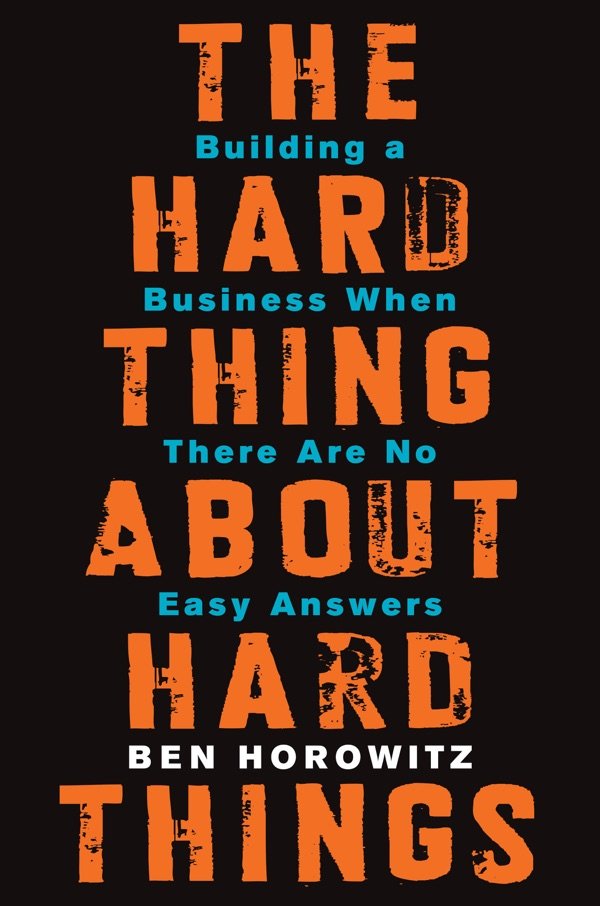
The Hard Thing About Hard Things: Building a Business When There Are No Easy Answers―Straight Talk on the Challenges of Entrepreneurship
by Ben Horowitz
Then I read chapter 16 of Andy Grove’s management classic, High Output Management, titled “Why Training Is the Boss’s Job,” and it changed my career. Grove wrote, “Most managers seem to feel that training employees is a job that should be left to others. I, on the other hand, strongly believe that the manager should do it himself.” That’s the hard thing about hard things—there is no formula for dealing with them.
Then I read chapter 16 of Andy Grove’s management classic, High Output Management, titled “Why Training Is the Boss’s Job,” and it changed my career. Grove wrote, “Most managers seem to feel that training employees is a job that should be left to others. I, on the other hand, strongly believe that the manager should do it himself.”
That’s the hard thing about hard things—there is no formula for dealing with them.
“Gentlemen, I’ve done many deals in my lifetime and through that process, I’ve developed a methodology, a way of doing things, a philosophy if you will. Within that philosophy, I have certain beliefs. I believe in artificial deadlines. I believe in playing one against the other. I believe in doing everything and anything short of illegal or immoral to get the damned deal done.”
Startup CEOs should not play the odds. When you are building a company, you must believe there is an answer and you cannot pay attention to your odds of finding it. You just have to find it. It matters not whether your chances are nine in ten or one in a thousand; your task is the same.
During this time I learned the most important rule of raising money privately: Look for a market of one. You only need one investor to say yes, so it’s best to ignore the other thirty who say “no.”
"Then I read chapter 16 of Andy Grove’s management classic, High Output Management, titled “Why Training Is the Boss’s Job,” and it changed my career. Grove wrote, “Most managers seem to feel that training employees is a job that should be left to others. I, on the other hand, strongly believe that the manager should do it himself.”"
"That’s the hard thing about hard things—there is no formula for dealing with them."
"“Gentlemen, I’ve done many deals in my lifetime and through that process, I’ve developed a methodology, a way of doing things, a philosophy if you will. Within that philosophy, I have certain beliefs. I believe in artificial deadlines. I believe in playing one against the other. I believe in doing everything and anything short of illegal or immoral to get the damned deal done.”"
"Startup CEOs should not play the odds. When you are building a company, you must believe there is an answer and you cannot pay attention to your odds of finding it. You just have to find it. It matters not whether your chances are nine in ten or one in a thousand; your task is the same."
"During this time I learned the most important rule of raising money privately: Look for a market of one. You only need one investor to say yes, so it’s best to ignore the other thirty who say “no.”"
"Being a good company doesn’t matter when things go well, but it can be the difference between life and death when things go wrong. Things always go wrong. Being a good company is an end in itself."
"There are no shortcuts to knowledge, especially knowledge gained from personal experience. Following conventional wisdom and relying on shortcuts can be worse than knowing nothing at all."
- →Then I read chapter 16 of Andy Grove’s management classic, High Output Management, titled “Why Training Is the Boss’s Job,” and it changed my career. Grove wrote, “Most managers seem to feel that training employees is a job that should be left to others. I, on the other hand, strongly believe that the manager should do it himself.”
- →Startup CEOs should not play the odds. When you are building a company, you must believe there is an answer and you cannot pay attention to your odds of finding it. You just have to find it. It matters not whether your chances are nine in ten or one in a thousand; your task is the same.
- →Being a good company doesn’t matter when things go well, but it can be the difference between life and death when things go wrong. Things always go wrong. Being a good company is an end in itself.
- →Perhaps the most important thing that I learned as an entrepreneur was to focus on what I needed to get right and stop worrying about all the things that I did wrong or might do wrong.
Looking for something similar?
Describe your situation. The search finds the right book from the entire library.