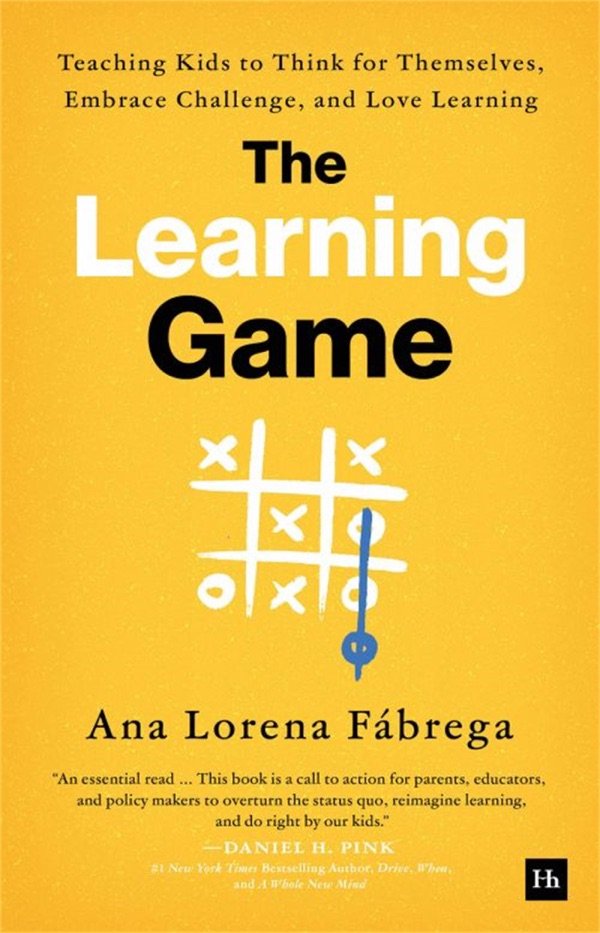
The Learning Game: Teaching Kids to Think for Themselves, Embrace Challenge, and Love Learning
by Ana Lorena Fabrega
As cognitive scientist Derek Cabrera points out, the adults at Lego who design the kits are the ones solving problems. Kids end up mimicking the picture on the box.25 Sure, the results look great (and make parents proud!), but Lego kits end up only teaching kids to follow instructions, leaving little room for independent thinking. The Lego example is a sign of the limits of our education system. As author and entrepreneur Seth Godin says, “Lego isn’t the problem, but it is a symptom of something seriously amiss.”26 Too often, we act like the white hat (facts) and black hat (judgment) are the only valuable perspectives. But good thinkers use all six hats. They also consider their emotions, evaluate upsides, propose crazy ideas, and monitor their overall thinking process. The six hats help kids see with a wide-angle lens. Kids learn to broaden their perception and use a diverse set of mental skills. In other words, they build wisdom.
The game of school is easy to master. Kids quickly pick up on what a successful student looks like. They try to look like they’re paying attention in class, raise their hand every few minutes, and turn in homework on time. They try to get away with doing as little as possible to pass the test so they can get school out of the way and head off to do what really matters to them.
Sixth, parents can foster a love for reading. Let kids read freely and widely. Let them try books and abandon them. Let them skim through books, and dive deep into what interests them: poems, comic books, nonfiction, magazines, cookbooks—or even the same book over and over. Choice is the secret recipe to foster a love of reading.
Struggling to implement rules in your household? Instead of taking a top-down approach, try a bottom-up approach. For instance, if you want to limit the time your kids spend in front of a screen, call a family meeting and tell them you want them to come up with fair rules. Allow your kids to be part of the rule-making process.35
This opened my eyes to where education is stuck. Kids are stuck in the game of school, imitating their teachers instead of thinking for themselves, losing points for mistakes instead of learning from them, coloring inside the lines instead of thinking outside the box, and waiting for instructions instead of figuring things out.
Elastic thinking is when we discover new perspectives by letting our minds wander through problems. It’s critical for making new discoveries and finding creative solutions. When we give kids instructions, we eliminate the chance for them to stumble on new, bold ideas. See chapter 19 for more on this topic.
"As cognitive scientist Derek Cabrera points out, the adults at Lego who design the kits are the ones solving problems. Kids end up mimicking the picture on the box.25 Sure, the results look great (and make parents proud!), but Lego kits end up only teaching kids to follow instructions, leaving little room for independent thinking. The Lego example is a sign of the limits of our education system. As author and entrepreneur Seth Godin says, “Lego isn’t the problem, but it is a symptom of something seriously amiss.”26"
"Too often, we act like the white hat (facts) and black hat (judgment) are the only valuable perspectives. But good thinkers use all six hats. They also consider their emotions, evaluate upsides, propose crazy ideas, and monitor their overall thinking process. The six hats help kids see with a wide-angle lens. Kids learn to broaden their perception and use a diverse set of mental skills. In other words, they build wisdom."
"Third, encourage kids to reject the defaults. When we reject the defaults, we start to notice inconsistencies, outdated methods, and overlooked opportunities. The sooner kids learn this habit, the better. As Adam Grant says: The hallmark of originality is rejecting the default and exploring whether a better option exists. The starting point is curiosity: pondering why the default exists in the first place."
"The game of school is easy to master. Kids quickly pick up on what a successful student looks like. They try to look like they’re paying attention in class, raise their hand every few minutes, and turn in homework on time. They try to get away with doing as little as possible to pass the test so they can get school out of the way and head off to do what really matters to them."
"Sixth, parents can foster a love for reading. Let kids read freely and widely. Let them try books and abandon them. Let them skim through books, and dive deep into what interests them: poems, comic books, nonfiction, magazines, cookbooks—or even the same book over and over. Choice is the secret recipe to foster a love of reading."
"Struggling to implement rules in your household? Instead of taking a top-down approach, try a bottom-up approach. For instance, if you want to limit the time your kids spend in front of a screen, call a family meeting and tell them you want them to come up with fair rules. Allow your kids to be part of the rule-making process.35"
"This opened my eyes to where education is stuck. Kids are stuck in the game of school, imitating their teachers instead of thinking for themselves, losing points for mistakes instead of learning from them, coloring inside the lines instead of thinking outside the box, and waiting for instructions instead of figuring things out."
- →Second, what are we teaching our children when we promise a reward to get them to do something? We’re telling them that they should care about what they’ll get instead of enjoying the learning process. They do things for the reward or to avoid punishment, rather than for the sake of learning itself.
- →While the Prussian model served some good purposes—literacy rates skyrocketed14—it had a notable downside: it used education as a mask for indoctrination. The system was designed to build a loyal army that would win wars, with no intention to raise citizens who think for themselves.
- →Teach your kids not to let anything into their head unexamined. Encourage them to ask questions like: “Is what that person just said true?” “How do I know that it is true?” “Who is telling the story and what are their motives?”
- →Children grow stronger from facing challenges, moderate pain, and low-stake conflicts. They do best when given the freedom to fail and navigate through the ups and downs of life. Children are antifragile.
Looking for something similar?
Describe your situation. The search finds the right book from the entire library.