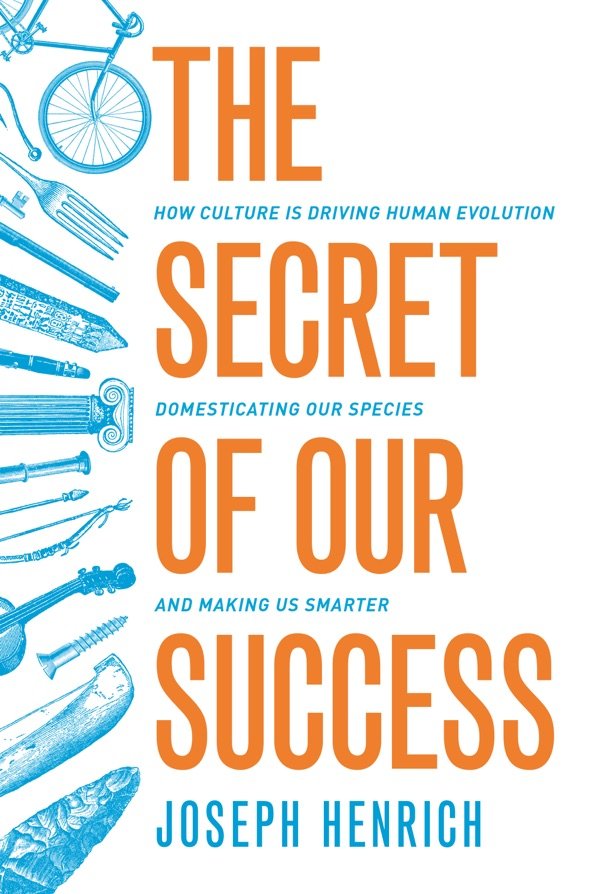
The Secret of Our Success: How Culture Is Driving Human Evolution, Domesticating Our Species, and Making Us Smarter
by Joseph Henrich
In many contexts, but not all, we humans make systemic logical errors, see illusory correlations, misattribute causal forces to random processes, and give equal weight to small and large samples. Thus, the three common explanations for our species’ ecological success are (1) generalized intelligence or mental processing power, (2) specialized mental abilities evolved for survival in the hunter-gatherer environments of our evolutionary past, and/or (3) cooperative instincts or social intelligence that permit high levels of cooperation.
In many contexts, but not all, we humans make systemic logical errors, see illusory correlations, misattribute causal forces to random processes, and give equal weight to small and large samples.
Thus, the three common explanations for our species’ ecological success are (1) generalized intelligence or mental processing power, (2) specialized mental abilities evolved for survival in the hunter-gatherer environments of our evolutionary past, and/or (3) cooperative instincts or social intelligence that permit high levels of cooperation.
The reason is that we humans are rather inclined to copy—spontaneously, automatically, and often unconsciously. Chimpanzees don’t appear to suffer from this cognitive “bug,” at least not nearly to the same degree.
The key to understanding how humans evolved and why we are so different from other animals is to recognize that we are a cultural species.
"In many contexts, but not all, we humans make systemic logical errors, see illusory correlations, misattribute causal forces to random processes, and give equal weight to small and large samples."
"Thus, the three common explanations for our species’ ecological success are (1) generalized intelligence or mental processing power, (2) specialized mental abilities evolved for survival in the hunter-gatherer environments of our evolutionary past, and/or (3) cooperative instincts or social intelligence that permit high levels of cooperation."
"The reason is that we humans are rather inclined to copy—spontaneously, automatically, and often unconsciously. Chimpanzees don’t appear to suffer from this cognitive “bug,” at least not nearly to the same degree."
"The key to understanding how humans evolved and why we are so different from other animals is to recognize that we are a cultural species."
Looking for something similar?
Describe your situation. The search finds the right book from the entire library.