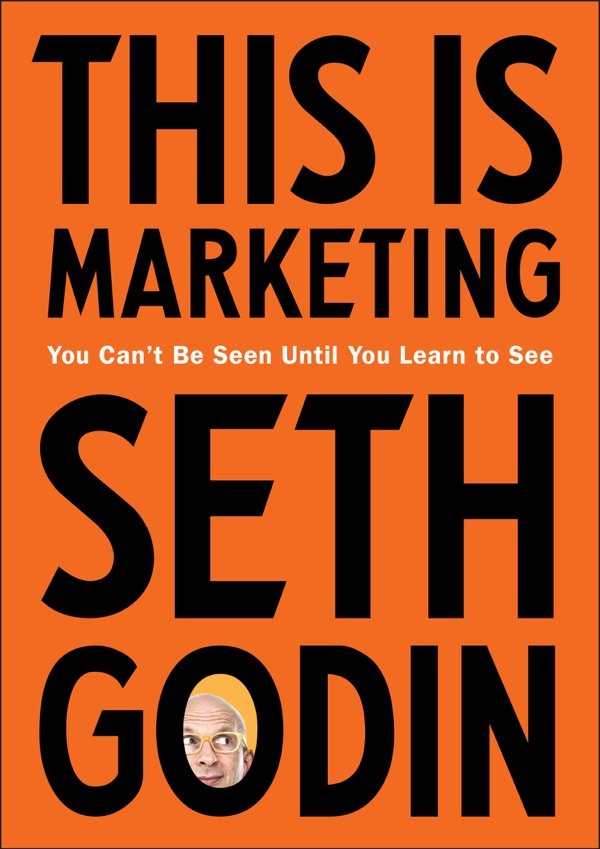
This is Marketing: You Can't Be Seen Until You Learn To See
by Seth Godin
Marketing is the generous act of helping someone solve a problem. Their problem. It’s a chance to change the culture for the better. For a long time, the most efficient way for a commercial enterprise to make large-scale change was simple: buy ads. Ads worked. Ads were a bargain. Ads paid for themselves. Besides, they were fun to make. You could buy a lot all at once. They made you (or your brand) a little famous. And they were reliable: money spent equaled sales made.
Marketing is the generous act of helping someone solve a problem. Their problem. It’s a chance to change the culture for the better.
For a long time, the most efficient way for a commercial enterprise to make large-scale change was simple: buy ads. Ads worked. Ads were a bargain. Ads paid for themselves. Besides, they were fun to make. You could buy a lot all at once. They made you (or your brand) a little famous. And they were reliable: money spent equaled sales made.
The way we make things better is by caring enough about those we serve to imagine the story that they need to hear. We need to be generous enough to share that story, so they can take action that they’ll be proud of.
When you’re marketing-driven, you’re focused on the latest Facebook data hacks, the design of your new logo, and your Canadian pricing model. On the other hand, when you’re market-driven, you think a lot about the hopes and dreams of your customers and their friends. You listen to their frustrations and invest in changing the culture. Being market-driven lasts.
The relentless pursuit of mass will make you boring, because mass means average, it means the center of the curve, it requires you to offend no one and satisfy everyone.
"Marketing is the generous act of helping someone solve a problem. Their problem. It’s a chance to change the culture for the better."
"For a long time, the most efficient way for a commercial enterprise to make large-scale change was simple: buy ads. Ads worked. Ads were a bargain. Ads paid for themselves. Besides, they were fun to make. You could buy a lot all at once. They made you (or your brand) a little famous. And they were reliable: money spent equaled sales made."
"The way we make things better is by caring enough about those we serve to imagine the story that they need to hear. We need to be generous enough to share that story, so they can take action that they’ll be proud of."
"When you’re marketing-driven, you’re focused on the latest Facebook data hacks, the design of your new logo, and your Canadian pricing model. On the other hand, when you’re market-driven, you think a lot about the hopes and dreams of your customers and their friends. You listen to their frustrations and invest in changing the culture. Being market-driven lasts."
"The relentless pursuit of mass will make you boring, because mass means average, it means the center of the curve, it requires you to offend no one and satisfy everyone."
"When we find the empathy to say, “I’m sorry, this isn’t for you, here’s the phone number of my competitor,” then we also find the freedom to do work that matters."
"We’re judging everything, and people are judging us in return. Often, those judgments are biased, incorrect, and inefficient. But denying them doesn’t make them disappear."
- →The relentless pursuit of mass will make you boring, because mass means average, it means the center of the curve, it requires you to offend no one and satisfy everyone.
- →When we find the empathy to say, “I’m sorry, this isn’t for you, here’s the phone number of my competitor,” then we also find the freedom to do work that matters.
- →If you tell your competition your tactics, they’ll steal them and it will cost you. But if you tell them your strategy, it won’t matter. Because they don’t have the guts or the persistence to turn your strategy into their strategy.
- →When I started out in marketing, I’d guess that fewer than 5 percent of all advertisers measured their results. It was just too difficult to do with TV, radio, and print. Today, I’m guessing the number is closer to 60 percent, because the numbers are so clearly marked. What’s missing is a thoughtful analysis of what those numbers mean.
Looking for something similar?
Describe your situation. The search finds the right book from the entire library.