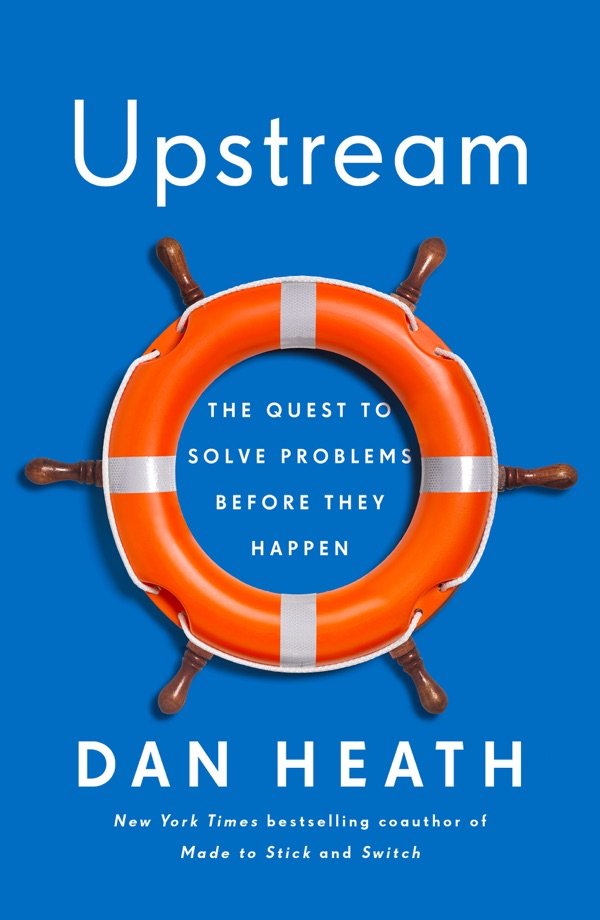
Upstream: The Quest to Solve Problems Before They Happen
by Dan Heath
“When we create organizations, we’re doing it to give people focus. We’re essentially giving them a license to be myopic. We’re saying: This is your problem. Define your mission and create your strategy and align your resources to solve that problem. And you have the divine right to ignore all of the other stuff that doesn’t align with that.” Problem blindness is the first of three barriers to upstream thinking that we’ll study in this section. When we don’t see a problem, we can’t solve it. And that blindness can create passivity even in the face of enormous harm. To move upstream, we must first overcome problem blindness.
“When we create organizations, we’re doing it to give people focus. We’re essentially giving them a license to be myopic. We’re saying: This is your problem. Define your mission and create your strategy and align your resources to solve that problem. And you have the divine right to ignore all of the other stuff that doesn’t align with that.”
Problem blindness is the first of three barriers to upstream thinking that we’ll study in this section. When we don’t see a problem, we can’t solve it. And that blindness can create passivity even in the face of enormous harm. To move upstream, we must first overcome problem blindness.
My goal in this book is to convince you that we should shift more of our energies upstream: personally, organizationally, nationally, and globally. We can—and we should—stop dealing with the symptoms of problems, again and again, and start fixing them.
To succeed upstream, leaders must: detect problems early, target leverage points in complex systems, find reliable ways to measure success, pioneer new ways of working together, and embed their successes into systems to give them permanence.
Notice what was missing: It was no group’s job to ensure that customers didn’t need to call for support. In fact, no team really stood to gain if customers stopped calling. It wasn’t what they were measured on.
"“When we create organizations, we’re doing it to give people focus. We’re essentially giving them a license to be myopic. We’re saying: This is your problem. Define your mission and create your strategy and align your resources to solve that problem. And you have the divine right to ignore all of the other stuff that doesn’t align with that.”"
"Problem blindness is the first of three barriers to upstream thinking that we’ll study in this section. When we don’t see a problem, we can’t solve it. And that blindness can create passivity even in the face of enormous harm. To move upstream, we must first overcome problem blindness."
"My goal in this book is to convince you that we should shift more of our energies upstream: personally, organizationally, nationally, and globally. We can—and we should—stop dealing with the symptoms of problems, again and again, and start fixing them."
"To succeed upstream, leaders must: detect problems early, target leverage points in complex systems, find reliable ways to measure success, pioneer new ways of working together, and embed their successes into systems to give them permanence."
"Notice what was missing: It was no group’s job to ensure that customers didn’t need to call for support. In fact, no team really stood to gain if customers stopped calling. It wasn’t what they were measured on."
"Downstream efforts are narrow and fast and tangible. Upstream efforts are broader, slower, and hazier—but when they work, they really work. They can accomplish massive and long-lasting good."
"In this book, I’m defining upstream efforts as those intended to prevent problems before they happen or, alternatively, to systematically reduce the harm caused by those problems."
- →My goal in this book is to convince you that we should shift more of our energies upstream: personally, organizationally, nationally, and globally. We can—and we should—stop dealing with the symptoms of problems, again and again, and start fixing them.
- →To succeed upstream, leaders must: detect problems early, target leverage points in complex systems, find reliable ways to measure success, pioneer new ways of working together, and embed their successes into systems to give them permanence.
- →How do you escape the tunnel? You need slack. Slack, in this context, means a reserve of time or resources that can be spent on problem solving.
Looking for something similar?
Describe your situation. The search finds the right book from the entire library.