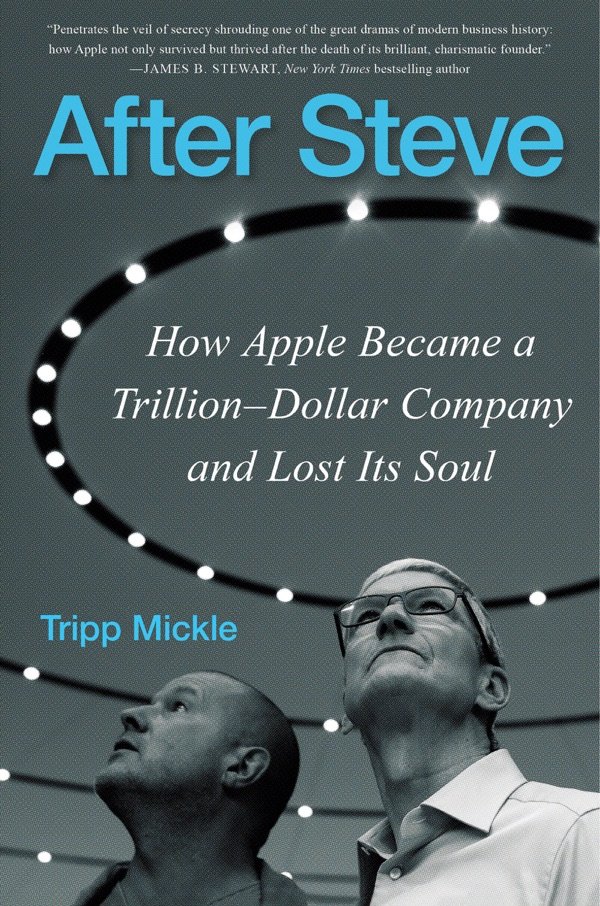
After Steve: How Apple Became a Trillion-Dollar Company and Lost Its Soul
von Tripp Mickle
“Jeff, if you left your phone at home and got to the office without it, would you go back and get it?” he asked. “Yes,” Williams said. “If you left your watch at home, would you go back to get it?” Dauber asked. Williams paused and thought. “No,” he said. “I’d get it when I got back home.” “That’s why we can’t ship this,” Dauber said. “It’s not ready. It’s not great.” The Key to a Product’s Success is purpose. The iPod dominated music because it put a thousand songs into people’s pockets. The iPhone flourished because it combined a music player, phone, and computer into a single device. Not every gadget starts with such transformative goals in mind, but every one that succeeds springs from a well of deep thought and consideration.
“Jeff, if you left your phone at home and got to the office without it, would you go back and get it?” he asked. “Yes,” Williams said. “If you left your watch at home, would you go back to get it?” Dauber asked. Williams paused and thought. “No,” he said. “I’d get it when I got back home.” “That’s why we can’t ship this,” Dauber said. “It’s not ready. It’s not great.”
The Key to a Product’s Success is purpose. The iPod dominated music because it put a thousand songs into people’s pockets. The iPhone flourished because it combined a music player, phone, and computer into a single device. Not every gadget starts with such transformative goals in mind, but every one that succeeds springs from a well of deep thought and consideration.
Architects working on the project were astounded at how the lofty demands of a tech company had forced the construction industry to innovate. In the years that followed, they would marvel as other buildings, such as the Los Angeles County Museum of Art, featured curved glass, which might have been impossible without Apple Park.
He believed that once-great companies often declined after they became monopolies, innovation slowed, and the products they made became an afterthought. Eventually, they put salespeople in charge and prioritized how much they sold instead of what they sold.
He became a disciple of the functionalist sensibility of the German designer Dieter Rams, who had made Braun a household name with minimalist radios and hair dryers guided by his philosophy that timeless design was about one thing: less but better.
"“Jeff, if you left your phone at home and got to the office without it, would you go back and get it?” he asked. “Yes,” Williams said. “If you left your watch at home, would you go back to get it?” Dauber asked. Williams paused and thought. “No,” he said. “I’d get it when I got back home.” “That’s why we can’t ship this,” Dauber said. “It’s not ready. It’s not great.”"
"The Key to a Product’s Success is purpose. The iPod dominated music because it put a thousand songs into people’s pockets. The iPhone flourished because it combined a music player, phone, and computer into a single device. Not every gadget starts with such transformative goals in mind, but every one that succeeds springs from a well of deep thought and consideration."
"Architects working on the project were astounded at how the lofty demands of a tech company had forced the construction industry to innovate. In the years that followed, they would marvel as other buildings, such as the Los Angeles County Museum of Art, featured curved glass, which might have been impossible without Apple Park."
"He believed that once-great companies often declined after they became monopolies, innovation slowed, and the products they made became an afterthought. Eventually, they put salespeople in charge and prioritized how much they sold instead of what they sold."
"He became a disciple of the functionalist sensibility of the German designer Dieter Rams, who had made Braun a household name with minimalist radios and hair dryers guided by his philosophy that timeless design was about one thing: less but better."
"Disney had structured his company much as Jobs structured Apple. It had been flat, staff members hadn’t had titles, and everyone had been called by their first name. “If you’re important to the company,” Disney said, “you’ll know it.”"
"Jobs had held fast to the idea that lawyers and accountants were there to execute the decisions made by the people at the company’s creative core. But over time, the company’s bureaucratic caboose had become its engine."
- →Architects working on the project were astounded at how the lofty demands of a tech company had forced the construction industry to innovate. In the years that followed, they would marvel as other buildings, such as the Los Angeles County Museum of Art, featured curved glass, which might have been impossible without Apple Park.
Ähnliche Bücher gesucht?
Beschreibe deine Situation. Die Suche findet das passende Buch aus der gesamten Bibliothek.