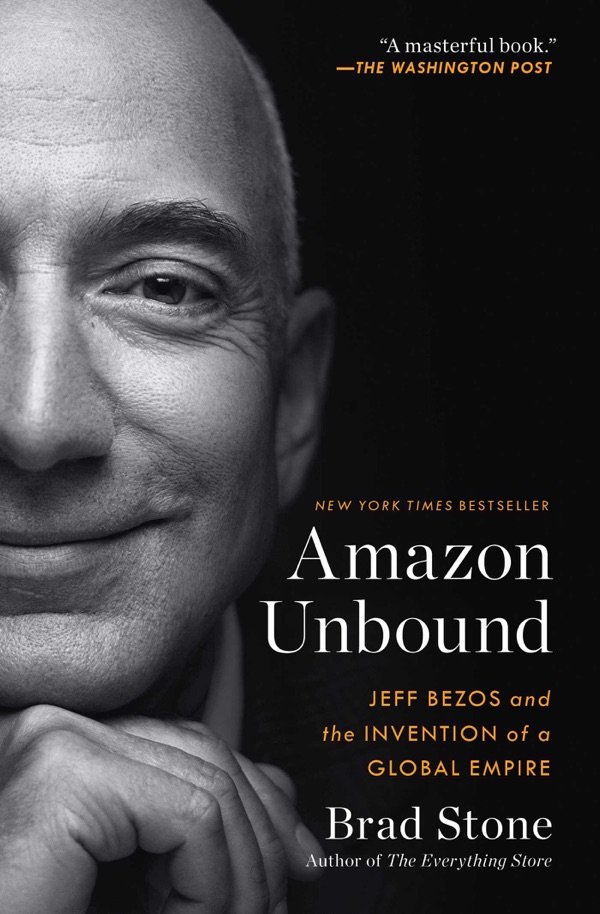
Amazon Unbound: Jeff Bezos and the Invention of a Global Empire
von Brad Stone
We all know that if you swing for the fences, you’re going to strike out a lot, but you’re also going to hit some home runs. The difference between baseball and business, however, is that baseball has a truncated outcome distribution. When you swing, no matter how well you connect with the ball, the most runs you can get is four. In business, every once in a while, when you step up to the plate, you can score 1,000 runs. This long-tailed distribution of returns is why it’s important to be bold. Then he had an epiphany, recognizing the flywheel, or virtuous cycle, that was powering his business. By adding outside vendors and additional selection to Amazon.com, the company drew in new shoppers and earned commissions on those sales, which it could use to lower prices or subsidize faster delivery. That in turn drew in more shoppers and attracted more sellers—and the process repeated itself. Invest in any part of the loop, Bezos reasoned, and this cycle would accelerate.
If Bezos took one leadership principle most to heart—which would also come to define the next half decade at Amazon—it was principle #8, “think big”: Thinking small is a self-fulfilling prophecy. Leaders create and communicate a bold direction that inspires results. They think differently and look around corners for ways to serve customers.
In this revamped performance review system, peers and managers were asked to write sixty words describing an employee’s “superpower,” and another sixty to describe a “growth idea” for the year ahead. “It was all about looking forward and being motivational,” Galetti said.
“The biggest needle movers will be things that customers don’t know to ask for,” he would write years later in a letter to shareholders. “We must invent on their behalf. We have to tap into our own inner imagination about what’s possible.”
“Every interesting thing I’ve ever done, every important thing I’ve ever done, every beneficial thing I’ve ever done, has been through a cascade of experiments and mistakes and failures,”
This unusual and decentralized corporate culture hammered into employees that there was no trade-off between speed and accuracy. They were supposed to move fast and never break things.
"We all know that if you swing for the fences, you’re going to strike out a lot, but you’re also going to hit some home runs. The difference between baseball and business, however, is that baseball has a truncated outcome distribution. When you swing, no matter how well you connect with the ball, the most runs you can get is four. In business, every once in a while, when you step up to the plate, you can score 1,000 runs. This long-tailed distribution of returns is why it’s important to be bold."
"Then he had an epiphany, recognizing the flywheel, or virtuous cycle, that was powering his business. By adding outside vendors and additional selection to Amazon.com, the company drew in new shoppers and earned commissions on those sales, which it could use to lower prices or subsidize faster delivery. That in turn drew in more shoppers and attracted more sellers—and the process repeated itself. Invest in any part of the loop, Bezos reasoned, and this cycle would accelerate."
"If Bezos took one leadership principle most to heart—which would also come to define the next half decade at Amazon—it was principle #8, “think big”: Thinking small is a self-fulfilling prophecy. Leaders create and communicate a bold direction that inspires results. They think differently and look around corners for ways to serve customers."
"In this revamped performance review system, peers and managers were asked to write sixty words describing an employee’s “superpower,” and another sixty to describe a “growth idea” for the year ahead. “It was all about looking forward and being motivational,” Galetti said."
"“The biggest needle movers will be things that customers don’t know to ask for,” he would write years later in a letter to shareholders. “We must invent on their behalf. We have to tap into our own inner imagination about what’s possible.”"
"“Every interesting thing I’ve ever done, every important thing I’ve ever done, every beneficial thing I’ve ever done, has been through a cascade of experiments and mistakes and failures,”"
"This unusual and decentralized corporate culture hammered into employees that there was no trade-off between speed and accuracy. They were supposed to move fast and never break things."
- →In this revamped performance review system, peers and managers were asked to write sixty words describing an employee’s “superpower,” and another sixty to describe a “growth idea” for the year ahead. “It was all about looking forward and being motivational,” Galetti said.
- →“The biggest needle movers will be things that customers don’t know to ask for,” he would write years later in a letter to shareholders. “We must invent on their behalf. We have to tap into our own inner imagination about what’s possible.”
- →This unusual and decentralized corporate culture hammered into employees that there was no trade-off between speed and accuracy. They were supposed to move fast and never break things.
- →“If I have to choose between agreement and conflict, I’ll take conflict every time,” Bezos often said. “It always yields a better result.”
Ähnliche Bücher gesucht?
Beschreibe deine Situation. Die Suche findet das passende Buch aus der gesamten Bibliothek.