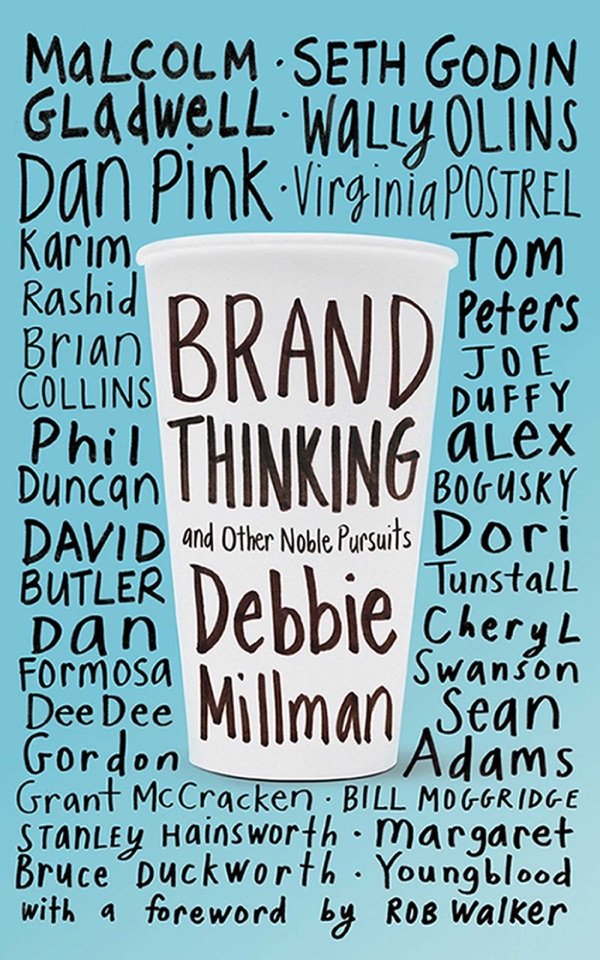
Brand Thinking and Other Noble Pursuits
von Debbie Millman
Design anthropology is the focus of your study and teaching, so I felt the natural first question would be, what is it? What is design anthropology? Well, there’s a theoretical dimension and a practical one. The practical dimension includes trying to figure out how to understand people and how to design products, communications, and experiences in ways that resonate with people. The theoretical response is about trying to understand how the processes and artifacts of design help define what it means to be human. Yes, to sell more stuff, but I’m not cynical about that. It’s really an attempt to figure out how to make connections through the objects that people are buying. This is why it can actually work very effectively. It goes like this: “I buy from Starbucks because they tell me this little story about where the bean comes from. And this relationship and the fair trade and the overall vibe make me feel better about the purchase—even though there’s a part of my brain saying, ‘Hmmm, I’m not so sure about this.’”
The brands are totems. They tell us stories about our place in culture—about where we are and where we’ve been. They also help us figure out where we’re going. Brands have become time capsules, and in many ways, they’re now navigation and identity devices. They’ve transcended their transactional economic function and now reflect our culture and who we are in a way that no other objects can.
Brands activate emotions. Method has a very deliberate positioning. The brand connects to a higher order, which is about living a joyful, vibrant life. When I worked on the launch of the Venus brand, the positioning was about revealing your inner beauty and your inner goddess. That was the emotional piece. And that’s a way, way, way higher order than just scraping hair off your legs.
When people go to a garage sale to buy something, they actually feel very satisfied about the interaction. Most of the time, it’s because the object they buy comes with a story—a very real, personal story about where the object fit into someone’s life. Whether it’s real or not, you connect with that person through the object.
Fundamentally, branding is a profound manifestation of the human condition. It is about belonging: belonging to a tribe, to a religion, to a family. Branding demonstrates that sense of belonging. It has this function for both the people who are part of the same group and also for the people who don’t belong.
We should go into situations, communities, organizations, industries, companies, and start looking for problems. I love the Yogi Berra quote, “You can observe a lot just by watching.” And that’s true for designers. Our problem-seeking skills are more powerful than our problem-solving skills.
"Design anthropology is the focus of your study and teaching, so I felt the natural first question would be, what is it? What is design anthropology? Well, there’s a theoretical dimension and a practical one. The practical dimension includes trying to figure out how to understand people and how to design products, communications, and experiences in ways that resonate with people. The theoretical response is about trying to understand how the processes and artifacts of design help define what it means to be human."
"Yes, to sell more stuff, but I’m not cynical about that. It’s really an attempt to figure out how to make connections through the objects that people are buying. This is why it can actually work very effectively. It goes like this: “I buy from Starbucks because they tell me this little story about where the bean comes from. And this relationship and the fair trade and the overall vibe make me feel better about the purchase—even though there’s a part of my brain saying, ‘Hmmm, I’m not so sure about this.’”"
"It is also a very cyclical business. It’s a hunting business—not a farming business. You can never ever stop. You can never relax. You can never say, “Okay, I got this, I am going to keep this, I am going to be doing this same work for ten years.” It’s not like that. And that means it’s very tough. A lot of people like this, and a lot of people don’t. It is also extremely demanding creatively. You need to be able to break through orthodoxies and conventions that most people accept."
"Scientists and anthropologists tend to agree that humans are, in essence, pack animals, which explains why we feel safer and more secure in groups. And psychologists such as Harry Harlow and John Bowlby have proven that humans feel happier and better about themselves when our brains resonate with those of other like-minded humans. Perhaps our motivation to brand, and to be branded, comes from our hardwired instinct to connect."
"The brands are totems. They tell us stories about our place in culture—about where we are and where we’ve been. They also help us figure out where we’re going. Brands have become time capsules, and in many ways, they’re now navigation and identity devices. They’ve transcended their transactional economic function and now reflect our culture and who we are in a way that no other objects can."
"Brands activate emotions. Method has a very deliberate positioning. The brand connects to a higher order, which is about living a joyful, vibrant life. When I worked on the launch of the Venus brand, the positioning was about revealing your inner beauty and your inner goddess. That was the emotional piece. And that’s a way, way, way higher order than just scraping hair off your legs."
"When people go to a garage sale to buy something, they actually feel very satisfied about the interaction. Most of the time, it’s because the object they buy comes with a story—a very real, personal story about where the object fit into someone’s life. Whether it’s real or not, you connect with that person through the object."
- →When people go to a garage sale to buy something, they actually feel very satisfied about the interaction. Most of the time, it’s because the object they buy comes with a story—a very real, personal story about where the object fit into someone’s life. Whether it’s real or not, you connect with that person through the object.
- →We should go into situations, communities, organizations, industries, companies, and start looking for problems. I love the Yogi Berra quote, “You can observe a lot just by watching.” And that’s true for designers. Our problem-seeking skills are more powerful than our problem-solving skills.
- →Truth has become extraordinarily important. Millennials, in particular, are embracing authenticity and genuineness. There is no way that this can be every brand’s mantra—but it is critical that marketers go back and find the inherent truths in their brands instead of trying to hide them.
- →Because people love numbers. No matter how phony they are. If Dickens or Shakespeare were writing today, you could not test their work in a focus group. If you are going to create something that is truly a breakthrough, you have to rely on your intuition and your judgment.
Ähnliche Bücher gesucht?
Beschreibe deine Situation. Die Suche findet das passende Buch aus der gesamten Bibliothek.