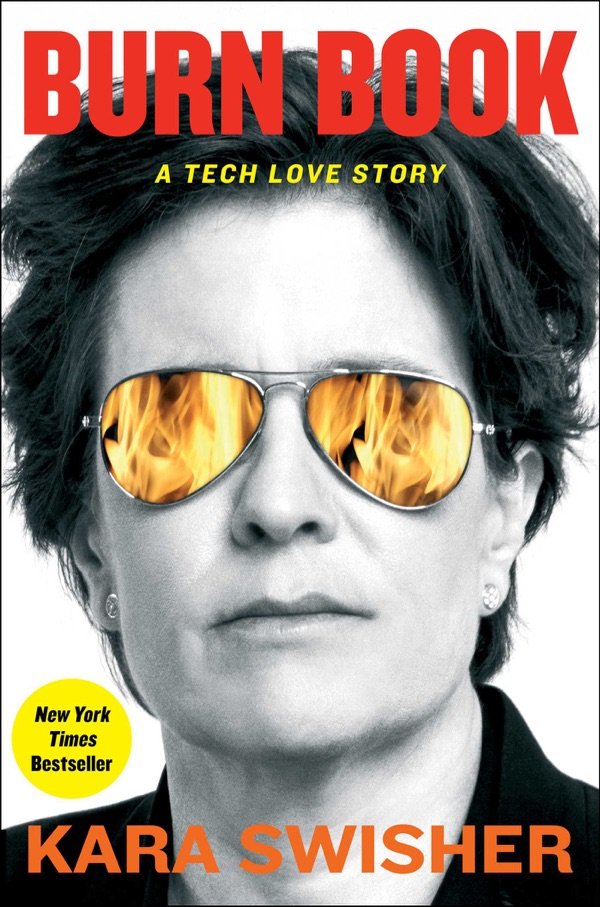
Burn Book: A Tech Love Story
von Kara Swisher
Too often, inventors are painted as heroic, with their faults glossed over in our accepted narrative. Most are damaged in a significant way, usually from early in their lives. Tech is littered with men whose parents—typically fathers—were either cruel or absent. By the time they grew to be adults, many were unhappy and often had some disgruntled tale of being misunderstood before they were proved triumphantly right. Most of all, the damaged ones shared one sad attribute: They all seemed achingly lonely. “Remembering that I’ll be dead soon is the most important tool I’ve ever encountered to help me make the big choices in life. Because almost everything—all external expectations, all pride, all fear of embarrassment or failure—these things just fall away in the face of death, leaving only what is truly important. Remembering that you are going to die is the best way I know to avoid the trap of thinking you have something to lose. You are already naked. There is no reason not to follow your heart.”
French philosopher Paul Virilio has a quote I think about a lot: “When you invent the ship, you also invent the shipwreck; when you invent the plane, you also invent the plane crash; and when you invent electricity, you invent electrocution…. Every technology carries its own negativity, which is invented at the same time as technical progress.”
But for tech to fulfill its promise, founders and executives who ran their creations needed to put more safety tools in place. They needed to anticipate consequences more. They needed to acknowledge that online rage might extend into the real world in increasingly scary ways.
While I have no particular secret, I approach every interview with these three goals: (1) to make it a conversation, (2) to not be afraid to ask the question everyone is thinking, and (3) to conduct each discussion as if I were never going to interview that person again.
No, Zuckerberg wasn’t an asshole. He was worse. He was one of the most carelessly dangerous men in the history of technology who didn’t even know it. Unfortunately, he wasn’t the worst of them.
Then and there, I decided that was the best way to go through life—not caring about the consequences of saying or doing what I believed was right.
"Too often, inventors are painted as heroic, with their faults glossed over in our accepted narrative. Most are damaged in a significant way, usually from early in their lives. Tech is littered with men whose parents—typically fathers—were either cruel or absent. By the time they grew to be adults, many were unhappy and often had some disgruntled tale of being misunderstood before they were proved triumphantly right. Most of all, the damaged ones shared one sad attribute: They all seemed achingly lonely."
"“Remembering that I’ll be dead soon is the most important tool I’ve ever encountered to help me make the big choices in life. Because almost everything—all external expectations, all pride, all fear of embarrassment or failure—these things just fall away in the face of death, leaving only what is truly important. Remembering that you are going to die is the best way I know to avoid the trap of thinking you have something to lose. You are already naked. There is no reason not to follow your heart.”"
"French philosopher Paul Virilio has a quote I think about a lot: “When you invent the ship, you also invent the shipwreck; when you invent the plane, you also invent the plane crash; and when you invent electricity, you invent electrocution…. Every technology carries its own negativity, which is invented at the same time as technical progress.”"
"But for tech to fulfill its promise, founders and executives who ran their creations needed to put more safety tools in place. They needed to anticipate consequences more. They needed to acknowledge that online rage might extend into the real world in increasingly scary ways."
"While I have no particular secret, I approach every interview with these three goals: (1) to make it a conversation, (2) to not be afraid to ask the question everyone is thinking, and (3) to conduct each discussion as if I were never going to interview that person again."
"No, Zuckerberg wasn’t an asshole. He was worse. He was one of the most carelessly dangerous men in the history of technology who didn’t even know it. Unfortunately, he wasn’t the worst of them."
"Then and there, I decided that was the best way to go through life—not caring about the consequences of saying or doing what I believed was right."
- →While I have no particular secret, I approach every interview with these three goals: (1) to make it a conversation, (2) to not be afraid to ask the question everyone is thinking, and (3) to conduct each discussion as if I were never going to interview that person again.
- →If you do not change direction, you may end up where you are heading.
Ähnliche Bücher gesucht?
Beschreibe deine Situation. Die Suche findet das passende Buch aus der gesamten Bibliothek.