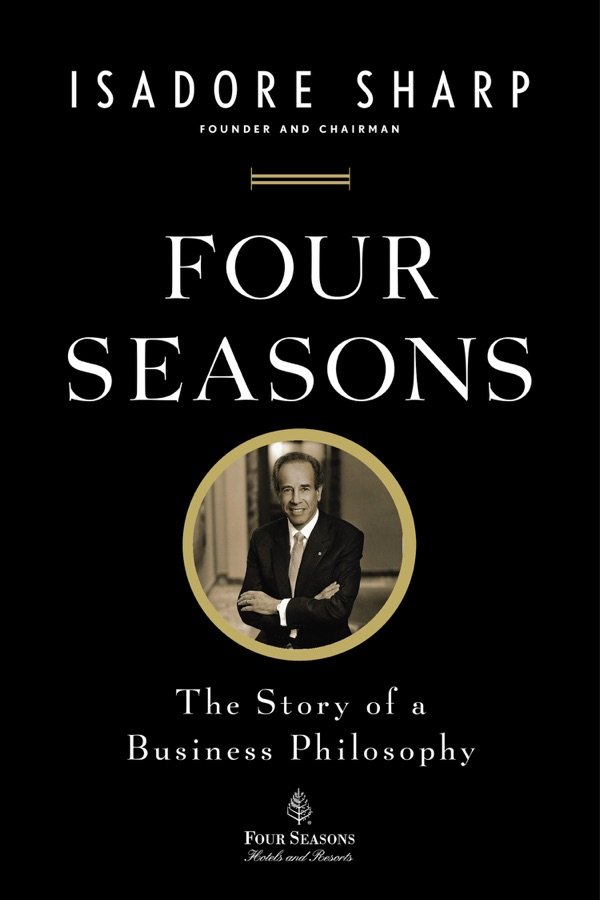
Four Seasons: The Story of a Business Philosophy
von Isadore Sharp
Next up is a review of the previous day’s mistakes in something we call the Glitch Report. Every department in the hotel is represented at the morning meeting, and each has a printout detailing what’s gone wrong and what steps may have already been taken to correct course. The Glitch Report ensures that every hotel department knows what happened and which guest it affected. That was a lesson painfully learned. One has to be accountable. We can’t make judgments and decisions in isolation; we always have to judge their effect on others. Although I could never undo that particular mistake, it taught me to make decisions and judgments with a little more thought.
Next up is a review of the previous day’s mistakes in something we call the Glitch Report. Every department in the hotel is represented at the morning meeting, and each has a printout detailing what’s gone wrong and what steps may have already been taken to correct course. The Glitch Report ensures that every hotel department knows what happened and which guest it affected.
That was a lesson painfully learned. One has to be accountable. We can’t make judgments and decisions in isolation; we always have to judge their effect on others. Although I could never undo that particular mistake, it taught me to make decisions and judgments with a little more thought.
We responded with a white paper called “The Power of Personal Service.” Service is hard to sound-bite, so initially we only wanted something to use internally, but then ultimately it was published by Cornell. It talked about what service is, why it matters, and why it’s so hard to do.
“Great companies first build a culture of discipline . and create a business model that fits squarely in the intersection of three circles: what they can be best in the world at, a deep understanding of their economic engine, and the core values they hold with deep passion.”
Looking back over the last forty years, I’ve identified the four key strategic decisions that formed the rock-solid foundation of Four Seasons. These are now known as the four pillars of our business model. They are quality, service, culture, and brand.
"Next up is a review of the previous day’s mistakes in something we call the Glitch Report. Every department in the hotel is represented at the morning meeting, and each has a printout detailing what’s gone wrong and what steps may have already been taken to correct course. The Glitch Report ensures that every hotel department knows what happened and which guest it affected."
"That was a lesson painfully learned. One has to be accountable. We can’t make judgments and decisions in isolation; we always have to judge their effect on others. Although I could never undo that particular mistake, it taught me to make decisions and judgments with a little more thought."
"We responded with a white paper called “The Power of Personal Service.” Service is hard to sound-bite, so initially we only wanted something to use internally, but then ultimately it was published by Cornell. It talked about what service is, why it matters, and why it’s so hard to do."
"“Great companies first build a culture of discipline . and create a business model that fits squarely in the intersection of three circles: what they can be best in the world at, a deep understanding of their economic engine, and the core values they hold with deep passion.”"
"Looking back over the last forty years, I’ve identified the four key strategic decisions that formed the rock-solid foundation of Four Seasons. These are now known as the four pillars of our business model. They are quality, service, culture, and brand."
"Well, they thought I was either wasting money or didn’t care about profit. And when I would tell them that profit was not a guide for a business decision but merely a confirmation of its result, I knew they were figuratively shaking their heads."
"Our research had told us that in Japan, especially in Tokyo, a hotel’s food and beverage sales accounted for up to 70 percent of revenue, while in North America it was about 30 percent."
- →That was a lesson painfully learned. One has to be accountable. We can’t make judgments and decisions in isolation; we always have to judge their effect on others. Although I could never undo that particular mistake, it taught me to make decisions and judgments with a little more thought.
- →We responded with a white paper called “The Power of Personal Service.” Service is hard to sound-bite, so initially we only wanted something to use internally, but then ultimately it was published by Cornell. It talked about what service is, why it matters, and why it’s so hard to do.
- →“Great companies first build a culture of discipline . and create a business model that fits squarely in the intersection of three circles: what they can be best in the world at, a deep understanding of their economic engine, and the core values they hold with deep passion.”
Ähnliche Bücher gesucht?
Beschreibe deine Situation. Die Suche findet das passende Buch aus der gesamten Bibliothek.