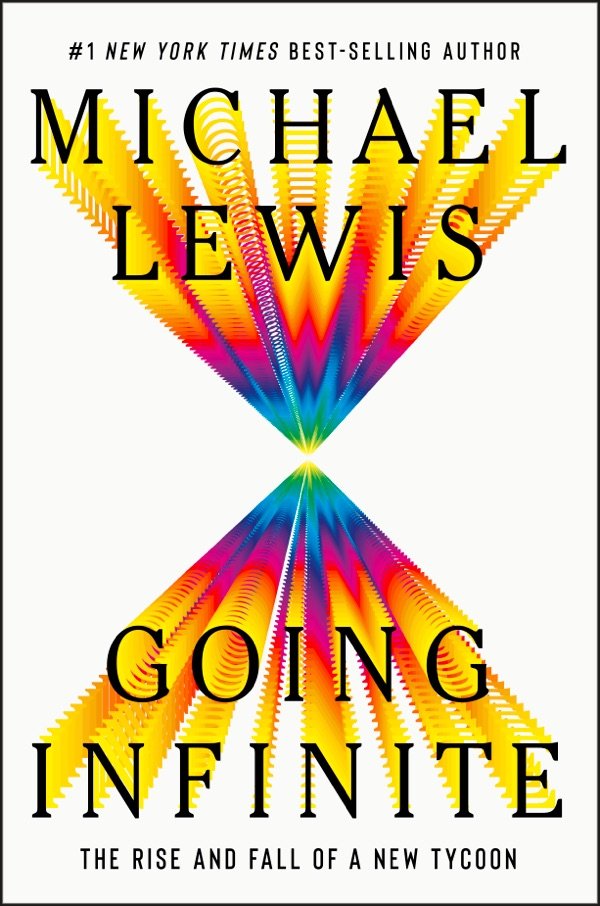
Going Infinite: The Rise and Fall of a New Tycoon
von Michael Lewis
In the end, between the summer of 2020 and the spring of 2021, in four rounds of fundraising, they sold roughly 6 percent of the company for $2.3 billion. Roughly one hundred fifty different venture capital firms invested. All of them caved to Sam’s refusal to give them a seat on the board (he had no board) or any other form of control over the business. When you had $22.5 billion, people really, really wanted to be your friend. They’d forgive you anything. Their desire freed you up from having to pay attention to them, which was good, because Sam had only so much attention to give.
In the end, between the summer of 2020 and the spring of 2021, in four rounds of fundraising, they sold roughly 6 percent of the company for $2.3 billion. Roughly one hundred fifty different venture capital firms invested. All of them caved to Sam’s refusal to give them a seat on the board (he had no board) or any other form of control over the business.
When you had $22.5 billion, people really, really wanted to be your friend. They’d forgive you anything. Their desire freed you up from having to pay attention to them, which was good, because Sam had only so much attention to give.
From the widespread belief in God, and Santa, Sam drew a conclusion: it was possible for almost everyone to be self-evidently wrong about something. “Mass delusions are a property of the world, as it turns out,” he said.
In traditional finance, founded on principles of trust, no one really had to trust anyone. In crypto finance, founded on a principle of mistrust, people trusted total strangers with vast sums of money.
The whole thing was odd: these people joined together by their fear of trust erected a parallel financial system that required more trust from its users than did the traditional financial system.
"In the end, between the summer of 2020 and the spring of 2021, in four rounds of fundraising, they sold roughly 6 percent of the company for $2.3 billion. Roughly one hundred fifty different venture capital firms invested. All of them caved to Sam’s refusal to give them a seat on the board (he had no board) or any other form of control over the business."
"When you had $22.5 billion, people really, really wanted to be your friend. They’d forgive you anything. Their desire freed you up from having to pay attention to them, which was good, because Sam had only so much attention to give."
"From the widespread belief in God, and Santa, Sam drew a conclusion: it was possible for almost everyone to be self-evidently wrong about something. “Mass delusions are a property of the world, as it turns out,” he said."
"In traditional finance, founded on principles of trust, no one really had to trust anyone. In crypto finance, founded on a principle of mistrust, people trusted total strangers with vast sums of money."
"The whole thing was odd: these people joined together by their fear of trust erected a parallel financial system that required more trust from its users than did the traditional financial system."
"What’s the difference between art and entertainment? “It’s a bullshit distinction dreamed up by academics trying to justify the existence of their jobs,” wrote Sam, and handed the exam back."
"People able to calculate the expected value of complicated financial gambles were the same people drawn to the belief that they could calculate the expected value of their entire lives."
- →When you had $22.5 billion, people really, really wanted to be your friend. They’d forgive you anything. Their desire freed you up from having to pay attention to them, which was good, because Sam had only so much attention to give.
Ähnliche Bücher gesucht?
Beschreibe deine Situation. Die Suche findet das passende Buch aus der gesamten Bibliothek.