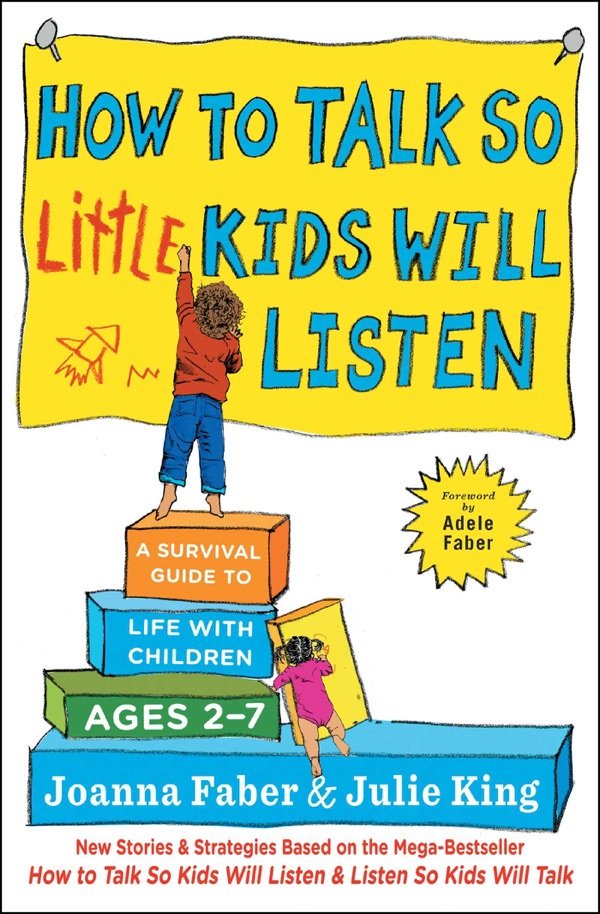
How to Talk So Little Kids Will Listen: A Survival Guide to Life with Children Ages 2-7
von Joanna Faber
You may have noticed that we don’t respond to a child’s distress by asking questions: Are you sad? Did that make you angry? Why are you crying? Even gentle questions can feel like an interrogation when a child is in distress. He may not know why he is upset. He may not be able to express it clearly in words. Children need us to validate their feelings so they can become grown-ups who know who they are and what they feel. We are also laying the groundwork for a person who can respect and not dismiss the needs and feelings of other people.
You may have noticed that we don’t respond to a child’s distress by asking questions: Are you sad? Did that make you angry? Why are you crying? Even gentle questions can feel like an interrogation when a child is in distress. He may not know why he is upset. He may not be able to express it clearly in words.
Children need us to validate their feelings so they can become grown-ups who know who they are and what they feel. We are also laying the groundwork for a person who can respect and not dismiss the needs and feelings of other people.
The gift we can give them is to not get in the way of their process by jumping in with our reactions: advice, questions, corrections. The important thing is to give them our full attention and trust them to work it out.
The next time your kid says something negative and inflammatory, follow these steps: 1. Grit your teeth and resist the urge to immediately contradict him! Think about the emotion he is feeling 3.
Writing down wishes is a different way to avoid a tantrum, without spoiling your child. Think of it as an opportunity to accept feelings while limiting actions.”
"You may have noticed that we don’t respond to a child’s distress by asking questions: Are you sad? Did that make you angry? Why are you crying? Even gentle questions can feel like an interrogation when a child is in distress. He may not know why he is upset. He may not be able to express it clearly in words."
"Children need us to validate their feelings so they can become grown-ups who know who they are and what they feel. We are also laying the groundwork for a person who can respect and not dismiss the needs and feelings of other people."
"The gift we can give them is to not get in the way of their process by jumping in with our reactions: advice, questions, corrections. The important thing is to give them our full attention and trust them to work it out."
"The next time your kid says something negative and inflammatory, follow these steps: 1. Grit your teeth and resist the urge to immediately contradict him! Think about the emotion he is feeling 3."
"Writing down wishes is a different way to avoid a tantrum, without spoiling your child. Think of it as an opportunity to accept feelings while limiting actions.”"
"Without having their own feelings acknowledged first, children will be deaf to our finest explanations and most passionate entreaties."
"Just accept the feeling. Often a simple acknowledgment of the feeling is enough to defuse a potential meltdown."
- →Just accept the feeling. Often a simple acknowledgment of the feeling is enough to defuse a potential meltdown.
- →When expressing anger or frustration, use the word I, avoid the word you.
Ähnliche Bücher gesucht?
Beschreibe deine Situation. Die Suche findet das passende Buch aus der gesamten Bibliothek.