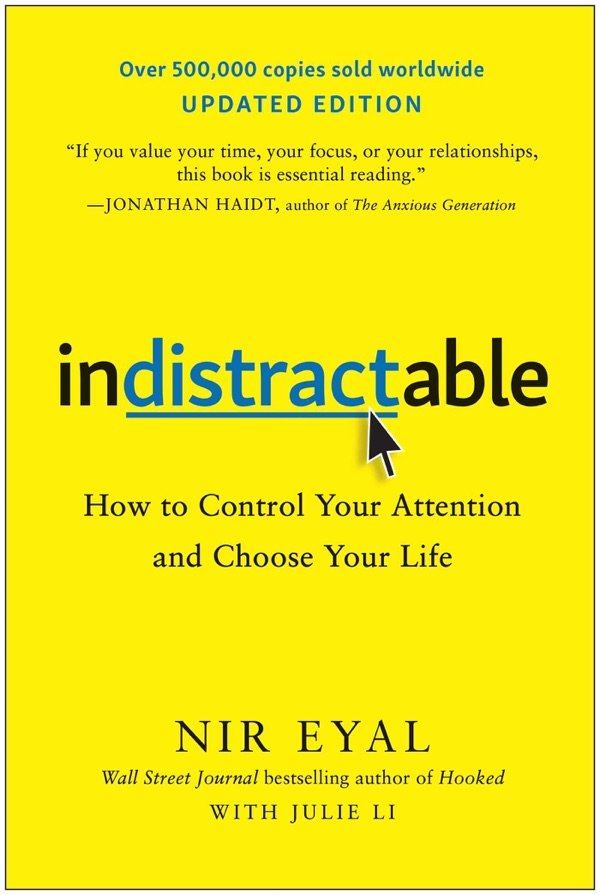
Indistractable: How to Control Your Attention and Choose Your Life
von Nir Eyal
If distraction costs us time, then time management is pain management. little we do to protect our time. A study by Promotional Products Association International found only a third of Americans keep a daily schedule, which means the vast majority wake up every morning with no formal plans. Our most precious asset—our time—is unguarded, just waiting to be stolen. If we don’t plan our days, someone else will.
If distraction costs us time, then time management is pain management.
little we do to protect our time. A study by Promotional Products Association International found only a third of Americans keep a daily schedule, which means the vast majority wake up every morning with no formal plans. Our most precious asset—our time—is unguarded, just waiting to be stolen. If we don’t plan our days, someone else will.
As is the case with all human behavior, distraction is just another way our brains attempt to deal with pain. If we accept this fact, it makes sense that the only way to handle distraction is by learning to handle discomfort.
The researchers found five key dynamics that set successful teams apart. The first four were dependability, structure and clarity, meaning of work, and impact of work. However, the fifth dynamic was without doubt the most important and actually underpinned the other four. It was something called psychological safety.
A technique I’ve found particularly helpful for dealing with this distraction trap is the “ten-minute rule.” If I find myself wanting to check my phone as a pacification device when I can’t think of anything better to do, I tell myself it’s fine to give in, but not right now. I have to wait just ten minutes.
"If distraction costs us time, then time management is pain management."
"little we do to protect our time. A study by Promotional Products Association International found only a third of Americans keep a daily schedule, which means the vast majority wake up every morning with no formal plans. Our most precious asset—our time—is unguarded, just waiting to be stolen. If we don’t plan our days, someone else will."
"As is the case with all human behavior, distraction is just another way our brains attempt to deal with pain. If we accept this fact, it makes sense that the only way to handle distraction is by learning to handle discomfort."
"Seeing the link between temperament and willpower through a different lens has profound implications on the way we focus our attention. For one, if mental energy is more like an emotion than fuel in a tank, it can be managed and utilized as such. A toddler might throw a temper tantrum when refused a toy but will, with age, gain self-control and learn to ride out bad feelings. Similarly, when we need to perform a difficult task, it’s more productive and healthful to believe a lack of motivation is temporary than it is to tell ourselves we’re spent and need a break (and maybe some ice cream)."
"Part two will look at the importance of making time for the things you really want to do. You’ll learn why you can’t call something a “distraction” unless you know what it is distracting you from. You’ll learn to plan your time with intention, even if you choose to spend it scrolling through celebrity headlines or reading a steamy romance novel. After all, the time you plan to waste is not wasted time."
"The researchers found five key dynamics that set successful teams apart. The first four were dependability, structure and clarity, meaning of work, and impact of work. However, the fifth dynamic was without doubt the most important and actually underpinned the other four. It was something called psychological safety."
"A technique I’ve found particularly helpful for dealing with this distraction trap is the “ten-minute rule.” If I find myself wanting to check my phone as a pacification device when I can’t think of anything better to do, I tell myself it’s fine to give in, but not right now. I have to wait just ten minutes."
- →little we do to protect our time. A study by Promotional Products Association International found only a third of Americans keep a daily schedule, which means the vast majority wake up every morning with no formal plans. Our most precious asset—our time—is unguarded, just waiting to be stolen. If we don’t plan our days, someone else will.
- →A technique I’ve found particularly helpful for dealing with this distraction trap is the “ten-minute rule.” If I find myself wanting to check my phone as a pacification device when I can’t think of anything better to do, I tell myself it’s fine to give in, but not right now. I have to wait just ten minutes.
- →By reimagining an uncomfortable internal trigger, we can disarm it. • Step 1. Look for the emotion preceding distraction. • Step 2. Write down the internal trigger. • Step 3. Explore the negative sensation with curiosity instead of contempt. • Step 4. Be extra cautious during liminal moments.
- →Unless we deal with the root causes of our distraction, we’ll continue to find ways to distract ourselves. Distraction, it turns out, isn’t about the distraction itself; rather, it’s about how we respond to it.
Ähnliche Bücher gesucht?
Beschreibe deine Situation. Die Suche findet das passende Buch aus der gesamten Bibliothek.