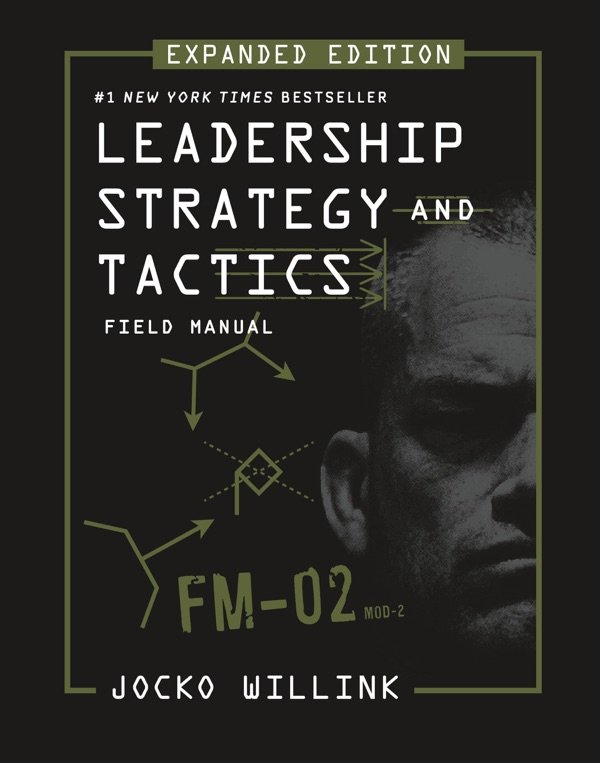
Leadership Strategy and Tactics: Field Manual
von Jocko Willink
Extreme Ownership is a mind-set of not making excuses and not blaming anyone or anything else when problems occur. Instead of casting blame or making excuses, good leaders and good teams take Extreme Ownership of the problems, find solutions, and implement those solutions. Failure to take ownership results in problems never being solved and teams never improving. When having a conversation with someone, I realized that if I detached, I could better read their emotions and their reactions. I also realized that if I was able to detach, I could better assess and manage my own emotions and reactions.
Extreme Ownership is a mind-set of not making excuses and not blaming anyone or anything else when problems occur. Instead of casting blame or making excuses, good leaders and good teams take Extreme Ownership of the problems, find solutions, and implement those solutions. Failure to take ownership results in problems never being solved and teams never improving.
When having a conversation with someone, I realized that if I detached, I could better read their emotions and their reactions. I also realized that if I was able to detach, I could better assess and manage my own emotions and reactions.
It is obvious that building a trustworthy relationship with your superiors is important. But how do you do that? One of the simplest ways is obvious, but it often gets overlooked—that is performance. Your boss expects you to complete certain tasks. So complete them. Do them on time, on budget, and with as little drama as possible.
I get things done and don’t constantly voice my objections, the boss actually listens. I always utilized this strategy with my senior leadership, and it worked well. I would simply make things happen as often as I could.
A leader also has to tell the truth when a mistake is made, which is inherent in taking Extreme Ownership of it. The owner must tell the truth about what happened, what went wrong, what mistakes they made, and how they are going to fix them.
"Extreme Ownership is a mind-set of not making excuses and not blaming anyone or anything else when problems occur. Instead of casting blame or making excuses, good leaders and good teams take Extreme Ownership of the problems, find solutions, and implement those solutions. Failure to take ownership results in problems never being solved and teams never improving."
"When having a conversation with someone, I realized that if I detached, I could better read their emotions and their reactions. I also realized that if I was able to detach, I could better assess and manage my own emotions and reactions."
"It is obvious that building a trustworthy relationship with your superiors is important. But how do you do that? One of the simplest ways is obvious, but it often gets overlooked—that is performance. Your boss expects you to complete certain tasks. So complete them. Do them on time, on budget, and with as little drama as possible."
"I get things done and don’t constantly voice my objections, the boss actually listens. I always utilized this strategy with my senior leadership, and it worked well. I would simply make things happen as often as I could."
"A leader also has to tell the truth when a mistake is made, which is inherent in taking Extreme Ownership of it. The owner must tell the truth about what happened, what went wrong, what mistakes they made, and how they are going to fix them."
"Why not just order them to implement the new method? Why not just force discipline upon them? If you know you are right, why not? Unfortunately, that is the least effective way to implement change. When you give that direct order and impose your will on the team, you are removing your subordinates’ input from the equation. They are simply doing what you told them to do with zero control or contribution."
"To build pride within a team, you have to put the members in situations that require unity, strength, and perseverance to get through. You have to push them in training to the point where they are truly tested, and in that they will develop pride in what they have accomplished."
- →It is obvious that building a trustworthy relationship with your superiors is important. But how do you do that? One of the simplest ways is obvious, but it often gets overlooked—that is performance. Your boss expects you to complete certain tasks. So complete them. Do them on time, on budget, and with as little drama as possible.
- →I get things done and don’t constantly voice my objections, the boss actually listens. I always utilized this strategy with my senior leadership, and it worked well. I would simply make things happen as often as I could.
- →To build pride within a team, you have to put the members in situations that require unity, strength, and perseverance to get through. You have to push them in training to the point where they are truly tested, and in that they will develop pride in what they have accomplished.
- →No matter what goes wrong, there is always some good to find in the setback. A negative attitude will spread throughout the team, as will a positive one, so it is important for a leader to maintain a positive attitude.
Ähnliche Bücher gesucht?
Beschreibe deine Situation. Die Suche findet das passende Buch aus der gesamten Bibliothek.