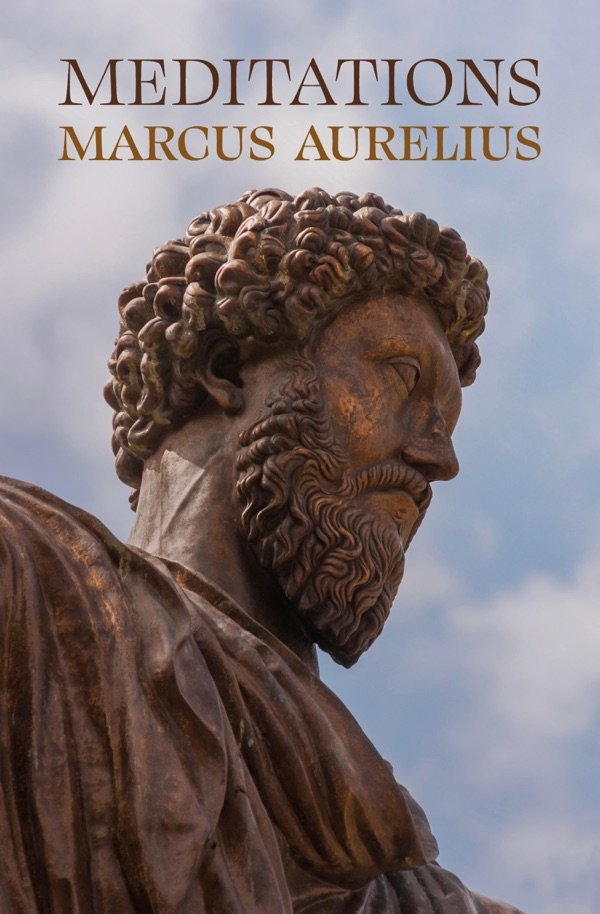
Meditations
von Marcus Aurelius
Your three components: body, breath, mind. Two are yours in trust; to the third alone you have clear title. If you can cut yourself—your mind—free of what other people do and say, of what you’ve said or done, of the things that you’re afraid will happen, the impositions of the body that contains you and the breath within, and what the whirling chaos sweeps in from outside, so that the mind is freed from fate, brought to clarity, and lives life on its own recognizance—doing what’s right, accepting what happens, and speaking the truth— Four habits of thought to watch for, and erase from your mind when you catch them. Tell yourself: This thought is unnecessary. This one is destructive to the people around you. This wouldn’t be what you really think (to say what you don’t think—the definition of absurdity). And the fourth reason for self-reproach: that the more divine part of you has been beaten and subdued by the degraded mortal part—the body and its stupid self-indulgence.
Don’t waste the rest of your time here worrying about other people—unless it affects the common good. It will keep you from doing anything useful. You’ll be too preoccupied with what so-and-so is doing, and why, and what they’re saying, and what they’re thinking, and what they’re up to, and all the other things that throw you off and keep you from focusing on your own mind.
Don’t look down on death, but welcome it. It too is one of the things required by nature. Like youth and old age. Like growth and maturity. Like a new set of teeth, a beard, the first gray hair. Like sex and pregnancy and childbirth. Like all the other physical changes at each stage of life, our dissolution is no different.
Frightened of change? But what can exist without it? What’s closer to nature’s heart? Can you take a hot bath and leave the firewood as it was? Eat food without transforming it? Can any vital process take place without something being changed? Can’t you see? It’s just the same with you—and just as vital to nature.
When you have trouble getting out of bed in the morning, remember that your defining characteristic—what defines a human being—is to work with others. Even animals know how to sleep. And it’s the characteristic activity that’s the more natural one—more innate and more satisfying.
Some people, when they do someone a favor, are always looking for a chance to call it in. And some aren’t, but they’re still aware of it—still regard it as a debt. But others don’t even do that. They’re like a vine that produces grapes without looking for anything in return.
"Your three components: body, breath, mind. Two are yours in trust; to the third alone you have clear title. If you can cut yourself—your mind—free of what other people do and say, of what you’ve said or done, of the things that you’re afraid will happen, the impositions of the body that contains you and the breath within, and what the whirling chaos sweeps in from outside, so that the mind is freed from fate, brought to clarity, and lives life on its own recognizance—doing what’s right, accepting what happens, and speaking the truth—"
"Four habits of thought to watch for, and erase from your mind when you catch them. Tell yourself: This thought is unnecessary. This one is destructive to the people around you. This wouldn’t be what you really think (to say what you don’t think—the definition of absurdity). And the fourth reason for self-reproach: that the more divine part of you has been beaten and subdued by the degraded mortal part—the body and its stupid self-indulgence."
"41. You take things you don’t control and define them as “good” or “bad.” And so of course when the “bad” things happen, or the “good” ones don’t, you blame the gods and feel hatred for the people responsible—or those you decide to make responsible. Much of our bad behavior stems from trying to apply those criteria. If we limited “good” and “bad” to our own actions, we’d have no call to challenge God, or to treat other people as enemies."
"Concentrate every minute like a Roman—like a man—on doing what’s in front of you with precise and genuine seriousness, tenderly, willingly, with justice. And on freeing yourself from all other distractions. Yes, you can—if you do everything as if it were the last thing you were doing in your life, and stop being aimless, stop letting your emotions override what your mind tells you, stop being hypocritical, self-centered, irritable."
"Don’t waste the rest of your time here worrying about other people—unless it affects the common good. It will keep you from doing anything useful. You’ll be too preoccupied with what so-and-so is doing, and why, and what they’re saying, and what they’re thinking, and what they’re up to, and all the other things that throw you off and keep you from focusing on your own mind."
"Don’t look down on death, but welcome it. It too is one of the things required by nature. Like youth and old age. Like growth and maturity. Like a new set of teeth, a beard, the first gray hair. Like sex and pregnancy and childbirth. Like all the other physical changes at each stage of life, our dissolution is no different."
"Frightened of change? But what can exist without it? What’s closer to nature’s heart? Can you take a hot bath and leave the firewood as it was? Eat food without transforming it? Can any vital process take place without something being changed? Can’t you see? It’s just the same with you—and just as vital to nature."
- →Some people, when they do someone a favor, are always looking for a chance to call it in. And some aren’t, but they’re still aware of it—still regard it as a debt. But others don’t even do that. They’re like a vine that produces grapes without looking for anything in return.
- →People find pleasure in different ways. I find it in keeping my mind clear. In not turning away from people or the things that happen to them. In accepting and welcoming everything I see. In treating each thing as it deserves.
- →Think of it this way: You are an old man. Stop allowing your mind to be a slave, to be jerked about by selfish impulses, to kick against fate and the present, and to mistrust the future.
- →Take the shortest route, the one that nature planned—to speak and act in the healthiest way. Do that, and be free of pain and stress, free of all calculation and pretension.
Ähnliche Bücher gesucht?
Beschreibe deine Situation. Die Suche findet das passende Buch aus der gesamten Bibliothek.