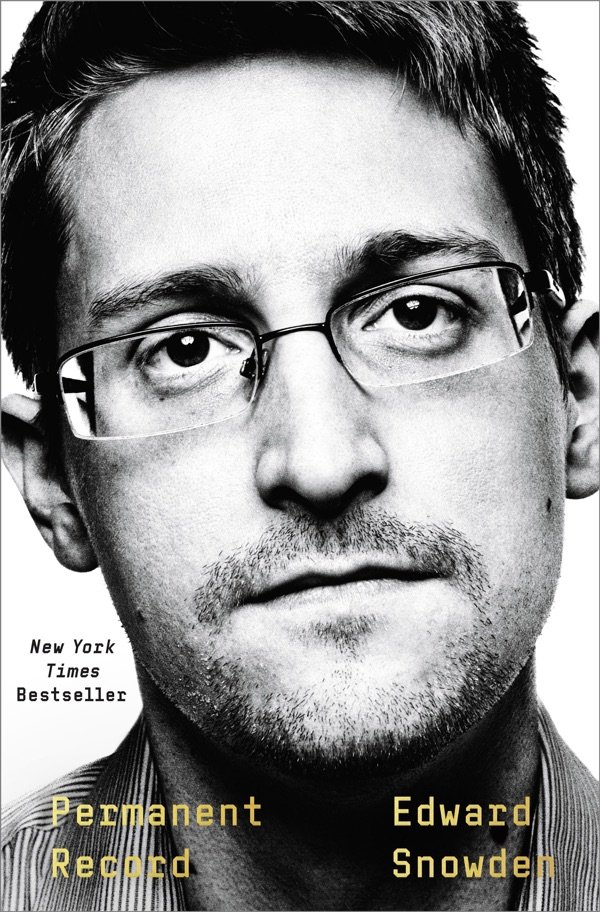
Permanent Record
von Edward Snowden
Deep in a tunnel under a pineapple field—a subterranean Pearl Harbor–era former airplane factory—I sat at a terminal from which I had practically unlimited access to the communications of nearly every man, woman, and child on earth who’d ever dialed a phone or touched a computer. Among those people were about 320 million of my fellow American citizens, who in the regular conduct of their everyday lives were being surveilled in gross contravention of not just the Constitution of the United States, but the basic values of any free society. This fact alone virtually guaranteed technological tyranny, which was perpetuated not by the technology itself but by the ignorance of everyone who used it daily and yet failed to understand it. To refuse to inform yourself about the basic operation and maintenance of the equipment you depended on was to passively accept that tyranny and agree to its terms: when your equipment works, you’ll work, but when your equipment breaks down you’ll break down, too. Your possessions would possess you.
The 2008 crisis, which laid so much of the foundation for the crises of populism that a decade later would sweep across Europe and America, helped me realize that something that is devastating for the public can be, and often is, beneficial to the elites. This was a lesson that the US government would confirm for me in other contexts, time and again, in the years ahead.
To hack a system requires getting to know its rules better than the people who created it or are running it, and exploiting all the vulnerable distance between how those people had intended the system to work and how it actually works, or could be made to work. In capitalizing on these unintentional uses, hackers aren’t breaking the rules as much as debunking them.
My generation was the last in American and perhaps even in world history for which this is true—the last undigitized generation, whose childhoods aren’t up on the cloud but are mostly trapped in analog formats like handwritten diaries and Polaroids and VHS cassettes, tangible and imperfect artifacts that degrade with age and can be lost irretrievably.
To grow up is to realize the extent to which your existence has been governed by systems of rules, vague guidelines, and increasingly unsupportable norms that have been imposed on you without your consent and are subject to change at a moment’s notice. There were even some rules that you’d only find out about after you’d violated them.
You should always let people underestimate you. Because when people misappraise your intelligence and abilities, they’re merely pointing out their own vulnerabilities—the gaping holes in their judgment that need to stay open if you want to cartwheel through later on a flaming horse, correcting the record with your sword of justice.
"Deep in a tunnel under a pineapple field—a subterranean Pearl Harbor–era former airplane factory—I sat at a terminal from which I had practically unlimited access to the communications of nearly every man, woman, and child on earth who’d ever dialed a phone or touched a computer. Among those people were about 320 million of my fellow American citizens, who in the regular conduct of their everyday lives were being surveilled in gross contravention of not just the Constitution of the United States, but the basic values of any free society."
"This fact alone virtually guaranteed technological tyranny, which was perpetuated not by the technology itself but by the ignorance of everyone who used it daily and yet failed to understand it. To refuse to inform yourself about the basic operation and maintenance of the equipment you depended on was to passively accept that tyranny and agree to its terms: when your equipment works, you’ll work, but when your equipment breaks down you’ll break down, too. Your possessions would possess you."
"STELLARWIND was the classified report’s deepest secret. It was, in fact, the NSA’s deepest secret, and the one that the report’s sensitive status had been designed to protect. The program’s very existence was an indication that the agency’s mission had been transformed, from using technology to defend America to using technology to control it by redefining citizens’ private Internet communications as potential signals intelligence."
"The freedom of a country can only be measured by its respect for the rights of its citizens, and it’s my conviction that these rights are in fact limitations of state power that define exactly where and when a government may not infringe into that domain of personal or individual freedoms that during the American Revolution was called “liberty” and during the Internet Revolution is called “privacy.”"
"The 2008 crisis, which laid so much of the foundation for the crises of populism that a decade later would sweep across Europe and America, helped me realize that something that is devastating for the public can be, and often is, beneficial to the elites. This was a lesson that the US government would confirm for me in other contexts, time and again, in the years ahead."
"To hack a system requires getting to know its rules better than the people who created it or are running it, and exploiting all the vulnerable distance between how those people had intended the system to work and how it actually works, or could be made to work. In capitalizing on these unintentional uses, hackers aren’t breaking the rules as much as debunking them."
"My generation was the last in American and perhaps even in world history for which this is true—the last undigitized generation, whose childhoods aren’t up on the cloud but are mostly trapped in analog formats like handwritten diaries and Polaroids and VHS cassettes, tangible and imperfect artifacts that degrade with age and can be lost irretrievably."
- →To grow up is to realize the extent to which your existence has been governed by systems of rules, vague guidelines, and increasingly unsupportable norms that have been imposed on you without your consent and are subject to change at a moment’s notice. There were even some rules that you’d only find out about after you’d violated them.
- →You should always let people underestimate you. Because when people misappraise your intelligence and abilities, they’re merely pointing out their own vulnerabilities—the gaping holes in their judgment that need to stay open if you want to cartwheel through later on a flaming horse, correcting the record with your sword of justice.
- →The most important decisions in life are never made that way. They’re made subconsciously and only express themselves consciously once fully formed—once you’re finally strong enough to admit to yourself that this is what your conscience has already chosen for you, this is the course that your beliefs have decreed.
- →There is no turning back, only going forward—for Mario and Luigi, for me, and for you. Life only scrolls in one direction, which is the direction of time, and no matter how far we might manage to go, that invisible wall will always be just behind us, cutting us off from the past, compelling us on into the unknown.
Ähnliche Bücher gesucht?
Beschreibe deine Situation. Die Suche findet das passende Buch aus der gesamten Bibliothek.