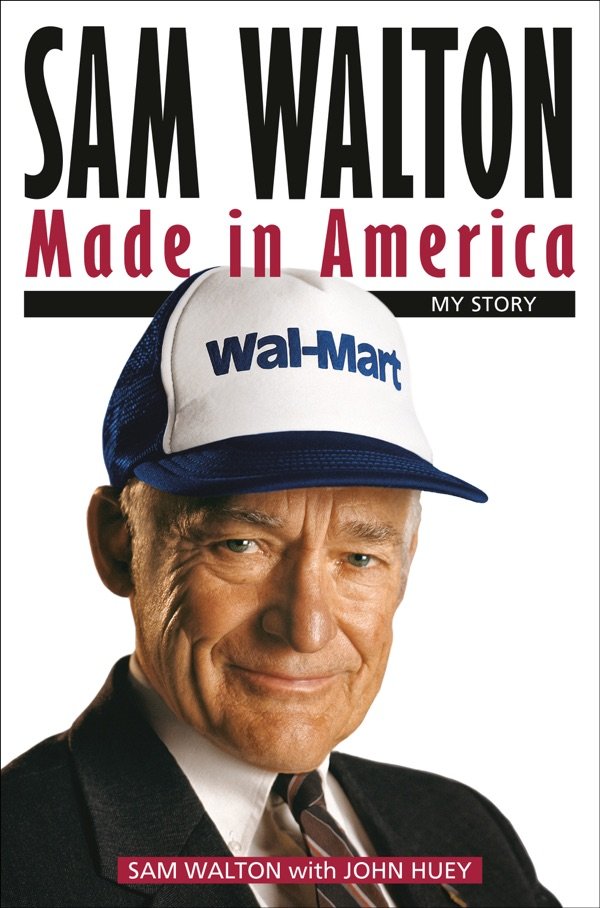
Sam Walton, Made in America: My Story
von Sam Walton
That helped me get access to a lot of information about how they were doing things. I probably visited more headquarters offices of more discounters than anybody else—ever. I would just show up and say, “Hi, I’m Sam Walton from Bentonville, Arkansas. We’ve got a few stores out there, and I’d like to visit with Mr. So-and-So”—whoever the head of the company was—“about his business.” And as often as not, they’d let me in, maybe out of curiosity, and I’d ask lots of questions about pricing and distribution, whatever. I learned a lot that way. In retail, you are either operations driven—where your main thrust is toward reducing expenses and improving efficiency—or you are merchandise driven. The ones that are truly merchandise driven can always work on improving operations. But the ones that are operations driven tend to level off and begin to deteriorate. So Sam’s item promotion mania is a great game and we all have a lot of fun with it, but it is also at the heart of what creates our extraordinary high sales per square foot, which enable us to dominate our competition.”
If I had to single out one element in my life that has made a difference for me, it would be a passion to compete.
If you take someone who lacks the experience and the know-how but has the real desire and the willingness to work his tail off to get the job done, he’ll make up for what he lacks.
It was a real blessing for me to be so green and ignorant, because it was from that experience that I learned a lesson which has stuck with me all through the years: you can learn from everybody. I didn’t just learn from reading every retail publication I could get my hands on, I probably learned the most from studying what John Dunham was doing across the street.
“Two things about Sam Walton distinguish him from almost everyone else I know. First, he gets up every day bound and determined to improve something. Second, he is less afraid of being wrong than anyone I’ve ever known. And once he sees he’s wrong, he just shakes it off and heads in another direction.”
Another way we tried hard to make up for our lack of experience and sophistication was to spend as much time as we could checking out the competition. It’s something I did from the beginning, and it’s something I insisted all our managers do.
"That helped me get access to a lot of information about how they were doing things. I probably visited more headquarters offices of more discounters than anybody else—ever. I would just show up and say, “Hi, I’m Sam Walton from Bentonville, Arkansas. We’ve got a few stores out there, and I’d like to visit with Mr. So-and-So”—whoever the head of the company was—“about his business.” And as often as not, they’d let me in, maybe out of curiosity, and I’d ask lots of questions about pricing and distribution, whatever. I learned a lot that way."
"In retail, you are either operations driven—where your main thrust is toward reducing expenses and improving efficiency—or you are merchandise driven. The ones that are truly merchandise driven can always work on improving operations. But the ones that are operations driven tend to level off and begin to deteriorate. So Sam’s item promotion mania is a great game and we all have a lot of fun with it, but it is also at the heart of what creates our extraordinary high sales per square foot, which enable us to dominate our competition.”"
"If I had to single out one element in my life that has made a difference for me, it would be a passion to compete."
"If you take someone who lacks the experience and the know-how but has the real desire and the willingness to work his tail off to get the job done, he’ll make up for what he lacks."
"It was a real blessing for me to be so green and ignorant, because it was from that experience that I learned a lesson which has stuck with me all through the years: you can learn from everybody. I didn’t just learn from reading every retail publication I could get my hands on, I probably learned the most from studying what John Dunham was doing across the street."
"“Two things about Sam Walton distinguish him from almost everyone else I know. First, he gets up every day bound and determined to improve something. Second, he is less afraid of being wrong than anyone I’ve ever known. And once he sees he’s wrong, he just shakes it off and heads in another direction.”"
"Another way we tried hard to make up for our lack of experience and sophistication was to spend as much time as we could checking out the competition. It’s something I did from the beginning, and it’s something I insisted all our managers do."
- →If I were a stockholder of Wal-Mart, or considering becoming one, I’d go into ten Wal-Mart stores and ask the folks working there, “How do you feel? How’s the company treating you?” Their answers would tell me much of what I need to know.
- →Every time Wal-Mart spends one dollar foolishly, it comes right out of our customers’ pockets. Every time we save them a dollar, that puts us one more step ahead of the competition—which is where we always plan to be.
- →If you want the people in the stores to take care of the customers, you have to make sure you’re taking care of the people in the stores. That’s the most important single ingredient of Wal-Mart’s success.
- →It never occurred to me that I might lose; to me, it was almost as if I had a right to win. Thinking like that often seems to turn into sort of a self-fulfilling prophecy.
Ähnliche Bücher gesucht?
Beschreibe deine Situation. Die Suche findet das passende Buch aus der gesamten Bibliothek.