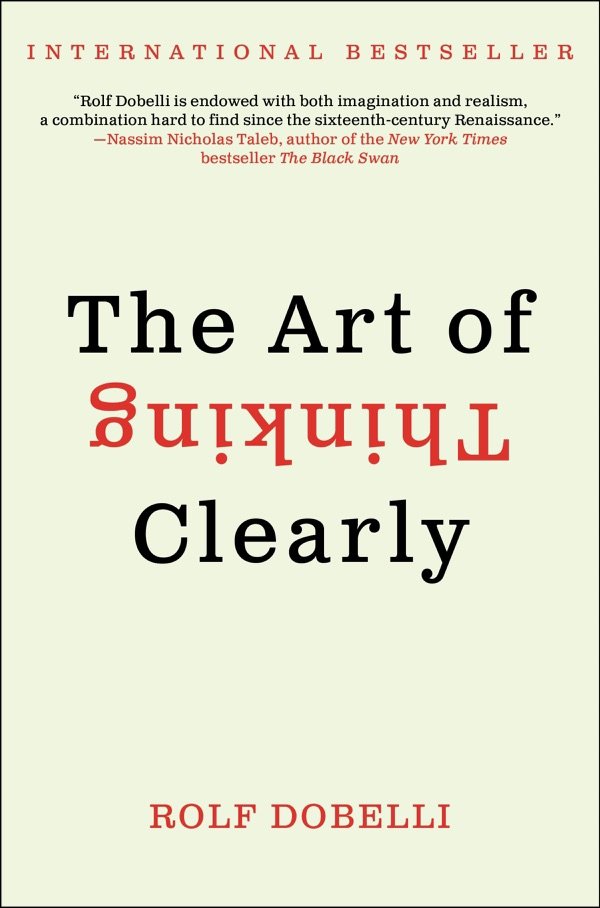
The Art of Thinking Clearly
von Rolf Dobelli
Base-Rate Neglect Mark is a thin man from Germany with glasses who likes to listen to Mozart. Which is more likely? That Mark is A) a truck driver or B) a professor of literature in Frankfurt. Most will bet on B, which is wrong. Germany has 10,000 times more truck drivers than Frankfurt has literature professors. Therefore, it is more likely that Mark is a truck driver. So what just happened? The detailed description enticed us to overlook the statistical reality. Scientists call this fallacy base-rate neglect: a disregard of fundamental distribution levels. Whenever we confuse selection factors with results, we fall prey to what Taleb calls the swimmer’s body illusion. Without this illusion, half of advertising campaigns would not work. But this bias has to do with more than just the pursuit of chiselled cheekbones and chests. For example, Harvard has the reputation of being a top university. Many highly successful people have studied there. Does this mean that Harvard is a good school? We don’t know. Perhaps the school is terrible, and it simply recruits the brightest students around.
If you ever find yourself in a tight, unanimous group, you must speak your mind, even if your team does not like it. Question tacit assumptions, even if you risk expulsion from the warm nest. And, if you lead a group, appoint someone as devil’s advocate. She will not be the most popular member of the team, but she might be the most important.
So, how can we dodge the self-serving bias? Do you have friends who tell you the truth – no holds barred? If so, consider yourself lucky. If not, do you have at least one enemy? Invite him or her over for coffee and ask for an honest opinion about your strengths and weaknesses. You will be forever grateful you did.
A mere smokescreen, the It’ll-Get-Worse-Before-It-Gets-Better Fallacy is a variant of the so-called confirmation bias. If the problem continues to worsen, the prediction is confirmed. If the situation improves unexpectedly, the customer is happy and the expert can attribute it to his prowess. Either way he wins.
The starting price should play no role. The other day an investor told me: ‘The share is a great value because it’s 50 per cent below the peak price.’ I shook my head. A share price is never ‘low’ or ‘high’. It is what it is, and the only thing that matters is whether it goes up or down from that point.
The sunk cost fallacy is most dangerous when we have invested a lot of time, money, energy or love in something. This investment becomes a reason to carry on, even if we are dealing with a lost cause. The more we invest, the greater the sunk costs are, and the greater the urge to continue becomes.
"Base-Rate Neglect Mark is a thin man from Germany with glasses who likes to listen to Mozart. Which is more likely? That Mark is A) a truck driver or B) a professor of literature in Frankfurt. Most will bet on B, which is wrong. Germany has 10,000 times more truck drivers than Frankfurt has literature professors. Therefore, it is more likely that Mark is a truck driver. So what just happened? The detailed description enticed us to overlook the statistical reality. Scientists call this fallacy base-rate neglect: a disregard of fundamental distribution levels."
"Whenever we confuse selection factors with results, we fall prey to what Taleb calls the swimmer’s body illusion. Without this illusion, half of advertising campaigns would not work. But this bias has to do with more than just the pursuit of chiselled cheekbones and chests. For example, Harvard has the reputation of being a top university. Many highly successful people have studied there. Does this mean that Harvard is a good school? We don’t know. Perhaps the school is terrible, and it simply recruits the brightest students around."
"If you ever find yourself in a tight, unanimous group, you must speak your mind, even if your team does not like it. Question tacit assumptions, even if you risk expulsion from the warm nest. And, if you lead a group, appoint someone as devil’s advocate. She will not be the most popular member of the team, but she might be the most important."
"So, how can we dodge the self-serving bias? Do you have friends who tell you the truth – no holds barred? If so, consider yourself lucky. If not, do you have at least one enemy? Invite him or her over for coffee and ask for an honest opinion about your strengths and weaknesses. You will be forever grateful you did."
"A mere smokescreen, the It’ll-Get-Worse-Before-It-Gets-Better Fallacy is a variant of the so-called confirmation bias. If the problem continues to worsen, the prediction is confirmed. If the situation improves unexpectedly, the customer is happy and the expert can attribute it to his prowess. Either way he wins."
"The starting price should play no role. The other day an investor told me: ‘The share is a great value because it’s 50 per cent below the peak price.’ I shook my head. A share price is never ‘low’ or ‘high’. It is what it is, and the only thing that matters is whether it goes up or down from that point."
"The sunk cost fallacy is most dangerous when we have invested a lot of time, money, energy or love in something. This investment becomes a reason to carry on, even if we are dealing with a lost cause. The more we invest, the greater the sunk costs are, and the greater the urge to continue becomes."
- →If you ever find yourself in a tight, unanimous group, you must speak your mind, even if your team does not like it. Question tacit assumptions, even if you risk expulsion from the warm nest. And, if you lead a group, appoint someone as devil’s advocate. She will not be the most popular member of the team, but she might be the most important.
- →So, how can we dodge the self-serving bias? Do you have friends who tell you the truth – no holds barred? If so, consider yourself lucky. If not, do you have at least one enemy? Invite him or her over for coffee and ask for an honest opinion about your strengths and weaknesses. You will be forever grateful you did.
- →The starting price should play no role. The other day an investor told me: ‘The share is a great value because it’s 50 per cent below the peak price.’ I shook my head. A share price is never ‘low’ or ‘high’. It is what it is, and the only thing that matters is whether it goes up or down from that point.
- →In conclusion: accept this piece of wisdom about auctions from Warren Buffett: ‘Don’t go.’ If you happen to work in an industry where they are inevitable, set a maximum price and deduct 20% from this to offset the winner’s curse. Write this number on a piece of paper and don’t go a cent over it.
Ähnliche Bücher gesucht?
Beschreibe deine Situation. Die Suche findet das passende Buch aus der gesamten Bibliothek.