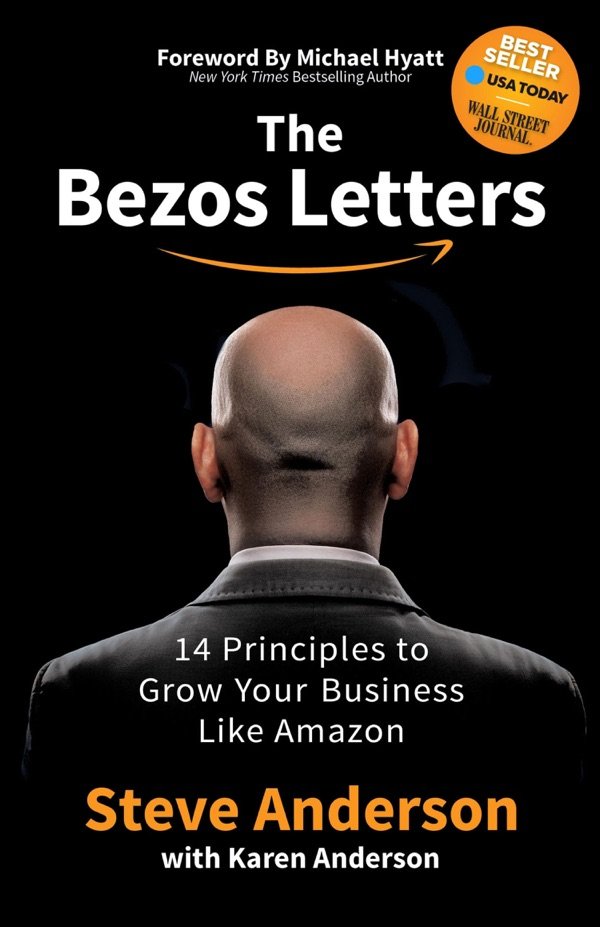
The Bezos Letters: 14 Principles to Grow Your Business Like Amazon
von Steve Anderson
Kurt Huffman said: “People are afraid of the consequences of failure. People are afraid of being fired, ridiculed, hurt, black-listed, demoted, etc. People may still not like failure. I don’t ‘like’ failure. But when I know the consequences of my failure are seen as learning opportunities rather than a pink slip, it facilitates rather than stifles innovation.” “Occasionally have multibillion-dollar failures” is hard for even me to grasp. But, again, that’s why Bezos is the master of risk.
Kurt Huffman said: “People are afraid of the consequences of failure. People are afraid of being fired, ridiculed, hurt, black-listed, demoted, etc. People may still not like failure. I don’t ‘like’ failure. But when I know the consequences of my failure are seen as learning opportunities rather than a pink slip, it facilitates rather than stifles innovation.”
“Occasionally have multibillion-dollar failures” is hard for even me to grasp. But, again, that’s why Bezos is the master of risk.
“You can be competitor focused, you can be product focused, you can be technology focused, you can be business model focused, and there are more. But in my view, obsessive customer focus is by far the most protective of Day 1 vitality.” —Bezos (2016 Letter)
Have you ever been frustrated by a company representative who couldn’t help you with an issue because of “company policy,” “procedures don’t allow for that,” or they were “only following orders”? If so, you have experienced an employee not resisting proxies. At Amazon, “company policy” or any other proxy is no excuse for doing the wrong thing for the customer.
Simply put, leadership principles focus on people, and growth principles focus on the business as a whole. Of course, there is overlap–but leadership principles apply to the way people work, and growth principles apply to the way the business or organization works. That’s why the list of Growth Principles end with Day 1 instead of starting there. To grow your business, you will come full circle.
"Kurt Huffman said: “People are afraid of the consequences of failure. People are afraid of being fired, ridiculed, hurt, black-listed, demoted, etc. People may still not like failure. I don’t ‘like’ failure. But when I know the consequences of my failure are seen as learning opportunities rather than a pink slip, it facilitates rather than stifles innovation.”"
"“Occasionally have multibillion-dollar failures” is hard for even me to grasp. But, again, that’s why Bezos is the master of risk."
"“You can be competitor focused, you can be product focused, you can be technology focused, you can be business model focused, and there are more. But in my view, obsessive customer focus is by far the most protective of Day 1 vitality.” —Bezos (2016 Letter)"
"Have you ever been frustrated by a company representative who couldn’t help you with an issue because of “company policy,” “procedures don’t allow for that,” or they were “only following orders”? If so, you have experienced an employee not resisting proxies. At Amazon, “company policy” or any other proxy is no excuse for doing the wrong thing for the customer."
"Steps to Create a Six-Page Narrative 1.Write the Press Release (This is the press release you would release in the future when the project is launched that tells the world about the project and why it’s important.) 2.Write the FAQs (Answer the common questions people will ask, in advance.) 3.Define the User Interaction (Explain how it works.) 4.Write the Manual (Give instructions on how it works.) 5.Answer these Questions: •Who is the customer? •What is the customer problem or opportunity? •What is the most important (singular) customer benefit? (Choose only one benefit, but make sure it’s the most significant one.) •How do you know what the customer needs? (Support the origin of the project.) •What does the customer experience look like? (Anticipate how the customer will react and respond.)"
"Amazon is also at the forefront of continuing education for its team, implementing a program called Career Choice, where it prepays 95 percent of tuition for employees to take courses for in-demand fields, such as airplane mechanic or nursing, regardless of whether the skills are relevant to a career at Amazon. For some, Amazon will be their long-term career of choice. For others, Amazon recognizes it might be a stepping-stone on the way to a job somewhere else and they might need new skills to get that job. Amazon is more than willing to help them attain those skills, even if another company will benefit from Amazon’s investment in education."
"“We’ve reduced AWS prices 27 times since launching 7 years ago, added enterprise service support enhancements, and created innovative tools to help customers be more efficient. AWS Trusted Advisor monitors customer configurations, compares them to known best practices, and then notifies customers where opportunities exist to improve performance, enhance security, or save money. Yes, we are actively telling customers they’re paying us more than they need to. In the last 90 days, customers have saved millions of dollars through Trusted Advisor, and the service is only getting started."
- →“You can be competitor focused, you can be product focused, you can be technology focused, you can be business model focused, and there are more. But in my view, obsessive customer focus is by far the most protective of Day 1 vitality.” —Bezos (2016 Letter)
- →“As organizations get larger, there seems to be a tendency to use the heavy-weight Type 1 decision-making process on most decisions, including many Type 2 decisions. The end result of this is slowness, unthoughtful risk aversion, failure to experiment sufficiently, and consequently diminished invention.” —Bezos (2015 Letter)
- →“Wandering in business is not efficient … but it’s also not random. It’s guided—by hunch, gut, intuition, curiosity, and powered by a deep conviction that the prize for customers is big enough that it’s worth being a little messy and tangential to find our way there.”—Bezos (2018 Letter)
- →Emphasizing customer obsession allows Amazon employees to become solution-focused rather than problem-focused. Bezos wants to always be ahead of the game… he wants to “solve problems before they happen,” meaning he doesn’t want screw-ups to happen in the first place.
Ähnliche Bücher gesucht?
Beschreibe deine Situation. Die Suche findet das passende Buch aus der gesamten Bibliothek.