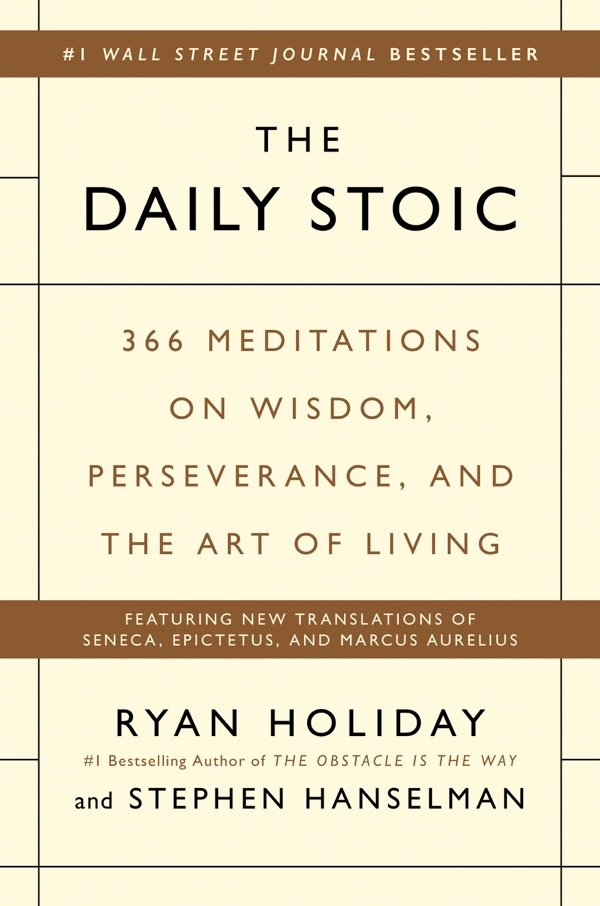
The Daily Stoic: 366 Meditations on Wisdom, Perseverance, and the Art of Living
von Ryan Holiday
The philosophy asserts that virtue (meaning, chiefly, the four cardinal virtues of self-control, courage, justice, and wisdom) is happiness, and it is our perceptions of things—rather than the things themselves—that cause most of our trouble. Stoicism teaches that we can’t control or rely on anything outside what Epictetus called our “reasoned choice”—our ability to use our reason to choose how we categorize, respond, and reorient ourselves to external events. Epictetus is reminding you that serenity and stability are results of your choices and judgment, not your environment. If you seek to avoid all disruptions to tranquility—other people, external events, stress—you will never be successful. Your problems will follow you wherever you run and hide. But if you seek to avoid the harmful and disruptive judgments that cause those problems, then you will be stable and steady wherever you happen to be.
If we can focus on making clear what parts of our day are within our control and what parts are not, we will not only be happier, we will have a distinct advantage over other people who fail to realize they are fighting an unwinnable battle.
Strength is the ability to maintain a hold of oneself. It’s being the person who never gets mad, who cannot be rattled, because they are in control of their passions—rather than controlled by their passions.
The more things we desire and the more we have to do to earn or attain those achievements, the less we actually enjoy our lives—and the less free we are.
Control your perceptions. Direct your actions properly. Willingly accept what's outside your control. That's all we need to do.
The single most important practice in Stoic philosophy is differentiating between what we can change and what we can’t.
"The philosophy asserts that virtue (meaning, chiefly, the four cardinal virtues of self-control, courage, justice, and wisdom) is happiness, and it is our perceptions of things—rather than the things themselves—that cause most of our trouble. Stoicism teaches that we can’t control or rely on anything outside what Epictetus called our “reasoned choice”—our ability to use our reason to choose how we categorize, respond, and reorient ourselves to external events."
"Epictetus is reminding you that serenity and stability are results of your choices and judgment, not your environment. If you seek to avoid all disruptions to tranquility—other people, external events, stress—you will never be successful. Your problems will follow you wherever you run and hide. But if you seek to avoid the harmful and disruptive judgments that cause those problems, then you will be stable and steady wherever you happen to be."
"If we can focus on making clear what parts of our day are within our control and what parts are not, we will not only be happier, we will have a distinct advantage over other people who fail to realize they are fighting an unwinnable battle."
"Strength is the ability to maintain a hold of oneself. It’s being the person who never gets mad, who cannot be rattled, because they are in control of their passions—rather than controlled by their passions."
"The more things we desire and the more we have to do to earn or attain those achievements, the less we actually enjoy our lives—and the less free we are."
"Control your perceptions. Direct your actions properly. Willingly accept what's outside your control. That's all we need to do."
"The single most important practice in Stoic philosophy is differentiating between what we can change and what we can’t."
- →If we can focus on making clear what parts of our day are within our control and what parts are not, we will not only be happier, we will have a distinct advantage over other people who fail to realize they are fighting an unwinnable battle.
- →Strength is the ability to maintain a hold of oneself. It’s being the person who never gets mad, who cannot be rattled, because they are in control of their passions—rather than controlled by their passions.
- →The more things we desire and the more we have to do to earn or attain those achievements, the less we actually enjoy our lives—and the less free we are.
Ähnliche Bücher gesucht?
Beschreibe deine Situation. Die Suche findet das passende Buch aus der gesamten Bibliothek.