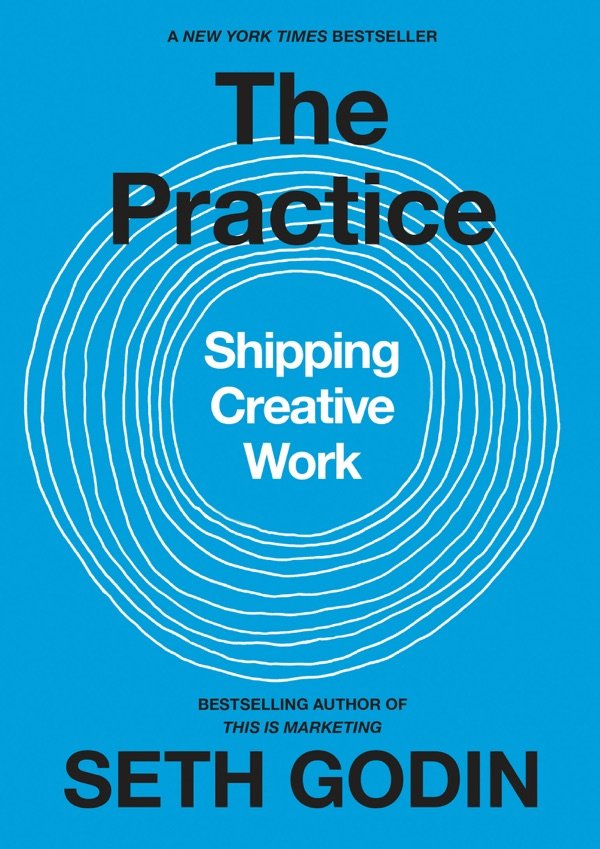
The Practice: Shipping Creative Work
von Seth Godin
If we condition ourselves to work without flow, it’s more likely to arrive. It all comes back to trusting our self to create the change we seek. We don’t agree to do that after flow arrives. We do the work, whether we feel like it or not, and then, without warning, flow can arise. Flow is a symptom of the work we’re doing, not the cause of it. For the important work, the instructions are always insufficient. For the work we’d like to do, the reward comes from the fact that there is no guarantee, that the path isn’t well lit, that we cannot possibly be sure it’s going to work. It’s about throwing, not catching. Starting, not finishing. Improving, not being perfect.
If we condition ourselves to work without flow, it’s more likely to arrive. It all comes back to trusting our self to create the change we seek. We don’t agree to do that after flow arrives. We do the work, whether we feel like it or not, and then, without warning, flow can arise. Flow is a symptom of the work we’re doing, not the cause of it.
For the important work, the instructions are always insufficient. For the work we’d like to do, the reward comes from the fact that there is no guarantee, that the path isn’t well lit, that we cannot possibly be sure it’s going to work. It’s about throwing, not catching. Starting, not finishing. Improving, not being perfect.
If you want to change your story, change your actions first. When we choose to act a certain way, our mind can’t help but rework our narrative to make those actions become coherent. We become what we do.
Identity fuels action, and action creates habits, and habits are part of a practice, and a practice is the single best way to get to where you seek to go.
The Bhagavad-Gita says, “It is better to follow your own path, however imperfectly, than to follow someone else’s perfectly.”
"If we condition ourselves to work without flow, it’s more likely to arrive. It all comes back to trusting our self to create the change we seek. We don’t agree to do that after flow arrives. We do the work, whether we feel like it or not, and then, without warning, flow can arise. Flow is a symptom of the work we’re doing, not the cause of it."
"For the important work, the instructions are always insufficient. For the work we’d like to do, the reward comes from the fact that there is no guarantee, that the path isn’t well lit, that we cannot possibly be sure it’s going to work. It’s about throwing, not catching. Starting, not finishing. Improving, not being perfect."
"If you want to change your story, change your actions first. When we choose to act a certain way, our mind can’t help but rework our narrative to make those actions become coherent. We become what we do."
"Identity fuels action, and action creates habits, and habits are part of a practice, and a practice is the single best way to get to where you seek to go."
"The Bhagavad-Gita says, “It is better to follow your own path, however imperfectly, than to follow someone else’s perfectly.”"
"If the problem can be solved, why worry? And if the problem can’t be solved, then worrying will do you no good."
"Sculptor Elizabeth King said it beautifully, “Process saves us from the poverty of our intentions.”"
- →If we condition ourselves to work without flow, it’s more likely to arrive. It all comes back to trusting our self to create the change we seek. We don’t agree to do that after flow arrives. We do the work, whether we feel like it or not, and then, without warning, flow can arise. Flow is a symptom of the work we’re doing, not the cause of it.
- →For the important work, the instructions are always insufficient. For the work we’d like to do, the reward comes from the fact that there is no guarantee, that the path isn’t well lit, that we cannot possibly be sure it’s going to work. It’s about throwing, not catching. Starting, not finishing. Improving, not being perfect.
- →If you want to change your story, change your actions first. When we choose to act a certain way, our mind can’t help but rework our narrative to make those actions become coherent. We become what we do.
- →If the problem can be solved, why worry? And if the problem can’t be solved, then worrying will do you no good.
Ähnliche Bücher gesucht?
Beschreibe deine Situation. Die Suche findet das passende Buch aus der gesamten Bibliothek.