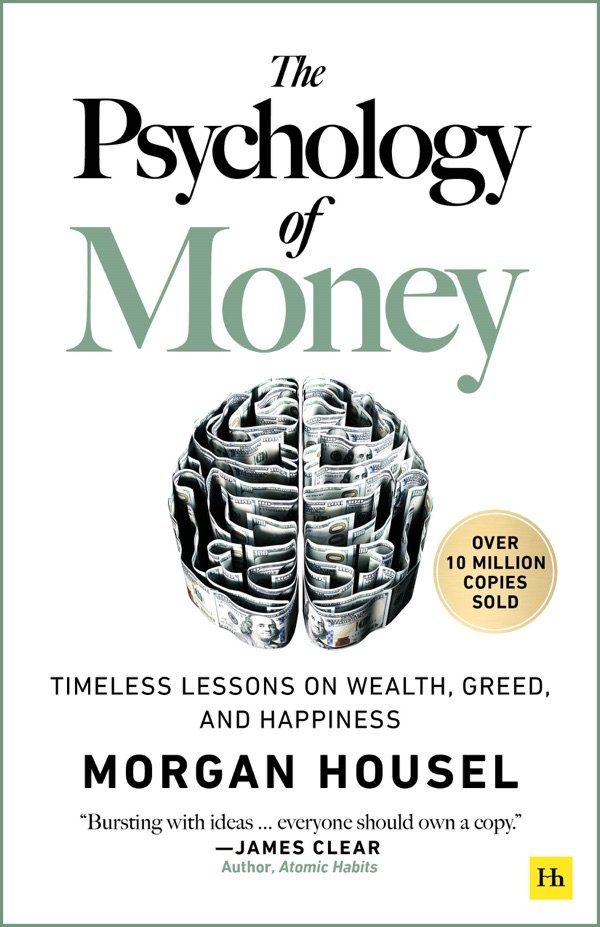
The Psychology of Money: Timeless Lessons on Wealth, Greed, and Happiness
von Morgan Housel
When you see someone driving a nice car, you rarely think, “Wow, the guy driving that car is cool.” Instead, you think, “Wow, if I had that car people would think I’m cool.” Ask yourself: How much should you pay for Google stock today? The answer depends on who “you” are. Do you have a 30-year time horizon? Then the smart price to pay involves a sober analysis of Google’s discounted cash flows over the next 30 years. Are you looking to cash out within 10 years? Then the price to pay can be figured out by an analysis of the tech industry’s potential over the next decade and whether Google management can execute on its vision. Are you looking to sell within a year? Then pay attention to Google’s current product sales cycles and whether we’ll have a bear market. Are you a day trader? Then the smart price to pay is “who cares?” because you’re just trying to squeeze a few bucks out of whatever happens between now and lunchtime, which can be accomplished at any price.
When you see someone driving a nice car, you rarely think, “Wow, the guy driving that car is cool.” Instead, you think, “Wow, if I had that car people would think I’m cool.”
Forecasting with precision is hard. This is obvious to the card counter, because no one could possibly know where a particular card lies in a shuffled deck. It’s less obvious to someone asking, “What will the average annual return of the stock market be over the next 10 years?” or “On what date will I be able to retire?” But they are fundamentally the same. The best we can do is think about odds.
To grasp why people bury themselves in debt you don’t need to study interest rates; you need to study the history of greed, insecurity, and optimism. To get why investors sell out at the bottom of a bear market you don’t need to study the math of expected future returns; you need to think about the agony of looking at your family and wondering if your investments are imperiling their future.
Anything that is huge, profitable, famous, or influential is the result of a tail event—an outlying one-in-thousands or millions event. And most of our attention goes to things that are huge, profitable, famous, or influential. When most of what we pay attention to is the result of a tail, it’s easy to underestimate how rare and powerful they are.
Daniel Kahneman once told me about the stories people tell themselves to make sense of the past. He said: Hindsight, the ability to explain the past, gives us the illusion that the world is understandable. It gives us the illusion that the world makes sense, even when it doesn’t make sense. That’s a big deal in producing mistakes in many fields.
"When you see someone driving a nice car, you rarely think, “Wow, the guy driving that car is cool.” Instead, you think, “Wow, if I had that car people would think I’m cool.”"
"Ask yourself: How much should you pay for Google stock today? The answer depends on who “you” are. Do you have a 30-year time horizon? Then the smart price to pay involves a sober analysis of Google’s discounted cash flows over the next 30 years. Are you looking to cash out within 10 years? Then the price to pay can be figured out by an analysis of the tech industry’s potential over the next decade and whether Google management can execute on its vision. Are you looking to sell within a year? Then pay attention to Google’s current product sales cycles and whether we’ll have a bear market. Are you a day trader? Then the smart price to pay is “who cares?” because you’re just trying to squeeze a few bucks out of whatever happens between now and lunchtime, which can be accomplished at any price."
"Benjamin Graham is known as one of the greatest investors of all time, the father of value investing and the early mentor of Warren Buffett. But the majority of Benjamin Graham’s investing success was due to owning an enormous chunk of GEICO stock which, by his own admission, broke nearly every diversification rule that Graham himself laid out in his famous texts. Where does the thin line between bold and reckless fall here? I don’t know. Graham wrote about his GEICO bonanza: “One lucky break, or one supremely shrewd decision—can we tell them apart?” Not easily. We"
"An interesting quirk of investing history is that the further back you look, the more likely you are to be examining a world that no longer applies to today. Many investors and economists take comfort in knowing their forecasts are backed up by decades, even centuries, of data. But since economies evolve, recent history is often the best guide to the future, because it’s more likely to include important conditions that are relevant to the future."
"Psychologists call it reactance. Jonah Berger, a marketing professor at the University of Pennsylvania, summed it up well: People like to feel like they’re in control—in the drivers’ seat. When we try to get them to do something, they feel disempowered. Rather than feeling like they made the choice, they feel like we made it for them. So they say no or do something else, even when they might have originally been happy to go along.25"
"What matters is that a blackjack card counter knows they are playing a game of odds, not certainties. In any particular hand they think they have a good chance of being right, but know there’s a decent chance they’re wrong. It might sound strange given their profession, but their strategy relies entirely on humility—humility that they don’t know, and cannot know exactly what’s going to happen next, so play their hand accordingly."
"The big takeaway from ice ages is that you don’t need tremendous force to create tremendous results. If something compounds—if a little growth serves as the fuel for future growth—a small starting base can lead to results so extraordinary they seem to defy logic. It can be so logic-defying that you underestimate what’s possible, where growth comes from, and what it can lead to. And so it is with money."
- →That stuck with me. Being able to wake up one morning and change what you’re doing, on your own terms, whenever you’re ready, seems like the grandmother of all financial goals. Independence, to me, doesn’t mean you’ll stop working. It means you only do the work you like with people you like at the times you want for as long as you want.
- →Reputation is invaluable. Freedom and independence are invaluable. Family and friends are invaluable. Being loved by those who you want to love you is invaluable. Happiness is invaluable. And your best shot at keeping these things is knowing when it’s time to stop taking risks that might harm them. Knowing when you have enough.
- →Reputation is invaluable. Freedom and independence are invaluable. Family and friends are invaluable. Being loved by those who you want to love you is invaluable. Happiness is invaluable. And your best shot at keeping these things is knowing when it’s time to stop taking risks that might harm them. Knowing when you have enough.
- →Exercise is like being rich. You think, “I did the work and I now deserve to treat myself to a big meal.” Wealth is turning down that treat meal and actually burning net calories. It’s hard, and requires self-control. But it creates a gap between what you could do and what you choose to do that accrues to you over time.
Ähnliche Bücher gesucht?
Beschreibe deine Situation. Die Suche findet das passende Buch aus der gesamten Bibliothek.