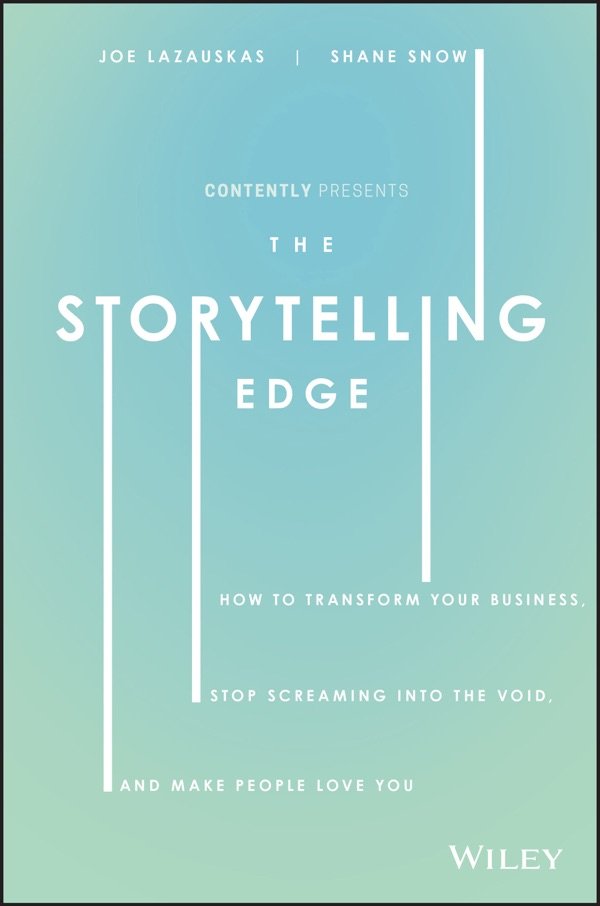
The Storytelling Edge: How to Transform Your Business, Stop Screaming into the Void, and Make People Love You
von Shane Snow
One of the secrets to BuzzFeed and a lot of the modern Internet's successful viral sites is they don't try to speak to everyone in every story; they try to relate very deeply to specific identity groups and bet that those groups will share these stories prolifically. Perhaps Ben's little secret for learning to write isn't so dissimilar from what MIT professor Seymour Papert's research has famously revealed: that children learn more effectively by building with LEGO bricks than they do by listening to lectures about architecture. It's not just the study of tiny details that accelerates learning; the act of assembling those details yourself makes a difference.
One of the secrets to BuzzFeed and a lot of the modern Internet's successful viral sites is they don't try to speak to everyone in every story; they try to relate very deeply to specific identity groups and bet that those groups will share these stories prolifically.
Perhaps Ben's little secret for learning to write isn't so dissimilar from what MIT professor Seymour Papert's research has famously revealed: that children learn more effectively by building with LEGO bricks than they do by listening to lectures about architecture. It's not just the study of tiny details that accelerates learning; the act of assembling those details yourself makes a difference.
In reality, content marketing is more like a political campaign. You have to introduce yourself to people and earn their trust. You have to listen to their concerns. You can't just begin your campaign by brazenly demanding that people give you support before you do anything to earn it. More than anything, you need a mission that drives your content and resonates with people.
This brings us back to our storytelling funnel-matrix. In the beginning of a relationship, you should tell stories about shared interests and values. As things progress, you can tell stories about the people in your life (like your customers or employees). Finally, as things start getting more serious, you tell stories about your products and services themselves.
Netflix's secret weapon is more than just data. It's how they take that data and use it to gain an advantage during every part of the TV-show-creating process—from creating a strategy for the show and planning how to make it, to the actual creation of the show, to figuring out what worked and optimizing the show for the next season.
"One of the secrets to BuzzFeed and a lot of the modern Internet's successful viral sites is they don't try to speak to everyone in every story; they try to relate very deeply to specific identity groups and bet that those groups will share these stories prolifically."
"Perhaps Ben's little secret for learning to write isn't so dissimilar from what MIT professor Seymour Papert's research has famously revealed: that children learn more effectively by building with LEGO bricks than they do by listening to lectures about architecture. It's not just the study of tiny details that accelerates learning; the act of assembling those details yourself makes a difference."
"In reality, content marketing is more like a political campaign. You have to introduce yourself to people and earn their trust. You have to listen to their concerns. You can't just begin your campaign by brazenly demanding that people give you support before you do anything to earn it. More than anything, you need a mission that drives your content and resonates with people."
"This brings us back to our storytelling funnel-matrix. In the beginning of a relationship, you should tell stories about shared interests and values. As things progress, you can tell stories about the people in your life (like your customers or employees). Finally, as things start getting more serious, you tell stories about your products and services themselves."
"Netflix's secret weapon is more than just data. It's how they take that data and use it to gain an advantage during every part of the TV-show-creating process—from creating a strategy for the show and planning how to make it, to the actual creation of the show, to figuring out what worked and optimizing the show for the next season."
"The challenge was to try to make the paragraph in question half as long, removing “sludge,” or words and phrases that took longer than necessary to say something. This became the basis of our own self-editing process as writers. Every time we write, we look at each sentence and ask, “How could I make the point in fewer words?”"
"We'll do a lot because of a good story. We'll support destroying a product associated with a bad story. We'll change our minds about a product if it incorporates a good story. We'll pay a little extra for a product that has an inspirational backstory. And we'll give something a second chance because of a redemption story."
- →One of the secrets to BuzzFeed and a lot of the modern Internet's successful viral sites is they don't try to speak to everyone in every story; they try to relate very deeply to specific identity groups and bet that those groups will share these stories prolifically.
- →Netflix's secret weapon is more than just data. It's how they take that data and use it to gain an advantage during every part of the TV-show-creating process—from creating a strategy for the show and planning how to make it, to the actual creation of the show, to figuring out what worked and optimizing the show for the next season.
- →The challenge was to try to make the paragraph in question half as long, removing “sludge,” or words and phrases that took longer than necessary to say something. This became the basis of our own self-editing process as writers. Every time we write, we look at each sentence and ask, “How could I make the point in fewer words?”
- →We'll do a lot because of a good story. We'll support destroying a product associated with a bad story. We'll change our minds about a product if it incorporates a good story. We'll pay a little extra for a product that has an inspirational backstory. And we'll give something a second chance because of a redemption story.
Ähnliche Bücher gesucht?
Beschreibe deine Situation. Die Suche findet das passende Buch aus der gesamten Bibliothek.