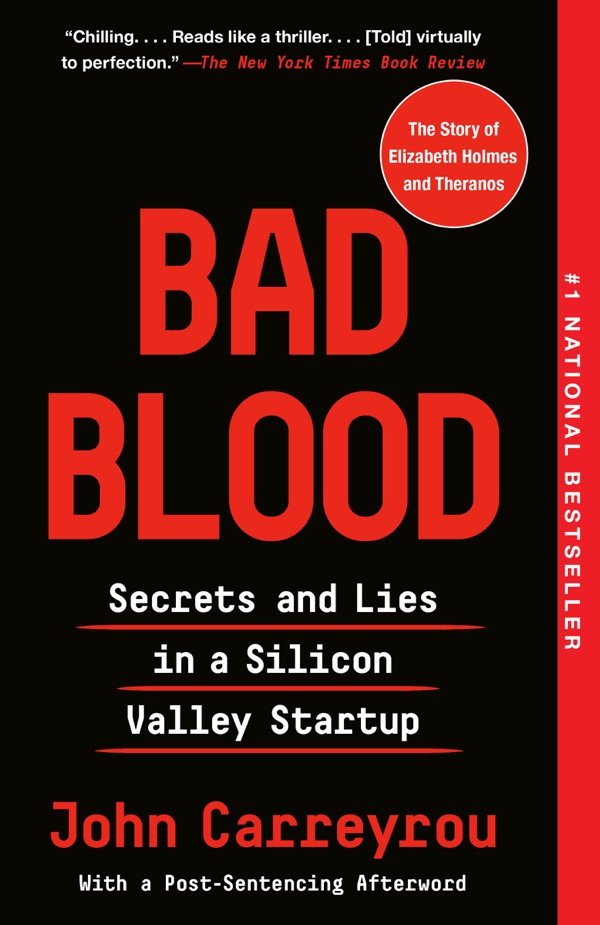
Bad Blood: Secrets and Lies in a Silicon Valley Startup
von John Carreyrou
Murdoch also derived comfort from some of the other reputable investors he heard Theranos had lined up. They included Cox Enterprises, the Atlanta-based, family-owned conglomerate whose chairman, Jim Kennedy, he was friendly with, and the Waltons of Walmart fame. Other big-name investors he didn’t know about ranged from Bob Kraft, owner of the New England Patriots, to Mexican billionaire Carlos Slim and John Elkann, the Italian industrialist who controlled Fiat Chrysler Automobiles. Most of the other investors opted against litigation, settling instead for a grant of extra shares in exchange for a promise not to sue. One notable exception was Rupert Murdoch. The media mogul sold his stock back to Theranos for one dollar so he could claim a big tax write-off on his other earnings. With a fortune estimated at $12 billion, Murdoch could afford to lose more than $100 million on a bad investment.
All of this might not have been enough to ignite the new boom, however, if it hadn’t been for another key ingredient: rock-bottom interest rates. To rescue the economy, the Federal Reserve had slashed rates to close to zero, making traditional investments like bonds unattractive and sending investors searching for higher returns elsewhere. One of the places they turned to was Silicon Valley.
Well, there was a reason it always seemed to work, Shaunak said. The image on the computer screen showing the blood flowing through the cartridge and settling into the little wells was real. But you never knew whether you were going to get a result or not. So they’d recorded a result from one of the times it worked. It was that recorded result that was displayed at the end of each demo.
The chemistry work was handled by a separate group made up of biochemists. The collaboration between that group and Ed’s group was far from optimal. Both reported up to Elizabeth but weren’t encouraged to communicate with each other. Elizabeth liked to keep information compartmentalized so that only she had the full picture of the system’s development.
Balwani had tasked a Theranos software engineer named Michael Craig to write an application for the miniLab’s software that masked test malfunctions. When something went wrong inside the machine, the app kicked in and prevented an error message from appearing on the digital display. Instead, the screen showed the test’s progress slowing to a crawl.
Ellison might be one of the richest people in the world, with a net worth of some $25 billion, but he wasn’t necessarily the ideal role model. In Oracle’s early years, he had famously exaggerated his database software’s capabilities and shipped versions of it crawling with bugs. That’s not something you could do with a medical device.
"Murdoch also derived comfort from some of the other reputable investors he heard Theranos had lined up. They included Cox Enterprises, the Atlanta-based, family-owned conglomerate whose chairman, Jim Kennedy, he was friendly with, and the Waltons of Walmart fame. Other big-name investors he didn’t know about ranged from Bob Kraft, owner of the New England Patriots, to Mexican billionaire Carlos Slim and John Elkann, the Italian industrialist who controlled Fiat Chrysler Automobiles."
"Most of the other investors opted against litigation, settling instead for a grant of extra shares in exchange for a promise not to sue. One notable exception was Rupert Murdoch. The media mogul sold his stock back to Theranos for one dollar so he could claim a big tax write-off on his other earnings. With a fortune estimated at $12 billion, Murdoch could afford to lose more than $100 million on a bad investment."
"Rochelle was overwhelmed with grief but she found the strength to call Elizabeth’s office and left a message with her assistant informing her about Ian’s passing. Elizabeth didn’t call back. Instead, later that day, Rochelle received an email from a Theranos lawyer requesting that she immediately return Ian’s company laptop and cell phone and any other confidential information he might have retained."
"All of this might not have been enough to ignite the new boom, however, if it hadn’t been for another key ingredient: rock-bottom interest rates. To rescue the economy, the Federal Reserve had slashed rates to close to zero, making traditional investments like bonds unattractive and sending investors searching for higher returns elsewhere. One of the places they turned to was Silicon Valley."
"Well, there was a reason it always seemed to work, Shaunak said. The image on the computer screen showing the blood flowing through the cartridge and settling into the little wells was real. But you never knew whether you were going to get a result or not. So they’d recorded a result from one of the times it worked. It was that recorded result that was displayed at the end of each demo."
"The chemistry work was handled by a separate group made up of biochemists. The collaboration between that group and Ed’s group was far from optimal. Both reported up to Elizabeth but weren’t encouraged to communicate with each other. Elizabeth liked to keep information compartmentalized so that only she had the full picture of the system’s development."
"Balwani had tasked a Theranos software engineer named Michael Craig to write an application for the miniLab’s software that masked test malfunctions. When something went wrong inside the machine, the app kicked in and prevented an error message from appearing on the digital display. Instead, the screen showed the test’s progress slowing to a crawl."
- →Ellison might be one of the richest people in the world, with a net worth of some $25 billion, but he wasn’t necessarily the ideal role model. In Oracle’s early years, he had famously exaggerated his database software’s capabilities and shipped versions of it crawling with bugs. That’s not something you could do with a medical device.
- →Elizabeth never reprimanded Tim, even when obvious examples of his duplicity were brought to her attention. She valued his loyalty and, in her eyes, the fact that he never said no to her reflected a can-do attitude. It mattered little that many of his colleagues thought Tim was a mediocrity and a terrible manager.
- →It was all beginning to make sense: Holmes and her company had overpromised and then cut corners when they couldn’t deliver. It was one thing to do that with software or a smartphone app, but doing it with a medical product that people relied on to make important health decisions was unconscionable.
- →At the Journal, we had a cardinal rule called “No surprises.” We never went to press with a story without informing the story subject of every single piece of information we had gathered in our reporting and giving them ample time and opportunity to address and rebut everything.
Ähnliche Bücher gesucht?
Beschreibe deine Situation. Die Suche findet das passende Buch aus der gesamten Bibliothek.