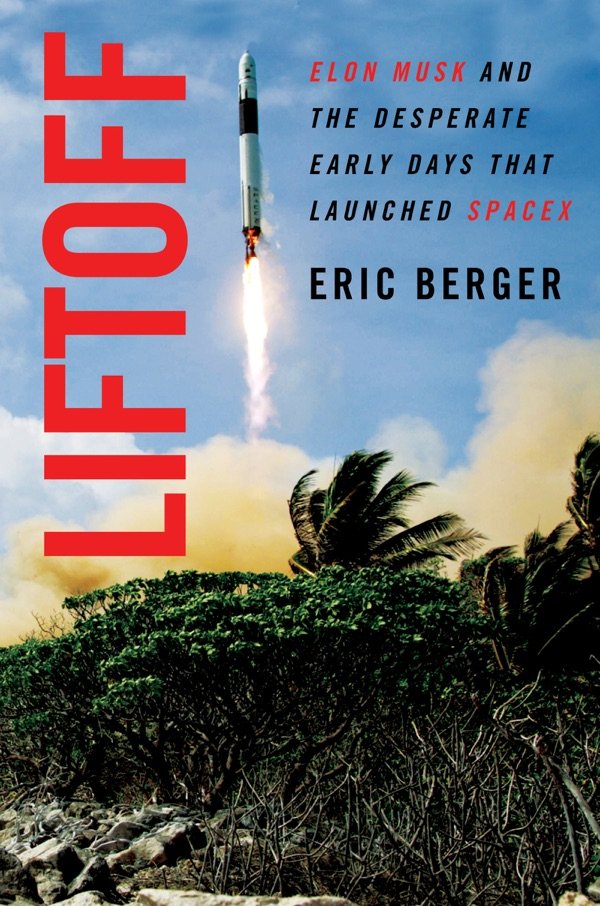
Liftoff: Elon Musk and the Desperate Early Days That Launched SpaceX
von Eric Berger
Musk differed from his competitors in another, important way—failure was an option. At most other aerospace companies, no employee wanted to make a mistake, lest it reflect badly on an annual performance review. Musk, by contrast, urged his team to move fast, build things, and break things. At some government labs and large aerospace firms, an engineer may devote a career to creating stacks of paperwork without ever touching hardware. The engineers designing the Falcon 1 rocket spent much of their time on the factory floor, testing ideas, rather than debating them. Talk less, do more. “I make the spending decisions and the engineering decisions in one head,” he said. “Normally those are at least two people. There’s some engineering guy who’s trying to convince a finance guy that this money should be spent. But the finance guy doesn’t understand engineering, so he can’t tell if this is a good way to spend money or not. Whereas I’m making the engineering decisions and spending decisions. So I know, already, that my brain trusts itself.”
Failure was an option at SpaceX, partly because the boss often asked the impossible of his team. In meetings, Musk might ask his engineers to do something that, on the face of it, seemed absurd. When they protested that it was impossible, Musk would respond with a question designed to open their minds to the problem, and potential solutions. He would ask, “What would it take?”
Taking it all in, a childlike smile broke out over his face. “Hey,” Musk said, turning to me. “Can you believe that thing, or something like it, is going to take people to another planet for the first time in 4.5 billion years? I mean, probably. It may not work. But it probably will.”
Musk made hiring a priority. He personally met with every single person the company hired through the first three thousand employees. It required late nights and weekends, but he felt it important to get the right people for his company.
“That’s one thing SpaceX seemed to know how to do from the very beginning,” she explained. “We just didn’t waste any time dithering about stuff. If they knew they needed to ship stuff, they just shipped stuff.”
When Musk decided that Spincraft could make good tanks for a fair price, that was it. No committees. No reports. Just, done.
"Musk differed from his competitors in another, important way—failure was an option. At most other aerospace companies, no employee wanted to make a mistake, lest it reflect badly on an annual performance review. Musk, by contrast, urged his team to move fast, build things, and break things. At some government labs and large aerospace firms, an engineer may devote a career to creating stacks of paperwork without ever touching hardware. The engineers designing the Falcon 1 rocket spent much of their time on the factory floor, testing ideas, rather than debating them. Talk less, do more."
"“I make the spending decisions and the engineering decisions in one head,” he said. “Normally those are at least two people. There’s some engineering guy who’s trying to convince a finance guy that this money should be spent. But the finance guy doesn’t understand engineering, so he can’t tell if this is a good way to spend money or not. Whereas I’m making the engineering decisions and spending decisions. So I know, already, that my brain trusts itself.”"
"The iterative approach begins with a goal and almost immediately leaps into concept designs, bench tests, and prototypes. The mantra with this approach is build and test early, find failures, and adapt. This is what SpaceX engineers and technicians did on the factory floor in El Segundo, and it allowed them to capture basic flaws with early prototypes, fix their designs, and build successively more “finished” iterations."
"Failure was an option at SpaceX, partly because the boss often asked the impossible of his team. In meetings, Musk might ask his engineers to do something that, on the face of it, seemed absurd. When they protested that it was impossible, Musk would respond with a question designed to open their minds to the problem, and potential solutions. He would ask, “What would it take?”"
"Taking it all in, a childlike smile broke out over his face. “Hey,” Musk said, turning to me. “Can you believe that thing, or something like it, is going to take people to another planet for the first time in 4.5 billion years? I mean, probably. It may not work. But it probably will.”"
"Musk made hiring a priority. He personally met with every single person the company hired through the first three thousand employees. It required late nights and weekends, but he felt it important to get the right people for his company."
"“That’s one thing SpaceX seemed to know how to do from the very beginning,” she explained. “We just didn’t waste any time dithering about stuff. If they knew they needed to ship stuff, they just shipped stuff.”"
- →“That’s one thing SpaceX seemed to know how to do from the very beginning,” she explained. “We just didn’t waste any time dithering about stuff. If they knew they needed to ship stuff, they just shipped stuff.”
- →The last thing Musk ever wanted to hear from an employee was “But that’s how it’s always been done.”
- →“Now,” Musk says, “I ask for the eleven top risks. Always go to eleven.”
Ähnliche Bücher gesucht?
Beschreibe deine Situation. Die Suche findet das passende Buch aus der gesamten Bibliothek.