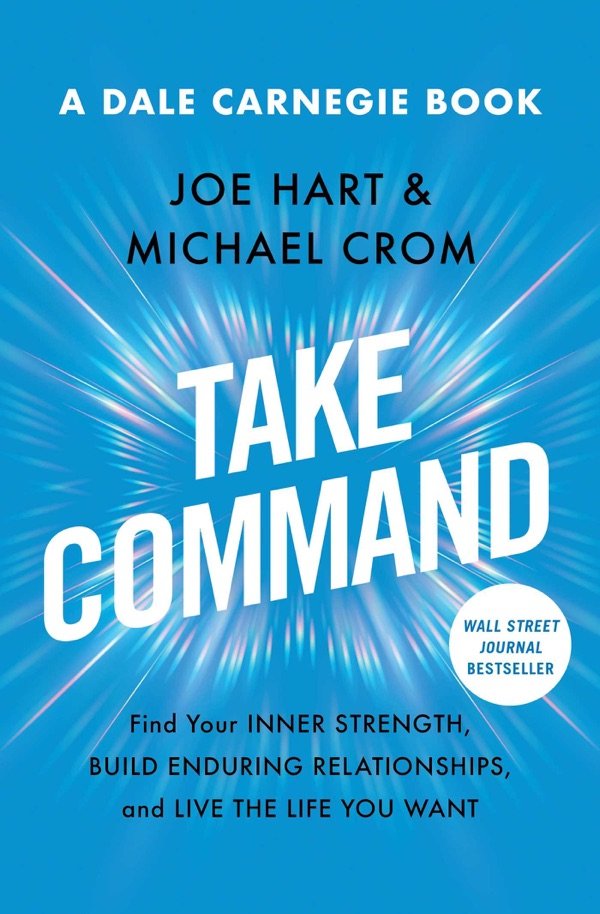
Take Command: Find Your Inner Strength, Build Enduring Relationships, and Live the Life You Want
von Joe Hart
One of the most important things we teach in our Dale Carnegie Course is the importance of living an intentional life. While we will discuss this idea in depth in Part III, we want to highlight now that creating and following healthy routines are critical parts of living an intentional life. Dale said that knowledge isn’t power. Applied knowledge is power. You can know all the right things to do, and yet if you don’t do them, you’re not going to receive the benefits that go along with them. Fulfillment is usually found outside of our comfort zone, not tucked safely within it.
One of the most important things we teach in our Dale Carnegie Course is the importance of living an intentional life. While we will discuss this idea in depth in Part III, we want to highlight now that creating and following healthy routines are critical parts of living an intentional life.
Dale said that knowledge isn’t power. Applied knowledge is power. You can know all the right things to do, and yet if you don’t do them, you’re not going to receive the benefits that go along with them. Fulfillment is usually found outside of our comfort zone, not tucked safely within it.
The next time you perceive a negative thought, consider it a warning sign. First, stop and challenge yourself. Ask, “What is this thought telling me?” Then ask yourself, “What do I need to do now?” Decide what action you need to take to alleviate the warning sign.
Routines are not just a “nice to have” in life; they are a “must have.” Having some sort of structure to your day cuts down on the number of decisions you have to make, which decreases stress, increases focus, and gives you an overall sense of peace and stability.
I now know with a conviction beyond all doubt that the biggest problem you and I have to deal with—in fact almost the only problem we have to deal with—is choosing the right thoughts. If we can do that, we will be on the highroad to solving all our problems.
"One of the most important things we teach in our Dale Carnegie Course is the importance of living an intentional life. While we will discuss this idea in depth in Part III, we want to highlight now that creating and following healthy routines are critical parts of living an intentional life."
"Dale said that knowledge isn’t power. Applied knowledge is power. You can know all the right things to do, and yet if you don’t do them, you’re not going to receive the benefits that go along with them. Fulfillment is usually found outside of our comfort zone, not tucked safely within it."
"The next time you perceive a negative thought, consider it a warning sign. First, stop and challenge yourself. Ask, “What is this thought telling me?” Then ask yourself, “What do I need to do now?” Decide what action you need to take to alleviate the warning sign."
"Routines are not just a “nice to have” in life; they are a “must have.” Having some sort of structure to your day cuts down on the number of decisions you have to make, which decreases stress, increases focus, and gives you an overall sense of peace and stability."
"I now know with a conviction beyond all doubt that the biggest problem you and I have to deal with—in fact almost the only problem we have to deal with—is choosing the right thoughts. If we can do that, we will be on the highroad to solving all our problems."
"Confidence comes from believing in yourself and in the unique abilities you have. For that reason, comparison can kill our confidence. We can’t be anyone other than ourselves, and we can choose to be the best version of ourselves we can be."
"We give meaning to the things that happen in our lives through our thoughts, and, for better or worse, that meaning affects how we think, feel, act, and react."
- →Dale said that knowledge isn’t power. Applied knowledge is power. You can know all the right things to do, and yet if you don’t do them, you’re not going to receive the benefits that go along with them. Fulfillment is usually found outside of our comfort zone, not tucked safely within it.
- →The next time you perceive a negative thought, consider it a warning sign. First, stop and challenge yourself. Ask, “What is this thought telling me?” Then ask yourself, “What do I need to do now?” Decide what action you need to take to alleviate the warning sign.
- →I now know with a conviction beyond all doubt that the biggest problem you and I have to deal with—in fact almost the only problem we have to deal with—is choosing the right thoughts. If we can do that, we will be on the highroad to solving all our problems.
- →Confidence comes from believing in yourself and in the unique abilities you have. For that reason, comparison can kill our confidence. We can’t be anyone other than ourselves, and we can choose to be the best version of ourselves we can be.
Ähnliche Bücher gesucht?
Beschreibe deine Situation. Die Suche findet das passende Buch aus der gesamten Bibliothek.