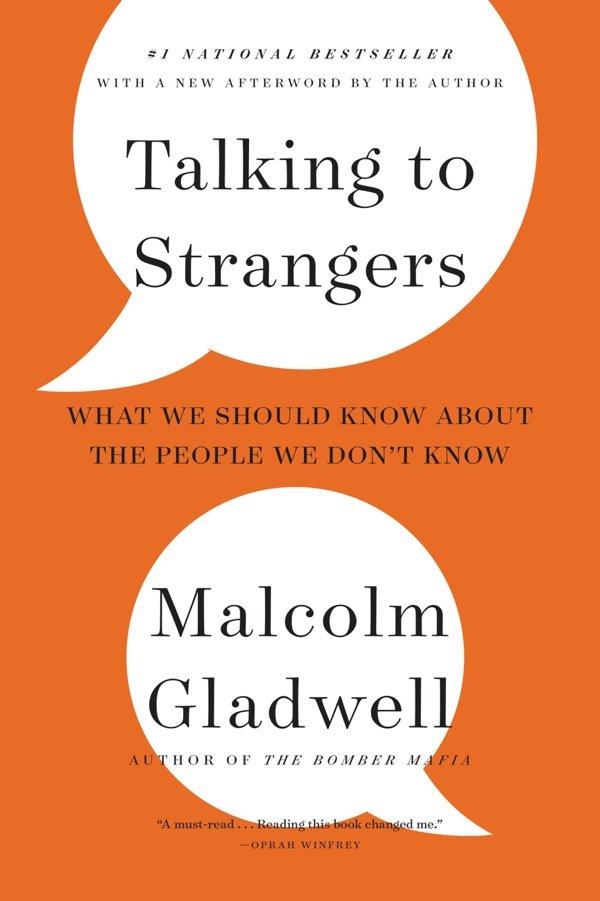
Talking to Strangers: What We Should Know About the People We Don't Know
von Malcolm Gladwell
The effects begin in the frontal lobes, the part of our brain behind our forehead that governs attention, motivation, planning, and learning. The first drink “dampens” activity in that region. It makes us a little dumber, less capable of handling competing complicated considerations. It hits the reward centers of the brain, the areas that govern euphoria, and gives them a little jolt. It finds its way into the amygdala. The amygdala’s job is to tell us how to react to the world around us. Are we being threatened? Should we be afraid? Alcohol turns the amygdala down a notch. The combination of those three effects is where myopia comes from. We don’t have the brainpower to handle more complex, long-term considerations. We’re distracted by the unexpected pleasure of the alcohol. Our neurological burglar alarm is turned off. We become altered versions of ourselves, beholden to the moment. Chamberlain was acting on the same assumption that we all follow in our efforts to make sense of strangers. We believe that the information gathered from a personal interaction is uniquely valuable. You would never hire a babysitter for your children without meeting that person first. Companies don’t hire employees blind. They call them in and interview them closely, sometimes for hours at a stretch, on more than one occasion. They do what Chamberlain did: they look people in the eye, observe their demeanor and behavior, and draw conclusions. He gave me the double handshake. Yet all that extra information Chamberlain gathered from his personal interactions with Hitler didn’t help him see Hitler more clearly. It did the opposite. Is
Today we are now thrown into contact all the time with people whose assumptions, perspectives, and backgrounds are different from our own. The modern world is not two brothers feuding for control of the Ottoman Empire. It is Cortés and Montezuma struggling to understand each other through multiple layers of translators. Talking to Strangers is about why we are so bad at that act of translation.
He said the one fact he keeps in mind whenever he goes to the doctor’s office is that forty cents of every health-care dollar goes to either fraud or waste. Whoever is treating me, I make sure I tell them that I’m a white-collar-criminal investigator, and I let them know that there’s a lot of fraud in medicine. I tell them that statistic. I do that so they don’t mess with me or my family.
There is a second, complicating element in many of these encounters, however. When you read through the details of the campus sexual-assault cases that have become so depressingly common, the remarkable fact is how many involve an almost identical scenario. A young woman and a young man meet at a party, then proceed to tragically misunderstand each other’s intentions—and they’re drunk.
The first set of mistakes we make with strangers—the default to truth and the illusion of transparency—has to do with our inability to make sense of the stranger as an individual. But on top of those errors we add another, which pushes our problem with strangers into crisis. We do not understand the importance of the context in which the stranger is operating.
When a liar acts like an honest person, though, or when an honest person acts like a liar, we’re flummoxed. Nervous Nelly is mismatched. She looks like she’s lying, but she’s not. She’s just nervous! In other words, human beings are not bad lie detectors. We are bad lie detectors in those situations when the person we’re judging is mismatched.
"The effects begin in the frontal lobes, the part of our brain behind our forehead that governs attention, motivation, planning, and learning. The first drink “dampens” activity in that region. It makes us a little dumber, less capable of handling competing complicated considerations. It hits the reward centers of the brain, the areas that govern euphoria, and gives them a little jolt. It finds its way into the amygdala. The amygdala’s job is to tell us how to react to the world around us. Are we being threatened? Should we be afraid? Alcohol turns the amygdala down a notch. The combination of those three effects is where myopia comes from. We don’t have the brainpower to handle more complex, long-term considerations. We’re distracted by the unexpected pleasure of the alcohol. Our neurological burglar alarm is turned off. We become altered versions of ourselves, beholden to the moment."
"Chamberlain was acting on the same assumption that we all follow in our efforts to make sense of strangers. We believe that the information gathered from a personal interaction is uniquely valuable. You would never hire a babysitter for your children without meeting that person first. Companies don’t hire employees blind. They call them in and interview them closely, sometimes for hours at a stretch, on more than one occasion. They do what Chamberlain did: they look people in the eye, observe their demeanor and behavior, and draw conclusions. He gave me the double handshake. Yet all that extra information Chamberlain gathered from his personal interactions with Hitler didn’t help him see Hitler more clearly. It did the opposite. Is"
"To snap out of truth-default mode requires what Levine calls a “trigger.” A trigger is not the same as a suspicion, or the first sliver of doubt. We fall out of truth-default mode only when the case against our initial assumption becomes definitive. We do not behave, in other words, like sober-minded scientists, slowly gathering evidence of the truth or falsity of something before reaching a conclusion. We do the opposite. We start by believing. And we stop believing only when our doubts and misgivings rise to the point where we can no longer explain them away."
"Transparency is the idea that people’s behavior and demeanor—the way they represent themselves on the outside—provides an authentic and reliable window into the way they feel on the inside. It is the second of the crucial tools we use to make sense of strangers. When we don’t know someone, or can’t communicate with them, or don’t have the time to understand them properly, we believe we can make sense of them through their behavior and demeanor."
"Poets die young. That is not just a cliché. The life expectancy of poets, as a group, trails playwrights, novelists, and nonfiction writers by a considerable margin. They have higher rates of “emotional disorders” than actors, musicians, composers, and novelists. And of every occupational category, poets have far and away the highest suicide rates—as much as five times higher than the general population."
"Today we are now thrown into contact all the time with people whose assumptions, perspectives, and backgrounds are different from our own. The modern world is not two brothers feuding for control of the Ottoman Empire. It is Cortés and Montezuma struggling to understand each other through multiple layers of translators. Talking to Strangers is about why we are so bad at that act of translation."
"He said the one fact he keeps in mind whenever he goes to the doctor’s office is that forty cents of every health-care dollar goes to either fraud or waste. Whoever is treating me, I make sure I tell them that I’m a white-collar-criminal investigator, and I let them know that there’s a lot of fraud in medicine. I tell them that statistic. I do that so they don’t mess with me or my family."
- →We think we want our guardians to be alert to every suspicion. We blame them when they default to truth. When we try to send people like Graham Spanier to jail, we send a message to all of those in positions of authority about the way we want them to make sense of strangers—without stopping to consider the consequences of sending that message.
- →Levine argues that over the course of evolution, human beings never developed sophisticated and accurate skills to detect deception as it was happening because there is no advantage to spending your time scrutinizing the words and behaviors of those around you. The advantage to human beings lies in assuming that strangers are truthful.
- →We think we can easily see into the hearts of others based on the flimsiest of clues. We jump at the chance to judge strangers. We would never do that to ourselves, of course. We are nuanced and complex and enigmatic. But the stranger is easy. If I can convince you of one thing in this book, let it be this: Strangers are not easy.
- →The conviction that we know others better than they know us—and that we may have insights about them they lack (but not vice versa)—leads us to talk when we would do well to listen and to be less patient than we ought to be when others express the conviction that they are the ones who are being misunderstood or judged unfairly.
Ähnliche Bücher gesucht?
Beschreibe deine Situation. Die Suche findet das passende Buch aus der gesamten Bibliothek.