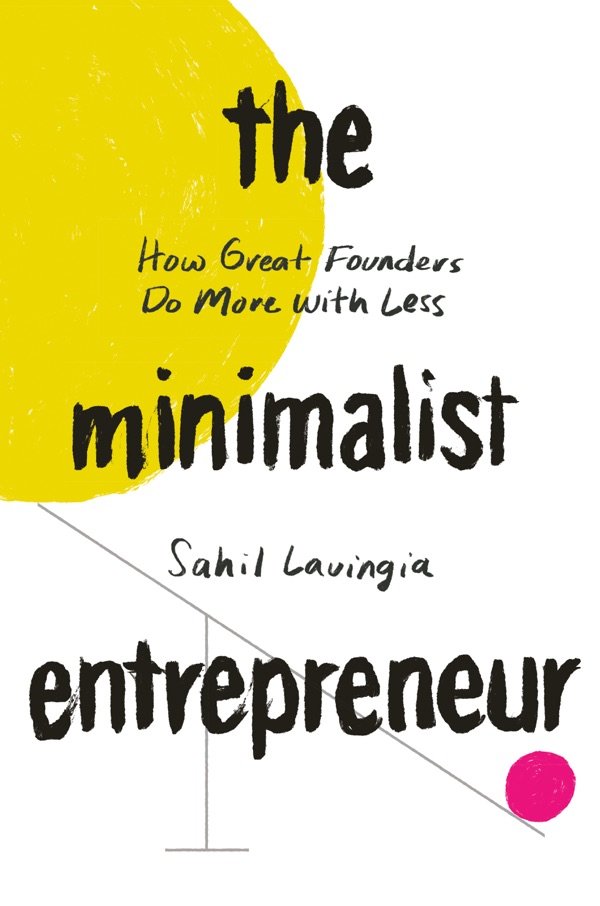
The Minimalist Entrepreneur: How Great Founders Do More with Less
von Sahil Lavingia
Clear expectations around availability allow people to build their work around their life, not the other way around. This is especially great for new parents, but everyone benefits from being able to structure their days to maximize their happiness and productivity, and most people can learn to manage themselves and be productive and impactful. I recognize that what I do and what we do at Gumroad may not work for every founder or every company, depending on the nature of the business. While flexible work hours are becoming more common, some companies function best when they are totally asynchronous and remote like us, while others use a hybrid of remote work and shared time at coworking spaces. As long as you keep a laser focus on delivering the best product to your customers, creating a system that works will develop organically from the bottom up rather than feeling like something dictated from the top. Create Conditions for Liftoff At the end of the last chapter, I talked about squashing doubts, but if you’re like 99 percent of the founders out there, doubts will be with you every step of the way, especially when you bring your product out to a community that you know and respect. Even though selling to strangers is inefficient, people are still desperate to avoid the awkwardness of telling their community what they’re working on. Sorry, but it’s still absolutely critical to start there.
The most profound thing I have learned running a company has been the difference between behavior and intention. Behavior is what someone is doing; intention is why they’re doing it. Most people judge themselves based on their own intentions but then judge others based on their behavior. Transparency makes that difficult, if not impossible.
In his book Anything You Want, CD Baby founder Derek Sivers writes, “If you want to make a movie recommendation service, start by telling friends to call you for movie recommendations. When you find a movie your friends like, they buy you a drink. Keep track of what you recommended and how your friends liked it, and improve from there.”
Most companies use meetings as an essential tool to get their work done, but we don’t have meetings at Gumroad. We’ve even taken it a step further: we’re fully asynchronous. This has meant that for us, all communication is thoughtful. Because nothing is urgent—unless the site is down—discussion takes place only after mindful processing.
If I talk, who listens? Where and with whom do I already spend my time, online and offline? In what situations am I most authentically myself? Who do I hang out with, even though I don’t really like them, but it’s worth it since we share something more important in common? Spend an hour, at least.
Maybe it’s the onions, but Askew’s story brings a tear to my eye. There is something profoundly beautiful in a value-oriented mission and a genuine purpose driven by your own lived experience. This is what being a minimalist entrepreneur is all about: making a difference while making a living.
"Clear expectations around availability allow people to build their work around their life, not the other way around. This is especially great for new parents, but everyone benefits from being able to structure their days to maximize their happiness and productivity, and most people can learn to manage themselves and be productive and impactful. I recognize that what I do and what we do at Gumroad may not work for every founder or every company, depending on the nature of the business. While flexible work hours are becoming more common, some companies function best when they are totally asynchronous and remote like us, while others use a hybrid of remote work and shared time at coworking spaces. As long as you keep a laser focus on delivering the best product to your customers, creating a system that works will develop organically from the bottom up rather than feeling like something dictated from the top."
"Create Conditions for Liftoff At the end of the last chapter, I talked about squashing doubts, but if you’re like 99 percent of the founders out there, doubts will be with you every step of the way, especially when you bring your product out to a community that you know and respect. Even though selling to strangers is inefficient, people are still desperate to avoid the awkwardness of telling their community what they’re working on. Sorry, but it’s still absolutely critical to start there."
"Even Katrina Lake, CEO of Stitchfix and one of Forbes’s Richest Self-Made Women in 2020, started out with cold calls and cold messages on LinkedIn to potential investors. “The more shameless you can be, the thicker skin you have, the better,” she says. “People are going to not write back and people are going to say no, but every now and then someone’s gonna be interested and say yes. And you wouldn’t have had that chance if you hadn’t gotten all the no’s first.”"
"Creator First, Entrepreneur Second On paper, it seems simple enough: 1. Narrow down who your ideal customer is. Narrow until you can narrow no more. 2. Define exactly what pain point you are solving for them, and how much they will pay you to solve it. 3. Set a hard deadline and focus fully on building a solution, then charge for it. 4. Repeat the process until you’ve found a product that works, then scale a business around it."
"Building a minimalist business does not mean settling for second best. Instead, it’s about creating sustainable companies that have the flexibility to take risks to serve the greater good, all while empowering others to do the same. Being profitable, hopefully from the very beginning, means being able to focus and to stay focused on the reason you started a business in the first place: to help others."
"Building a minimalist business does not mean settling for second best. Instead, it’s about creating sustainable companies that have the flexibility to take risks to serve the greater good, all while empowering others to do the same. Being profitable, hopefully from the very beginning, means being able to focus and to stay focused on the reason you started a business in the first place: to help others."
"The most profound thing I have learned running a company has been the difference between behavior and intention. Behavior is what someone is doing; intention is why they’re doing it. Most people judge themselves based on their own intentions but then judge others based on their behavior. Transparency makes that difficult, if not impossible."
- →In his book Anything You Want, CD Baby founder Derek Sivers writes, “If you want to make a movie recommendation service, start by telling friends to call you for movie recommendations. When you find a movie your friends like, they buy you a drink. Keep track of what you recommended and how your friends liked it, and improve from there.”
- →Most companies use meetings as an essential tool to get their work done, but we don’t have meetings at Gumroad. We’ve even taken it a step further: we’re fully asynchronous. This has meant that for us, all communication is thoughtful. Because nothing is urgent—unless the site is down—discussion takes place only after mindful processing.
- →If I talk, who listens? Where and with whom do I already spend my time, online and offline? In what situations am I most authentically myself? Who do I hang out with, even though I don’t really like them, but it’s worth it since we share something more important in common? Spend an hour, at least.
- →Painters need brushes. Writers need pencils. Creators need businesses. It’s key for people to understand that, because it lowers the cognitive barrier to starting a business, and starting is really important. You don’t learn, then start. You start, then learn.
Ähnliche Bücher gesucht?
Beschreibe deine Situation. Die Suche findet das passende Buch aus der gesamten Bibliothek.