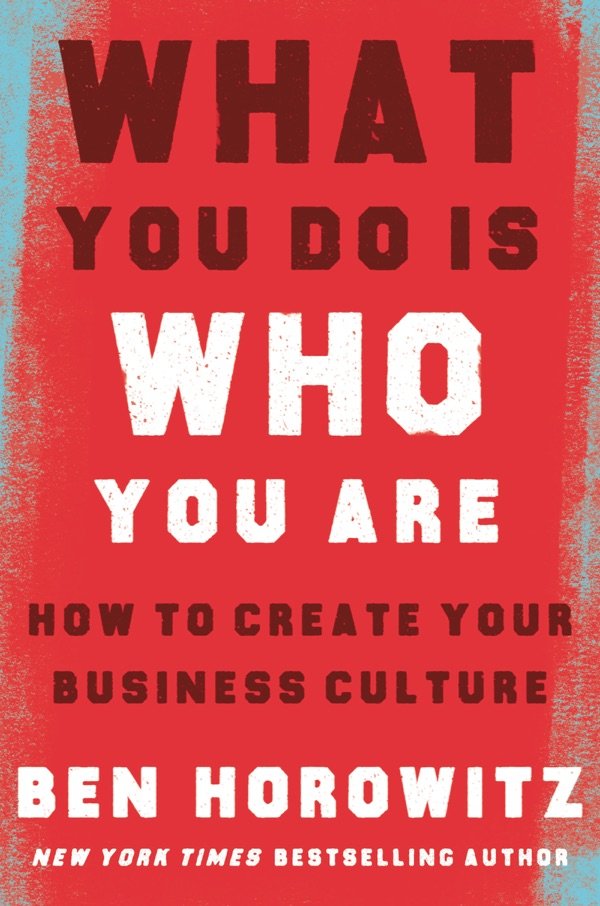
What You Do Is Who You Are: How to Create Your Business Culture
von Ben Horowitz
The samurai called their principles “virtues” rather than “values”; virtues are what you do, while values are merely what you believe. We have three rules here at Netscape. The first rule is if you see a snake, don’t call committees, don’t call your buddies, don’t form a team, don’t get a meeting together, just kill the snake. The second rule is don’t go back and play with dead snakes. Too many people waste too much time on decisions that have already been made. And the third rule of snakes is: all opportunities start out looking like snakes.
The samurai called their principles “virtues” rather than “values”; virtues are what you do, while values are merely what you believe.
Building a great culture means adapting it to circumstances. And that often means bringing in outside leadership from the culture you need to penetrate or master.
Make Decisions That Demonstrate Cultural Priorities The more counterintuitive the leader’s decision, the stronger the impact on the culture.
If you bring in outside leadership, it will make everyone highly uncomfortable. That’s what cultural change feels like.
That’s the nature of culture. It’s not a single decision—it’s a code that manifests itself as a vast set of actions taken over time. No one person makes or takes all these actions. Cultural design is a way to program the actions of an organization, but, like computer programs, every culture has bugs. And cultures are significantly more difficult to debug than programs.
"The samurai called their principles “virtues” rather than “values”; virtues are what you do, while values are merely what you believe."
"We have three rules here at Netscape. The first rule is if you see a snake, don’t call committees, don’t call your buddies, don’t form a team, don’t get a meeting together, just kill the snake. The second rule is don’t go back and play with dead snakes. Too many people waste too much time on decisions that have already been made. And the third rule of snakes is: all opportunities start out looking like snakes."
"Building a great culture means adapting it to circumstances. And that often means bringing in outside leadership from the culture you need to penetrate or master."
"Make Decisions That Demonstrate Cultural Priorities The more counterintuitive the leader’s decision, the stronger the impact on the culture."
"He instilled in our eight-person sales team the crucial four C’s. To sell, you had have 1) the competence—expert knowledge of the product you were selling and the process to demonstrate it (qualifying the buyer by validating their need and budget; helping define what their buying criteria are while setting traps for the competition; getting sign-off from the technical and the economic buyer at the customer, and so forth) so that you could have 2) the confidence to state your point of view, which would give you 3) the courage to have 4) the conviction not to be sold by the customer on why she wasn’t going to buy your product. Cranney was obsessed with training every salesperson, testing them, and holding them accountable on the four C’s."
"If you bring in outside leadership, it will make everyone highly uncomfortable. That’s what cultural change feels like."
"That’s the nature of culture. It’s not a single decision—it’s a code that manifests itself as a vast set of actions taken over time. No one person makes or takes all these actions. Cultural design is a way to program the actions of an organization, but, like computer programs, every culture has bugs. And cultures are significantly more difficult to debug than programs."
- →The reason so many efforts to establish “corporate values” are basically worthless is that they emphasize beliefs instead of actions. Culturally, what you believe means nearly nothing. What you do is who you are.
- →My mentor, Bill Campbell, used to say, “We are doing it for each other. How much do you care about the people you’re working with? Do you want to let them down?”
- →Simply saying something you feel more or less comfortable terming “the truth” doesn’t build trust. What builds trust is the bona fide truth being heard.
- →When Wilderotter arrived at Frontier, she told me, “Everybody wanted to show me the org chart, to make sure I understood the pecking order. I didn’t even look at it, because I believe that work gets done through the go-to people. They may not have titles and positions, but they’re the ones who get the work done.”
Ähnliche Bücher gesucht?
Beschreibe deine Situation. Die Suche findet das passende Buch aus der gesamten Bibliothek.